Castle of Good Hope
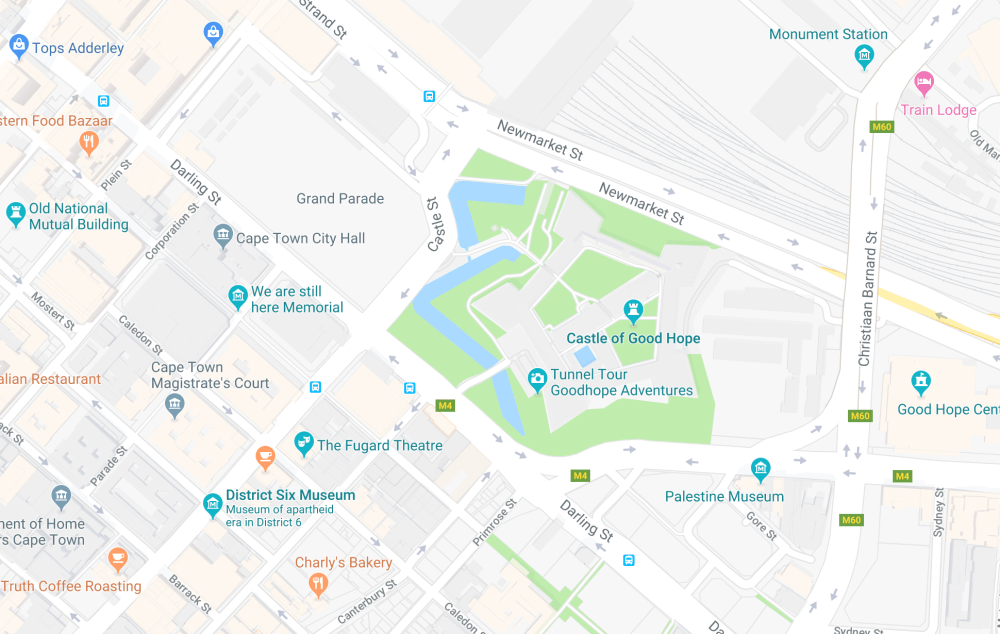
The Castle of Good Hope is a bastion fort built by the Dutch East India Company between 1666 and 1679. It is the oldest existing colonial building in South Africa. It was originally located on the coastline of Table Bay, but following land reclamation the fort is now located inland.

Cape Town City Hall
Cape Town City Hall is a large Edwardian building built in 1905. It is located on the Grand Parade to the west of the Castle and is built from honey-coloured oolitic limestone imported from Bath in England. The tower of the City Hall has a Turret Clock which strikes the hours and chimes the Westminster quarters. The faces of the clock are made from 4 skeleton iron dials filled with opal. On February 11, 1990, only hours after his release from prison, Nelson Mandela made his first public speech after his release from the balcony of Cape Town City Hall. The City Hall no longer houses the offices of the City of Cape Town, which are located in the Cape Town Civic Centre. The auditorium is regularly used for concerts, while the City Library was recently moved to the adjacent Old Drill Hall.


Directions: From the Castle of Good Hope, turn right on Darling Street.
Parliament of South Africa
The Houses of Parliament of South Africa are situated in Cape Town. The building consists of three main sections: the original building, completed in 1884, and additions constructed in the 1920s and 1980s. The newer addition currently houses the National Assembly (the lower house of the bicameral Parliament of South Africa), and the original building houses the National Council of Provinces (the upper house of Parliament).
The original parliament building was designed in a Neoclassical style, incorporating features of Cape Dutch architecture. The later additions have been so designed as to blend with the original building.
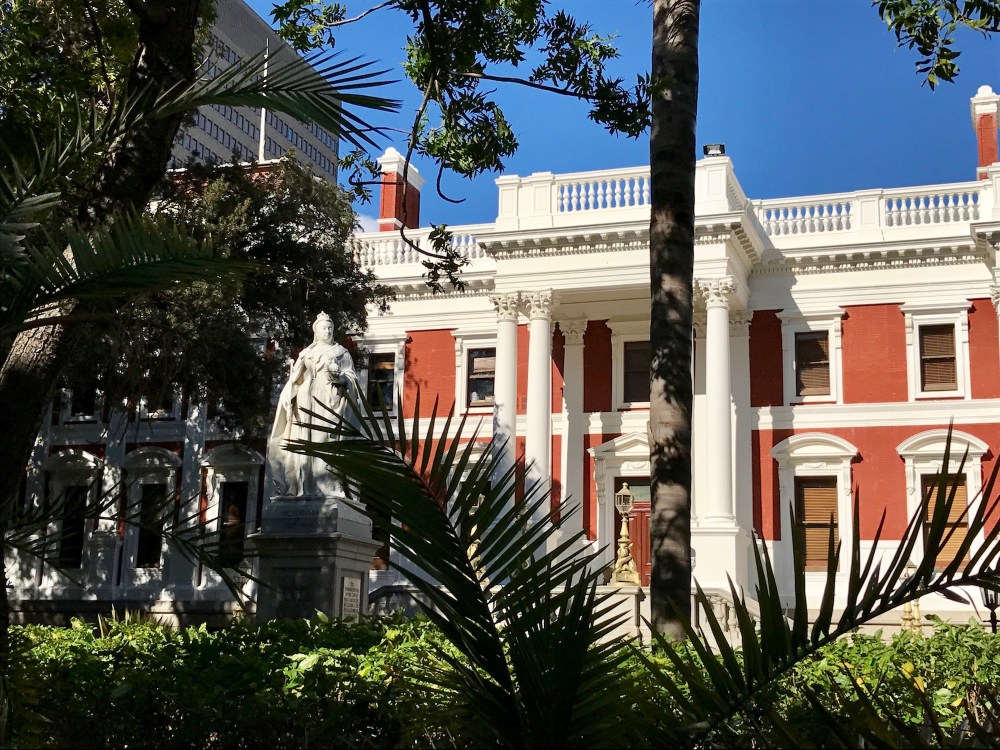

Directions: Continue on Darling Street. Turn left on Adderley Street and curve to the right. Turn left on Government Avenue.
Saint George’s Cathedral
St George’s Cathedral (in full, The Cathedral Church of St George the Martyr) is the Anglican cathedral in Cape Town, South Africa. It is the seat of the Archbishop of Cape Town.St George’s Cathedral is both the metropolitical church of the Anglican Church of Southern Africa and a congregation in the Diocese of Cape Town.
The cathedral was designed by Sir Herbert Baker and the foundation stone was laid in 1901.[1] The cathedral replaced a church built in 1834 on the same site, and is still incomplete. The cathedral’s crypt houses a jazz restaurant, and known as The Crypt.
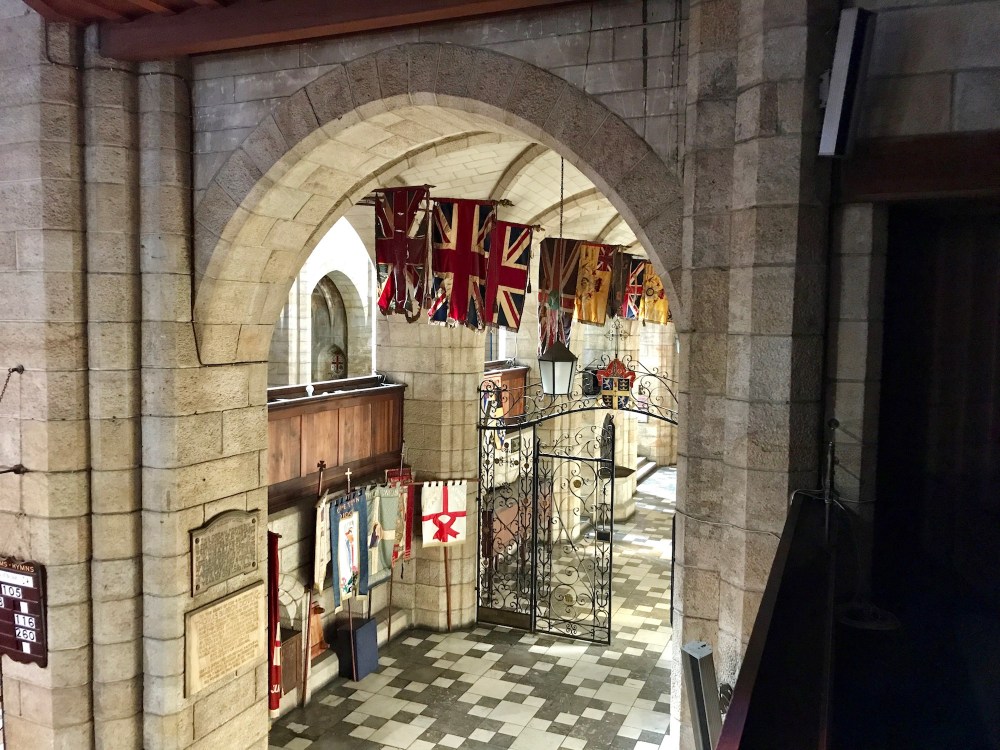

Directions: Return on Government Avenue. Turn left on Wale Street.
Long Street
Long Street is a major street located in the City Bowl section of Cape Town, South Africa. It is famous as a bohemian hang out and the street is lined with many book stores, various ethnic restaurants and bars. Restaurants include African restaurants such as Zula, and Indian restaurants such as Masala Dosa. Long Street exhibits a diversified culture and attracts tourists from all over the world. It also has a number of youth hostels which provide accommodation to an international roster of guests. Several theatres which showed anti-apartheid plays were located on the street during the 1970s and 1980s, although most have now closed and been replaced by restaurants or stores.
Architecturally it is noted for its Victorian buildings with wrought iron balconies.


Directions: Continue on Wale Street. Turn left on Long Street.
Table Mountain
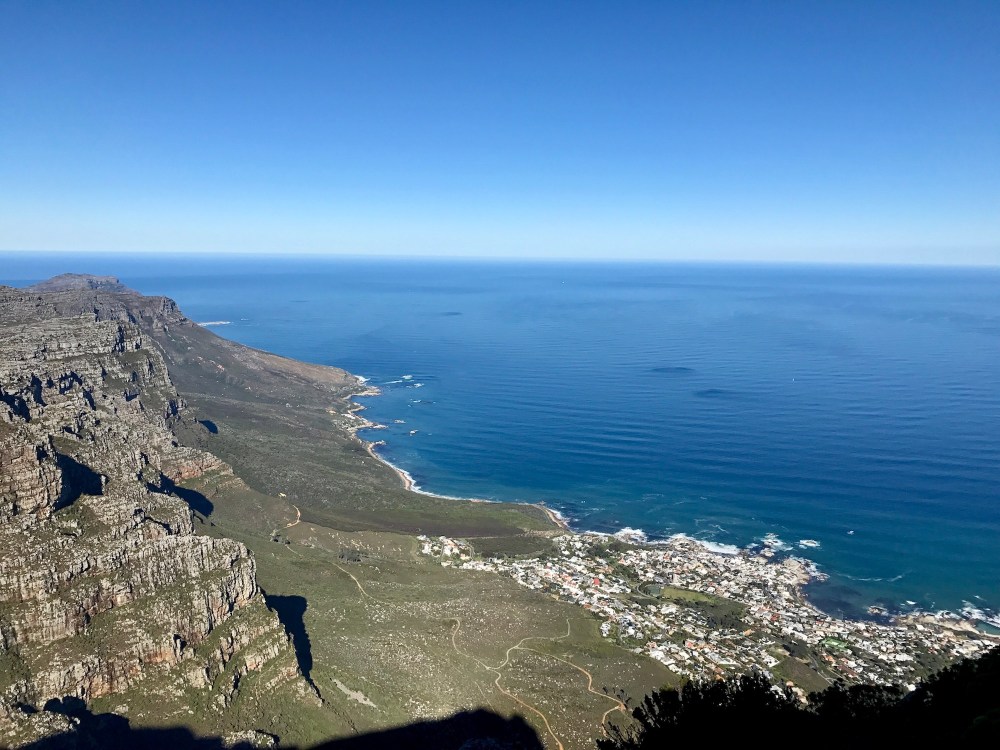
Table Mountain (Khoekhoe: Huri ‡oaxa, mountain rising from the sea; Afrikaans: Tafelberg) is a flat-topped mountain forming a prominent landmark overlooking the city of Cape Town in South Africa. It is a significant tourist attraction, with many visitors using the cableway or hiking to the top.[2] The mountain forms part of the Table Mountain National Park. Table Mountain is home to a large array of fauna and flora, most of which is endemic.
Kirstenbosch National Botanic Garden
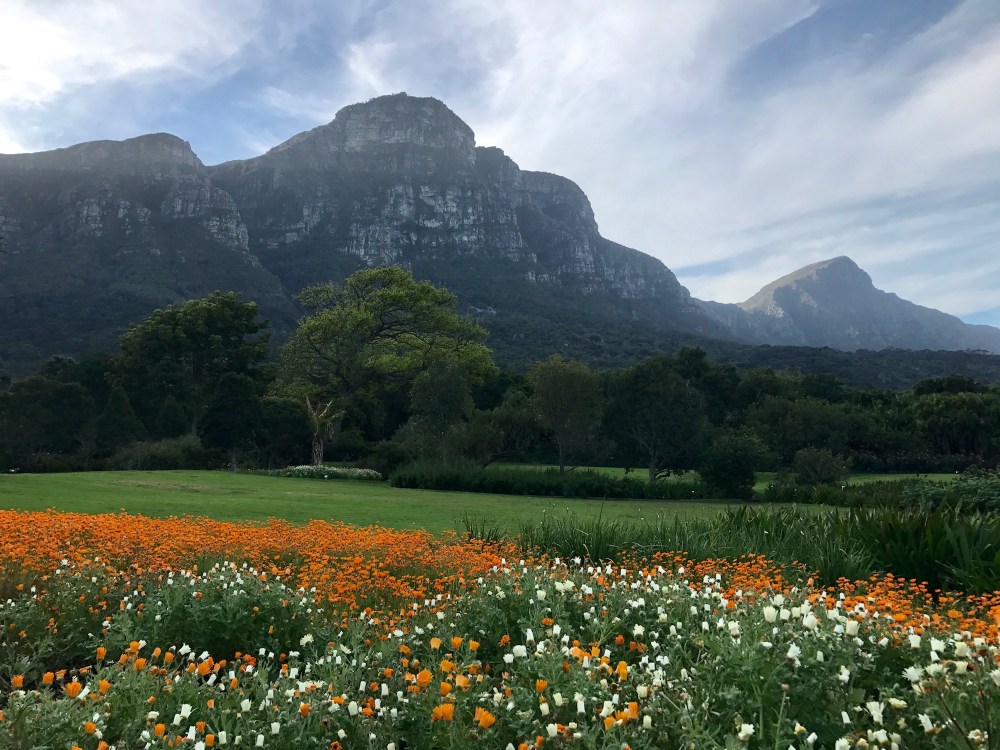
Kirstenbosch is an important botanical garden nestled at the eastern foot of Table Mountain in Cape Town. The garden is one of nine National Botanical Gardens covering five of South Africa’s six different biomes and administered by the South African National Biodiversity Institute (SANBI). Prior to 1 September 2004, the institute was known as the National Botanical Institute.
When Kirstenbosch, the most famous of the gardens, was founded in 1913 to preserve the country’s unique flora, it was the first botanical garden in the world with this ethos. Kirstenbosch places a strong emphasis on the cultivation of indigenous plants.
The garden includes a large conservatory (The Botanical Society Conservatory) exhibiting plants from a number of different regions, including savanna, fynbos, karoo and others. Outdoors, the focus is on plants native to the Cape region, highlighted by the spectacular collections of proteas.
 Eternal Horizon