Starting Point: Bo-Kaap
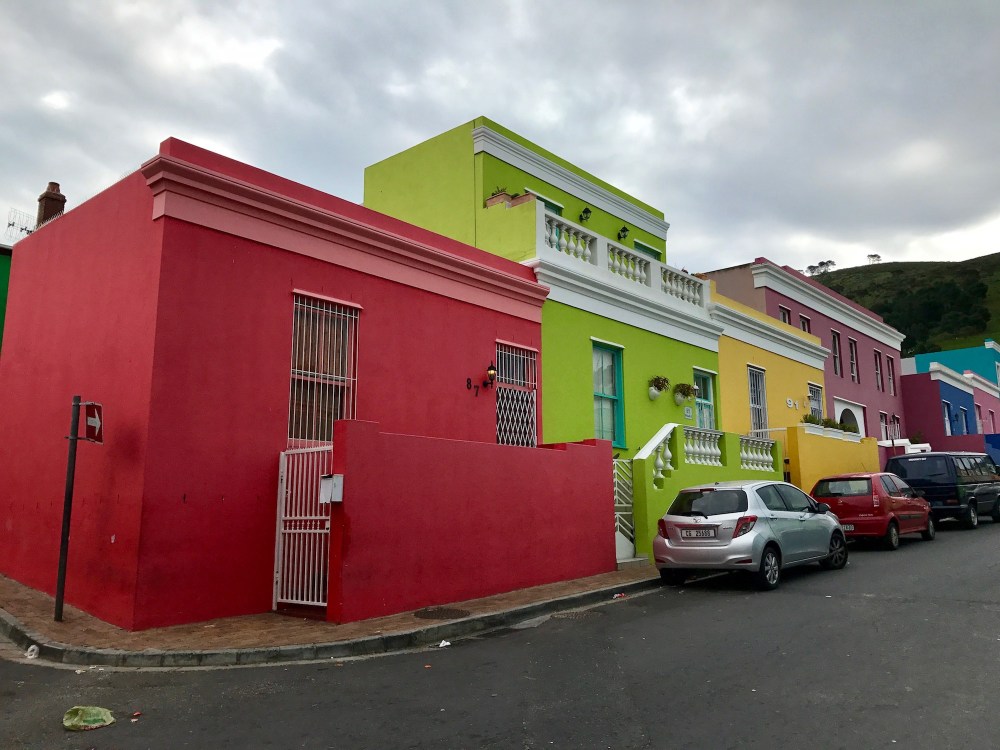
The Bo-Kaap is an area of Cape Town formerly known as the Malay Quarter. It is a former township, situated on the slopes of Signal Hill above the city center. The Nurul Islam Mosque, established in 1844, is located in the area. The area is known for its brightly coloured homes and cobble stoned streets.
Starting in 1763, several small rental houses were built here and leased to slaves, which were initially imported from Malaysia, Indonesia, and other parts of Africa. Most of the slaves were Muslim, and several mosques were built in the area, starting with the Auwal Mosque in Dorp Street in 1740. Between 1790 and 1825 more housing in both the Cape Dutch and Cape Georgian styles was built for the expanding population of tradesmen, craftsmen, and artisans. More Muslims continued to move into the area, including a wave of political exiles from Java and Ceylon circa 1820. After the emancipation in 1834 and the arrival of liberated slaves, developers constructed numerous rows of narrow, deep houses. The brightly coloured facades are attributed to and expression of freedom by the new homeowners, as all the houses were painted white while on lease.

Victoria & Alfred Waterfront
The Victoria & Alfred (V&A) Waterfront is situated on Cape Town’s Atlantic shore.
The 300 acre area in South Africa’s oldest working harbor has been developed for mixed-use, with both residential and commercial real estate. It attracts more than 23 million visitors a year. The complex houses over 450 retail outlets, including fashion, homeware and curios, to jewelry, leather goods and audio-visual equipment. The V&A Waterfront is also still a working harbor.
The site was named for Queen Victoria and her second son, Prince Alfred. Alfred visited the Cape Colony harbor in 1860 as a sixteen-year-old Royal Navy Midshipman and was the first member of the royal family to visit.

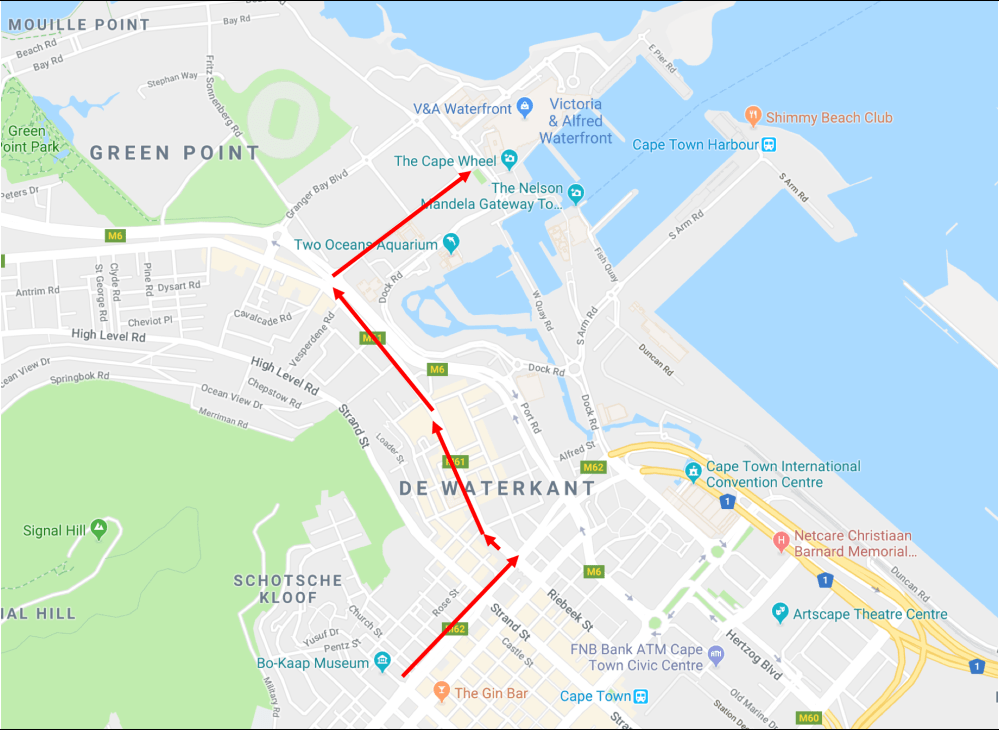
Directions: From the Bo-Kaap neighborhood, take a left on Buitengracht Street. Turn left on Somerset Road. Turn right at Portswood Road and continue.
 Eternal Horizon