Starting Point: Breakfast, Pasteleria Escribà
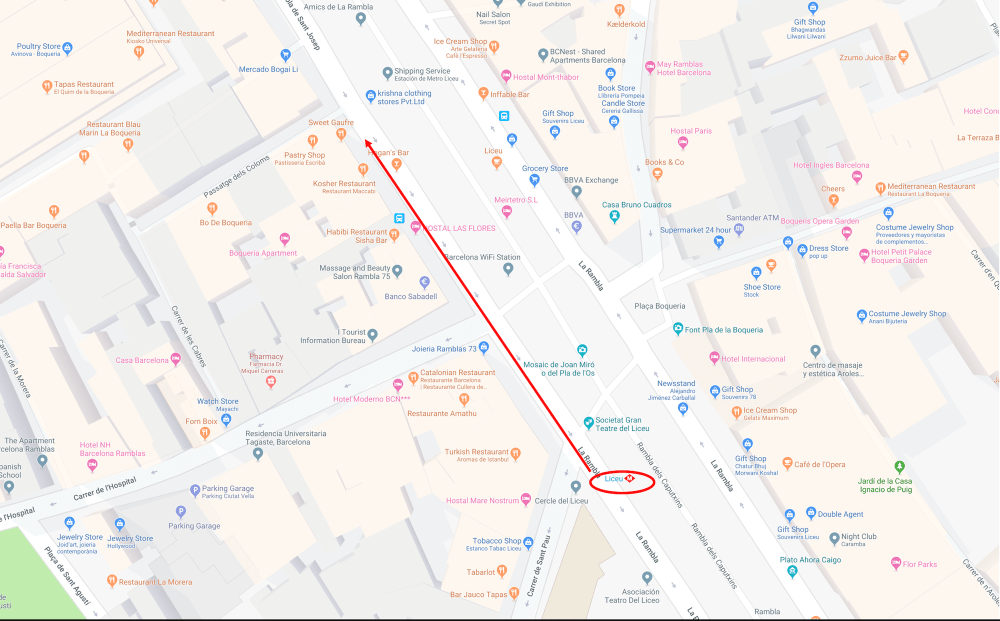
Directions: The the L3 subway line to Liceu. Go right on La Rambla.
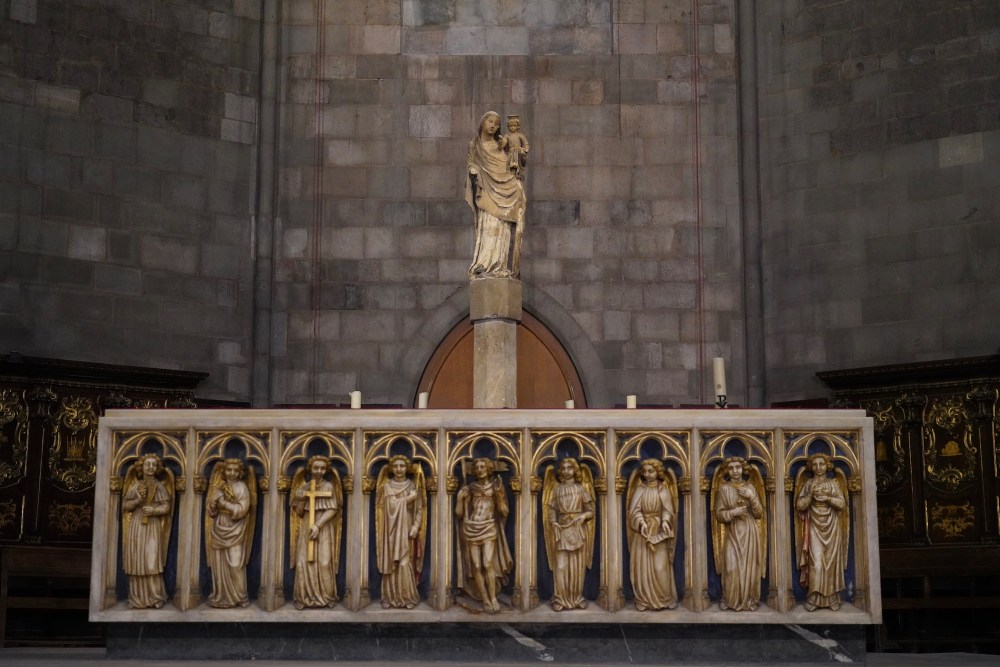
Basílica de Santa Maria del Pi
Santa Maria del Pi is a 15th-century Gothic church. The church was most built between 1319 and 1391. The earthquake in Catalonia in 1428 caused serious damage to the church, especially on the façade. It was affected by the bombings of 1714 during the war of the Spanish succession and by the explosion of a non-related ammunition dump causing the collapse of the presbistery and destroying the main altarpiece and all the ornaments that there were, although the Virgin and other images were saved. In 1936 the church was gutted by a fire deliberately set by anarchists, who wanted to destroy the building. The church was restored following the end of the Civil War.
Directions: Return on La Ramba. Turn left on Plaça de la Boqueria. Turn left on Carrer del Cardenal Casañas and follow it as it curves.

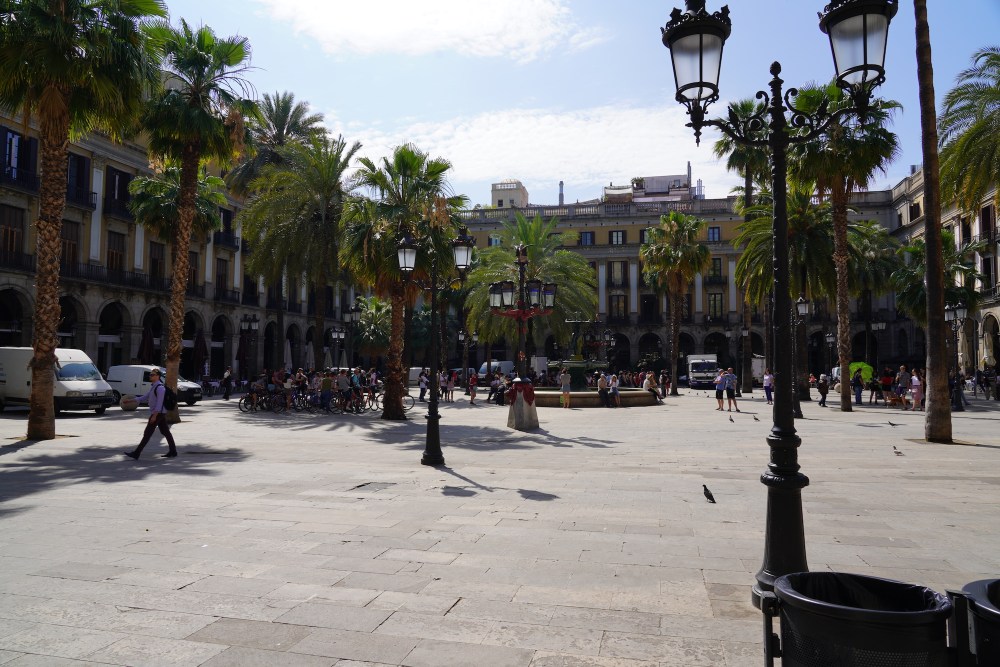
Plaça Reial
Plaça Reial is a square in the Barri Gòtic of Barcelona. It lies next to La Rambla and is a well-known tourist attraction, especially at night. On the plaza are a large number of restaurants and some of the city’s most famous nightclubs. It is also known for its many outdoor venues and is a popular meeting place during the summer and the annual La Mercè festival in September, when open-air concerts take place, and during other celebrations such as New Year’s Eve, often being very crowded.
Directions: From the church, turn right on Plaça de Sant Josep Oriol. Turn right on Carrer de la Boqueria. Turn left on Carrer del Vidre.

Columbus Monument
The Columbus Monument 197 ft tall monument to Christopher Columbus at the lower end of La Rambla. It was constructed for the Exposición Universal de Barcelona (1888) in honor of Columbus’ first voyage to the Americas. The monument serves as a reminder that Christopher Columbus reported to Queen Isabella I and King Ferdinand V in Barcelona after his first trip to the new continent.
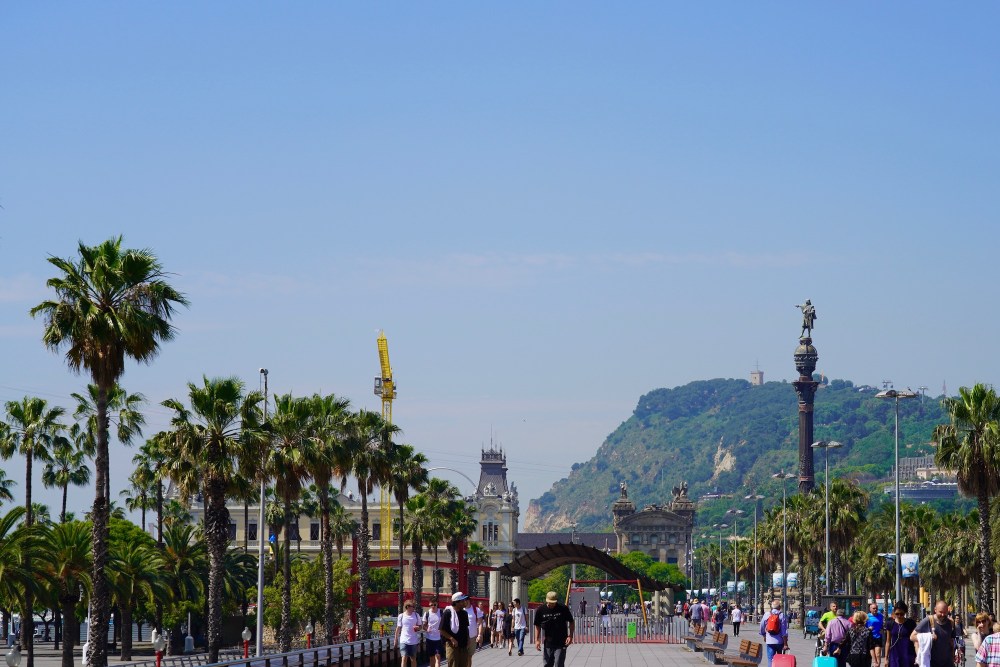
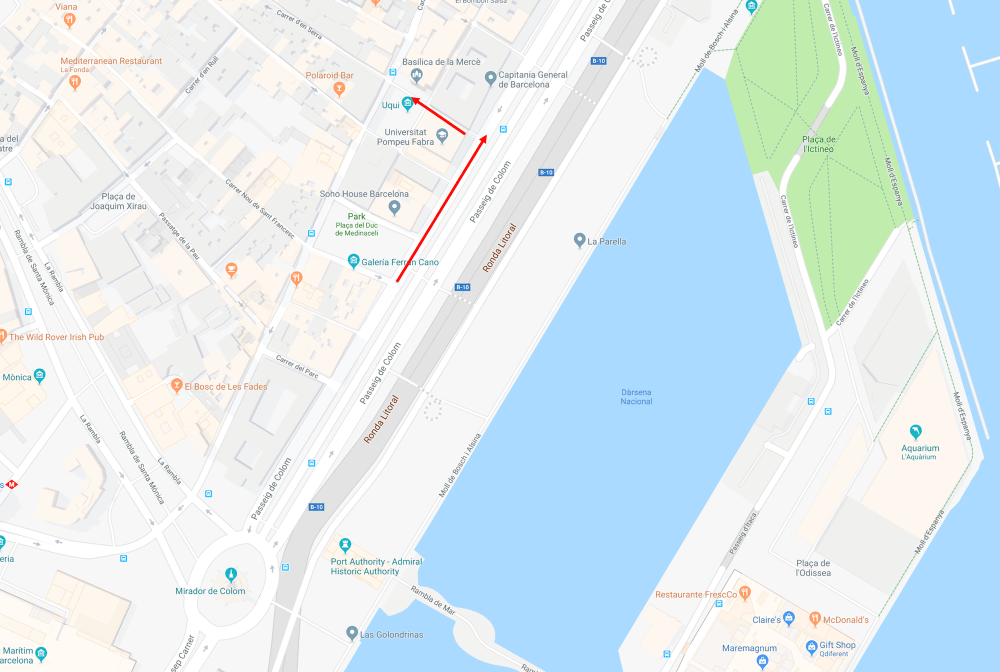
Directions: Exit on Carrer del Vidre which turns into Carrer Nou de Sant Francesc and then Plaça del Duc de Medinaceli. This will lead you to Passeig de Colom. You can see the Columbus Monument from here and walk as close to it as you would like.

Basílica de la Mercè
The Basilica of Our Lady of Mercy is a Baroque-style basilica built between 1765 and 1775. The dome of the church is crowned with the iconic statue of Our Lady that is visible from the seaside promenade.

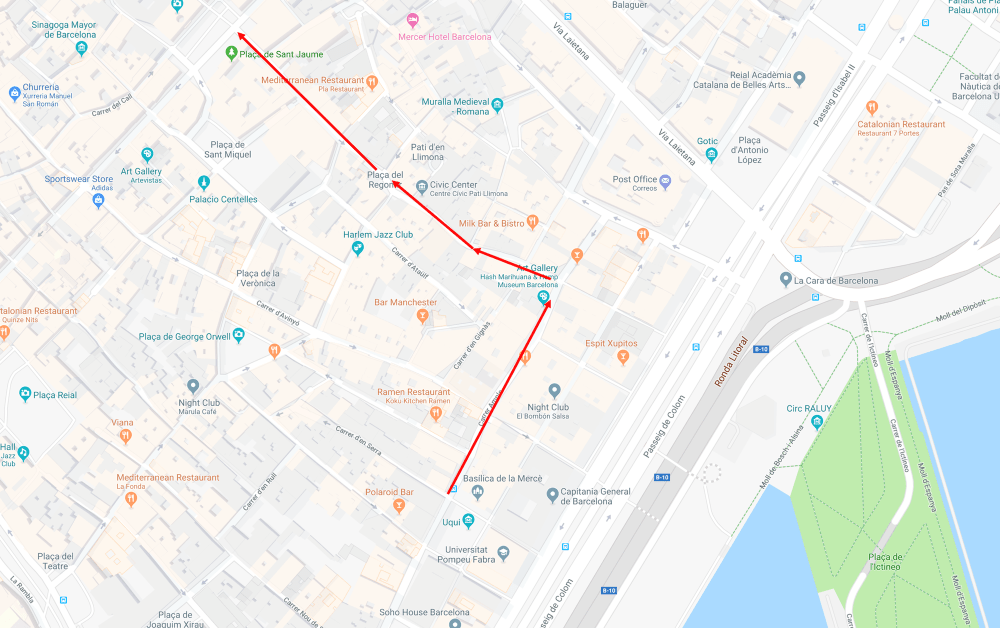
Directions: Turn left on Passeig de Colom (or turn around on Passeig de Colom if you walked closer to the Columbus Monument). Turn left on Carrer d’En Boltres.
Plaça de Sant Jaume
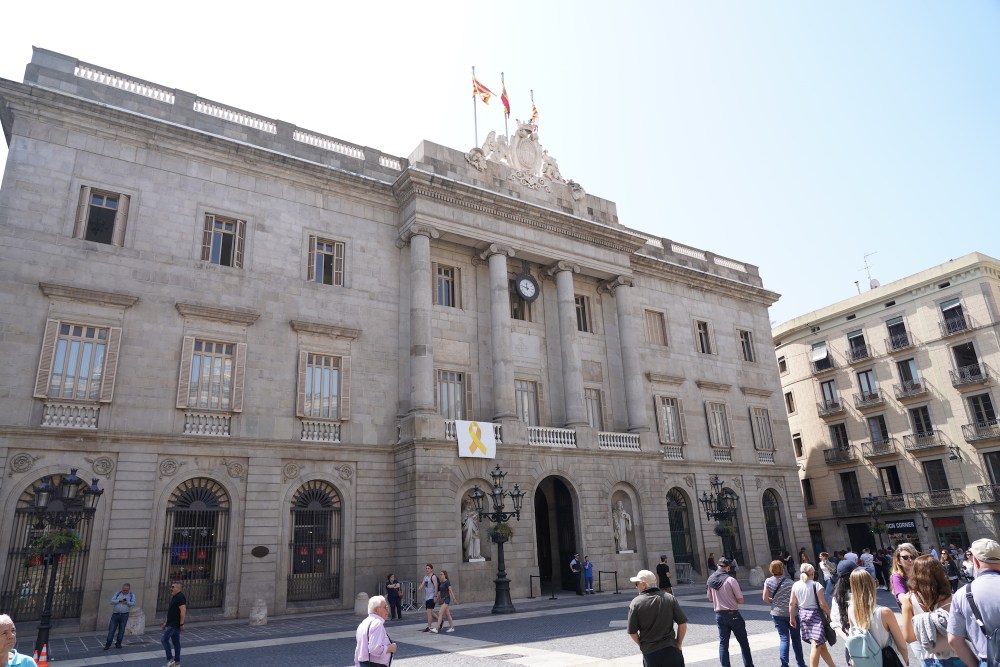
The Plaça de Sant Jaume is a square at the center of the Old City of Barcelona and the administrative heart of both the city and surrounding Catalonia. This is because the Palace of the Generalitat of Catalonia and the City Hall are located here across from one another. This square has a great historical value but it is relatively recent since its origin is from the early-19th century, when the new main façade of the City Hall was built and the former church of Sant Jaume was demolished.
Directions: Turn right on Carrer Ample. Turn left on Carrer del Regomir which becomes Carrer de la Ciutat.
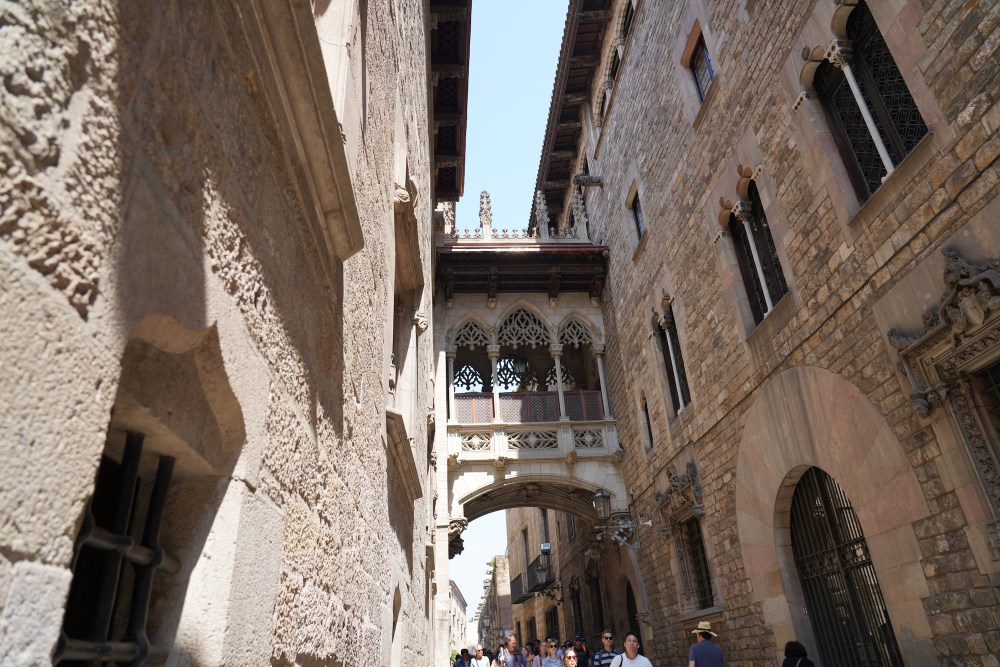
Pont Gòtic
Directions: Exit on Carrer del Bisbe.

Temple d’August
The Temple of Augustus in Barcelona was a Roman temple built during the Imperial period in the colony of Barcino (modern day Barcelona). The temple was the central building on Tàber Hill, currently in Carrer del Paradís number 10. The dedication to Augustus is traditional, but unproven. At some point the temple was demolished, and its ruins were not discovered until the late 19th century, when three of its columns appeared on the construction site of Centre Excursionista de Catalunya. A fourth column was then exhibited at the Plaça del Rei and was later added to the structure, as it can be seen nowadays.

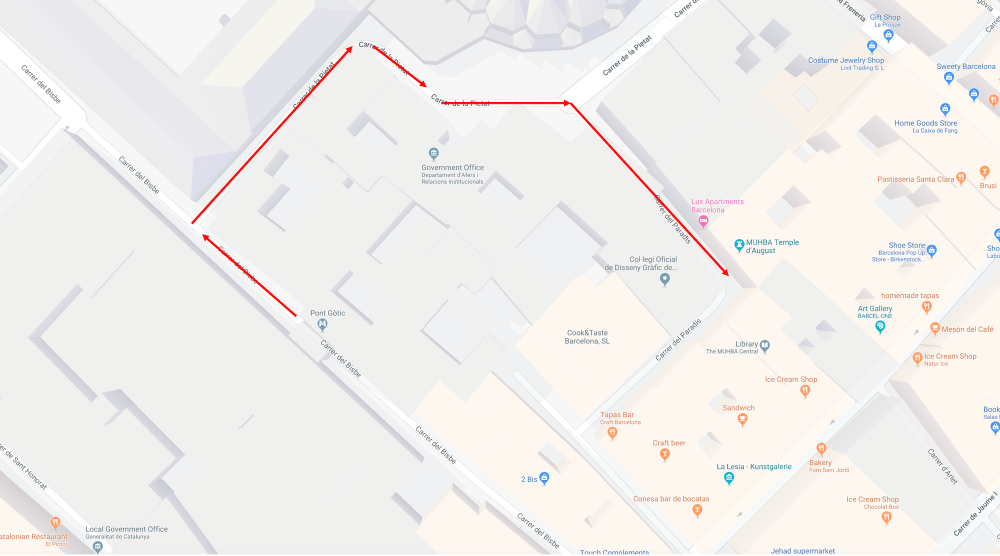
Directions: Continue on Carrer del Bisbe. Turn right on Carrer de la Pietat. Turn right on Carrer del Paradís. Follow it to the curve and go into the door on the left. The ruins are located inside of this building.
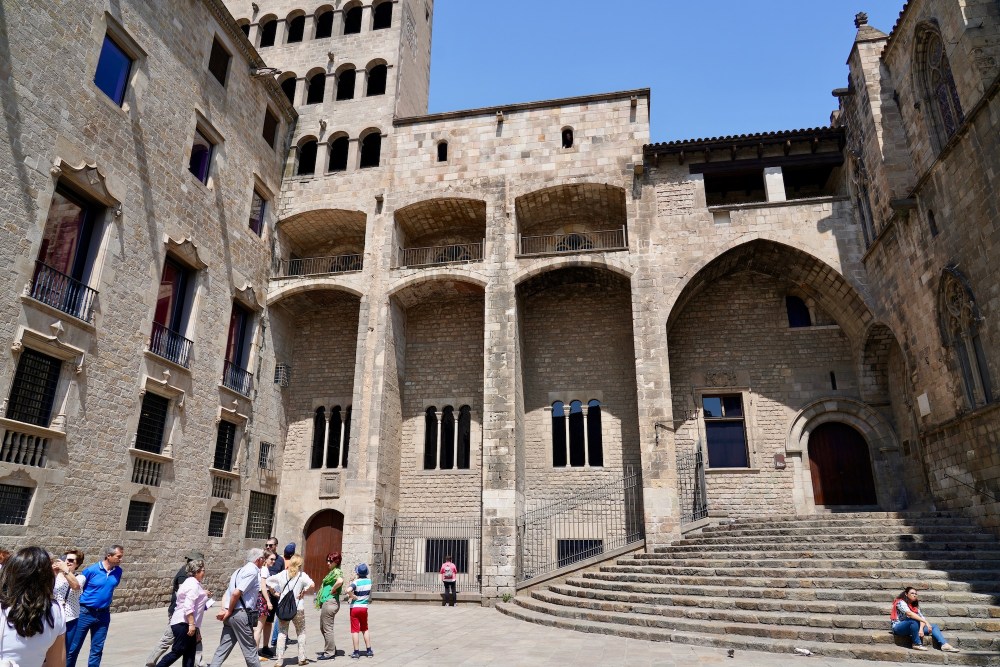
Plaça del Rei
Plaça del Rei is a 14th-century medieval public square in the Barri Gòtic. The square is surrounded by the Palau Reial Major including the Saló del Tinell, the Palau del Lloctinent (“Lieutenant’s Palace”), the 15th-century tower Mirador del Rei Martí (“King Martin’s Watchtower”), and the Capella Reial de Santa Àgata (“Royal Chapel of St Agatha”). On its southern side stands Casa Padellàs (Padellàs’s House) a 15th–16th century palazzo moved here stone by stone from Mercaders Street in 1931 and since 1943, has housed the Barcelona City History Museum.
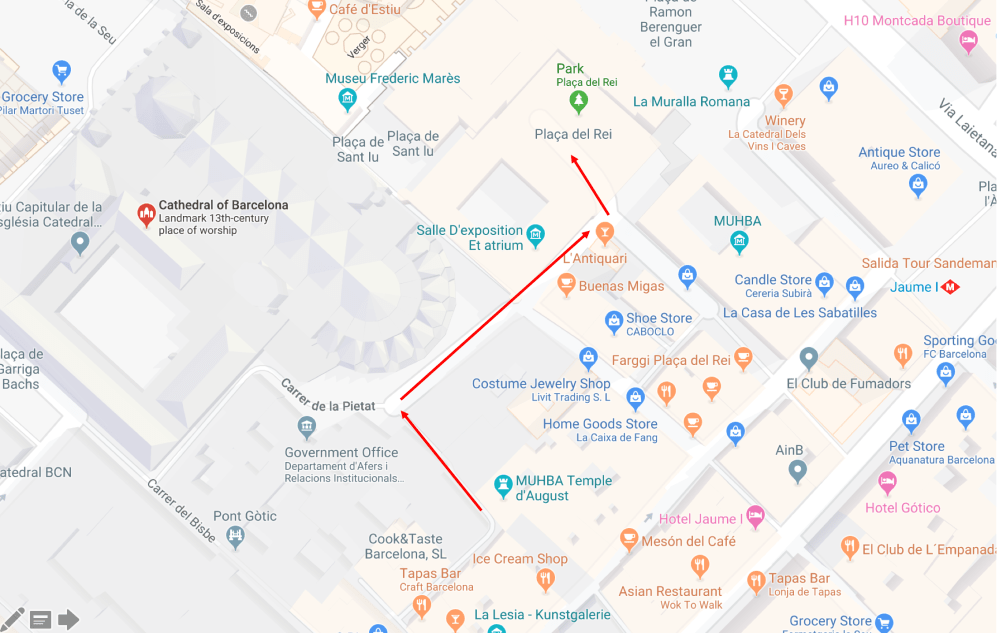
Directions: Return on Carrer del Paradís. Turn right on Carrer de la Pietat.
La Muralla Romana / Capella de Santa Àgueda
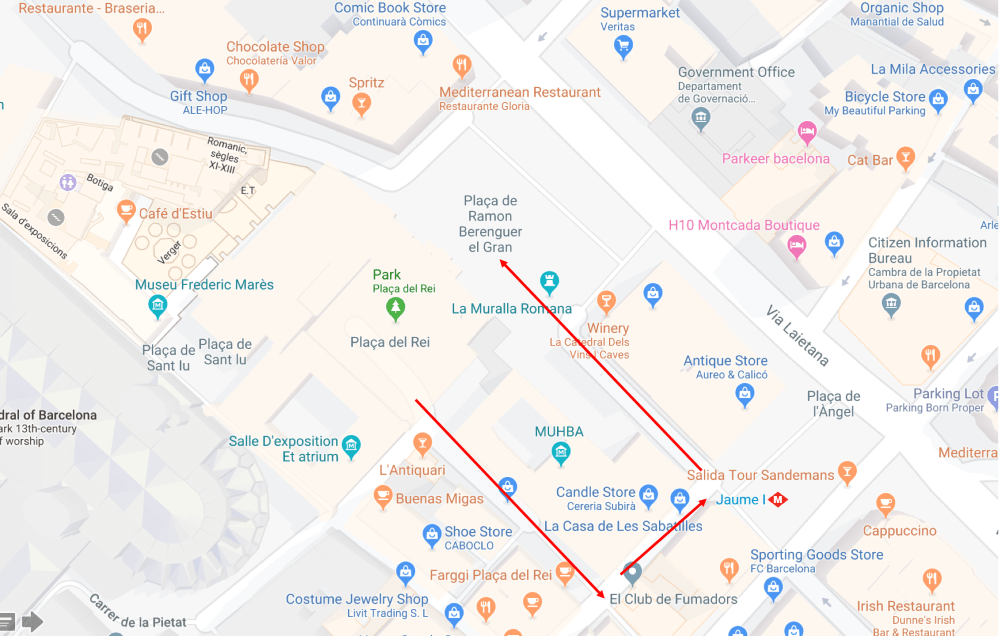
Directions: Exit on Carrer del Veguer. Turn left on Baixada de la Llibreteria. Turn left on Carrer de la Tapineria.
Cathedral of Barcelona
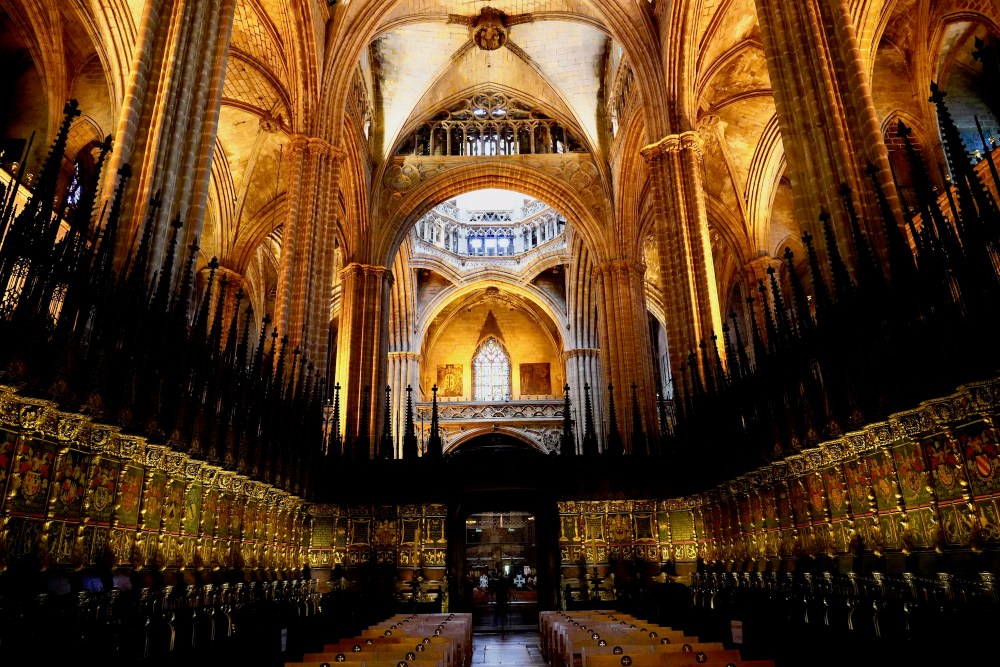
The Cathedral of the Holy Cross and Saint Eulalia, also known as Barcelona Cathedral, is the Gothic cathedral and seat of the Archbishop of Barcelona, Spain. The cathedral was constructed from the 13th to 15th centuries, with the principal work done in the 14th century. In the late 19th century, the neo-Gothic façade was constructed over the nondescript exterior that was common to Catalan churches. The roof is notable for its gargoyles, featuring a wide range of animals, both domestic and mythical. The high altar is raised, allowing a clear view into the crypt. The cathedral has a secluded Gothic cloister where 13 white geese are kept, the number explained by the assertion that Eulalia was 13 when she was martyred.
Directions: From Plaça de Ramon Berenguer el Gran, continue on Carrer de la Tapineria. Turn left on Baixada de la Canonja.
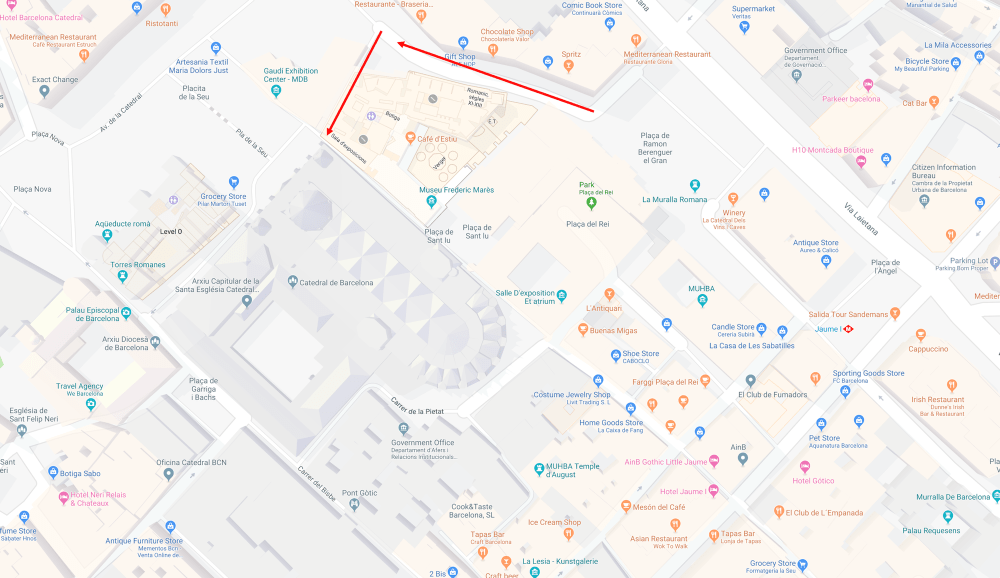
Torres Romanes, Acueducto Romano
Directions: After leaving the cathedral, turn to the left. They are located just to the left of the cathedral.
Lunch: Els 4Gats
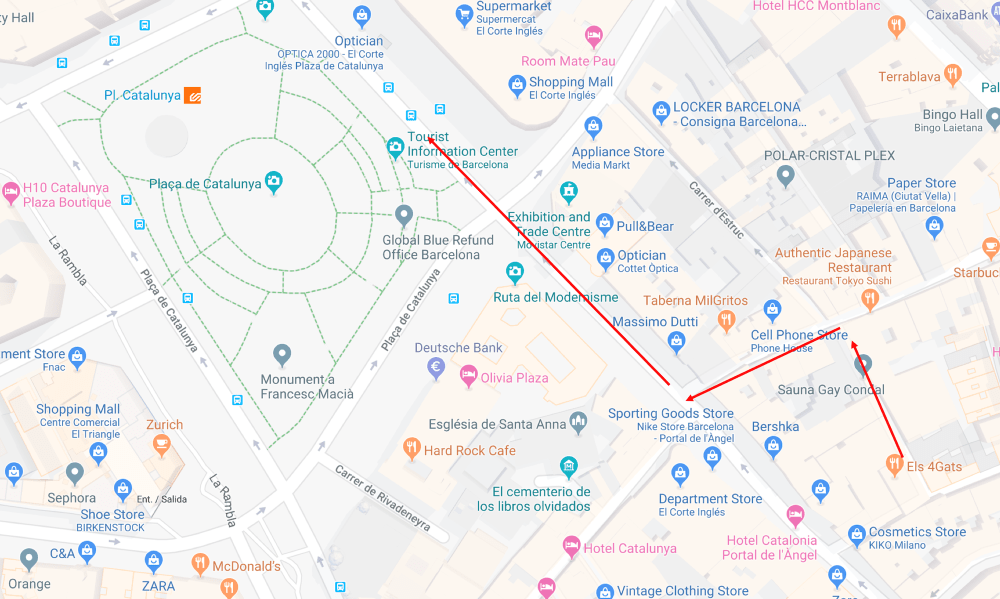
Directions: From Plaça Nova, take Carrer dels Arcs. Turn right on Avinguda del Portal de l’Àngel. Turn right on Carrer de Montsió.

Plaça de Catalunya
Directions: From Carrer de Montsió, turn left on Passatge del Patriarca. Turn left on Carrer Comtal. Turn right on Avinguda del Portal de l’Àngel.
Passeig de Gràcia
Passeig de Gràcia is one of the major avenues in Barcelona and one of its most important shopping and business areas, containing several of the city’s most celebrated pieces of architecture.

Directions: From Plaça de Catalunya, take Passeig de Gràcia.

Casa Batlló
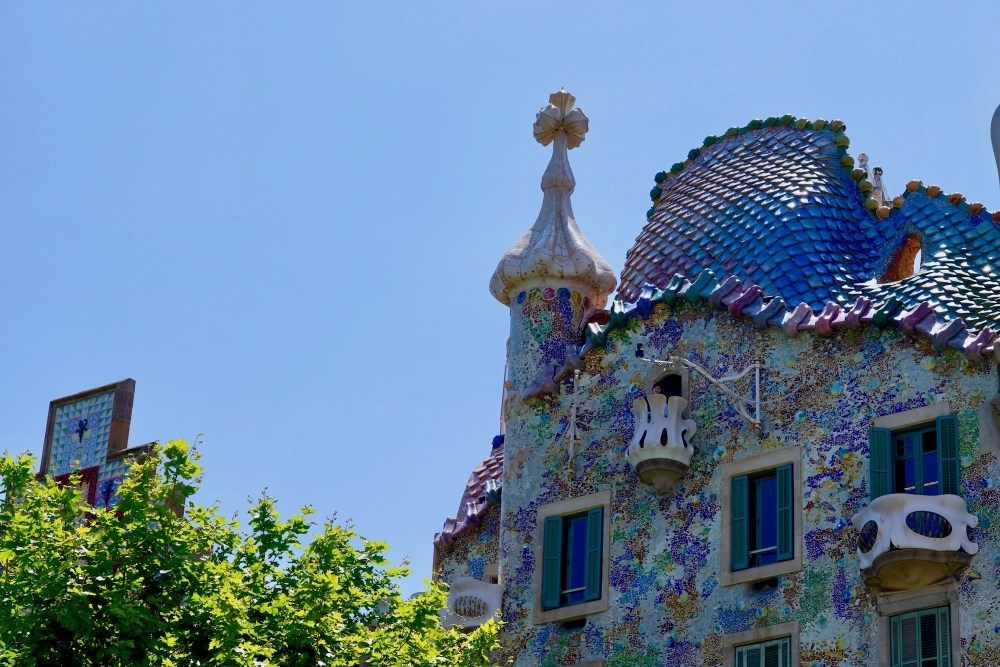
Casa Batlló was designed by Antoni Gaudí, and is considered one of his masterpieces. A remodel of a previously built house, it was redesigned in 1904 by Gaudí and has been refurbished several times after that.
Like everything Gaudí designed, it is only identifiable as Modernisme or Art Nouveau in the broadest sense. The ground floor, in particular, has unusual tracery, irregular oval windows and flowing sculpted stone work. There are few straight lines, and much of the façade is decorated with a colorful mosaic made of broken ceramic tiles (trencadís). The roof is arched and was likened to the back of a dragon or dinosaur. A common theory about the building is that the rounded feature to the left of centre, terminating at the top in a turret and cross, represents the lance of Saint George (patron saint of Catalonia, Gaudí’s home), which has been plunged into the back of the dragon.
Directions: Continue on Passeig de Gràcia.
Casa Milà
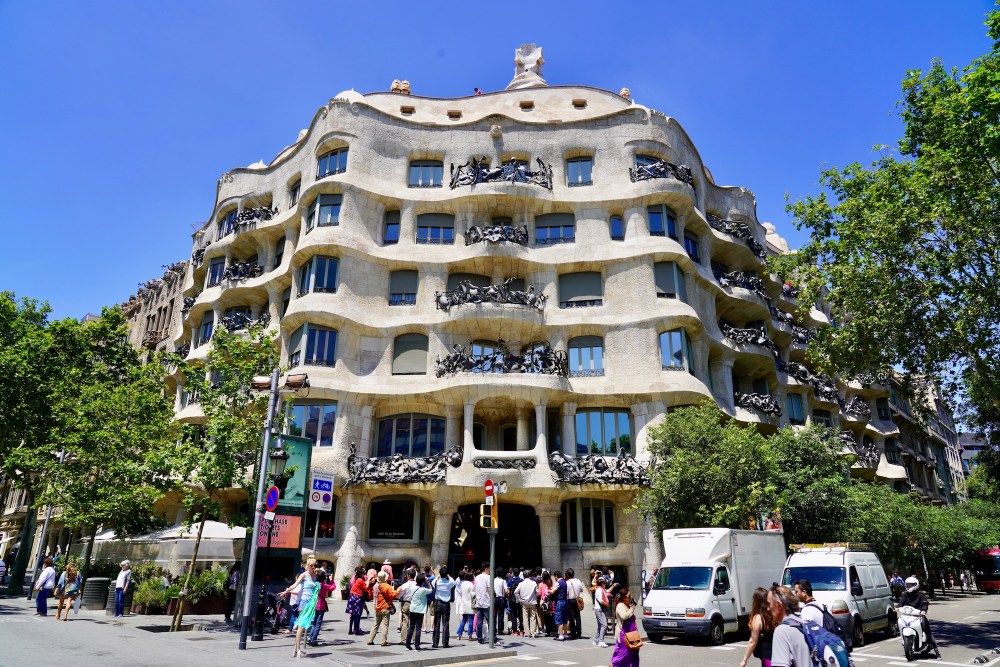
Casa Milà, popularly known as La Pedrera or “The stone quarry”, is a modernist building and the last private residence designed by architect Antoni Gaudí. It was built between 1906 and 1912.
The building was commissioned in 1906 by Pere Milà (ca; es) and his wife Roser Segimon (ca; es). At the time, it was controversial because of its undulating stone facade, twisting wrought iron balconies and designed by Josep Maria Jujol. Several structural innovations include a self-supporting stone façade, and a free-plan floor, underground garage and the spectacular terrace on the roof.
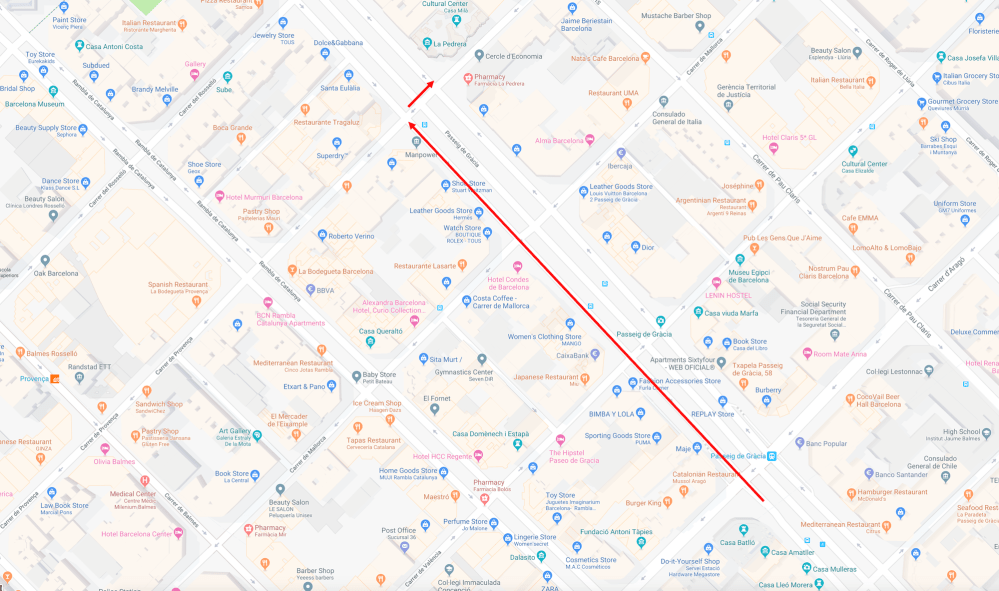
Directions: Continue on Passeig de Gràcia.
 Eternal Horizon