Starting point: Helbrunn Castle
Hellbrunn Palace (German: Schloss Hellbrunn) is an early Baroque villa of palatial size, located in a southern district of Salzburg. It was built in 1613–19 and named for the “clear spring” that supplied it. Hellbrunn was only meant for use as a day residence in summer, as the Archbishop usually returned to Salzburg in the evening, therefore, there is no bedroom in Hellbrunn. The schloss is also famous for its “watergames” in the grounds, which are a popular tourist attraction in the summer months. These games were conceived as a series of practical jokes to be performed on guests.
Directions: Take Bus 25 to Schloss Hellbrunn
Restaurant Stiegkeller (lunch)
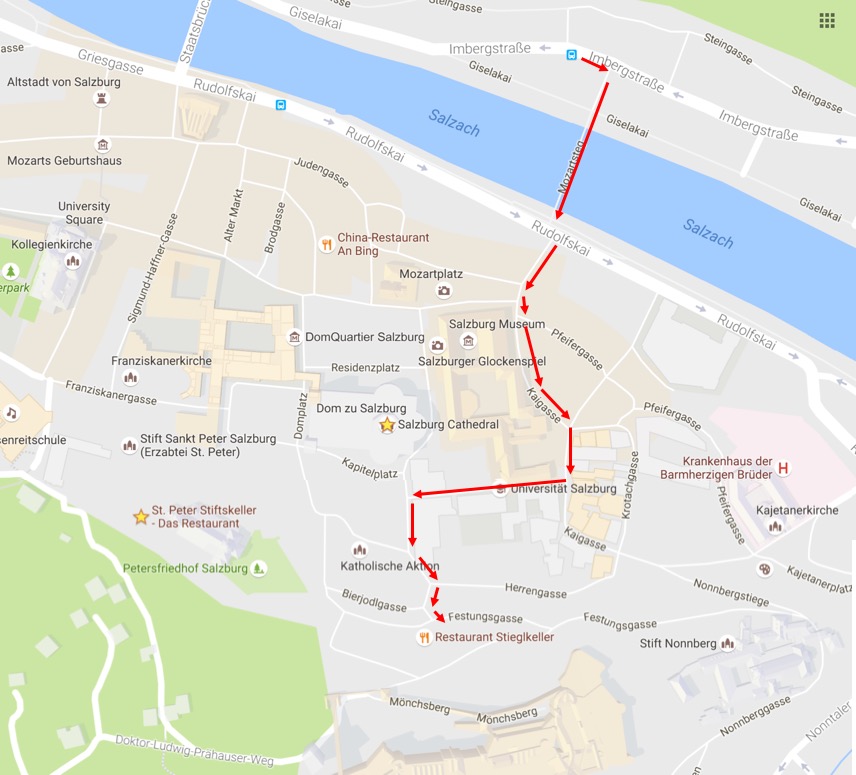
Website Hours Menu ReservationsDirections: Take Bus 25 towards Hauptbahnhof. From Imbergstrasse, take a right on Mozartsteg. After crossing the bridge, continue forward through Mozartplatz and keep left on Kaigasse. Turn right on Kapitelgasse. Then turn left on Kapitelplatz. Turn right on Bierjodlgasse. Turn right on Festungsgasse and arrive at Restaurant Stiegkeller.
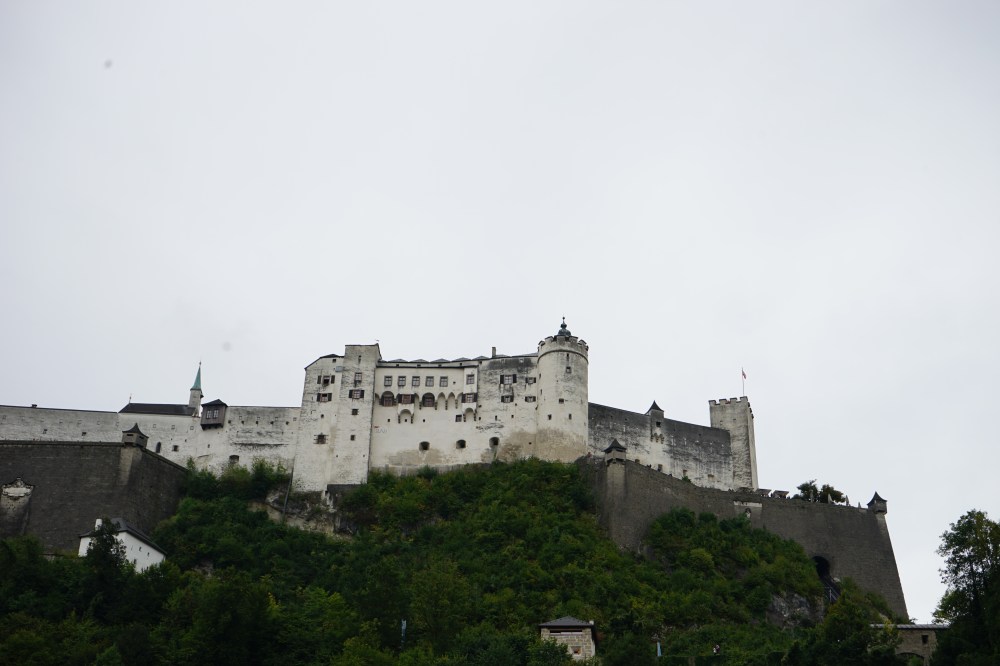
Hohensalzburg Castle
Hohensalzburg Castle (German: Festung Hohensalzburg) sits atop a small hill in Salzburg. It is one of the largest medieval castles in Europe. Construction of the fortress began in 1077. The castle was gradually expanded during the following centuries. The ring walls and towers were built in 1462. The current external bastions, begun in the 16th century and completed in the 17th, were added as a precaution because of fears of Turkish Invasion. The only time that the fortress actually came under siege was during the German Peasants’ War in 1525, when a group of miners, farmers and townspeople tried to oust Prince-Archbishop Matthäus Lang, but failed to take the castle.
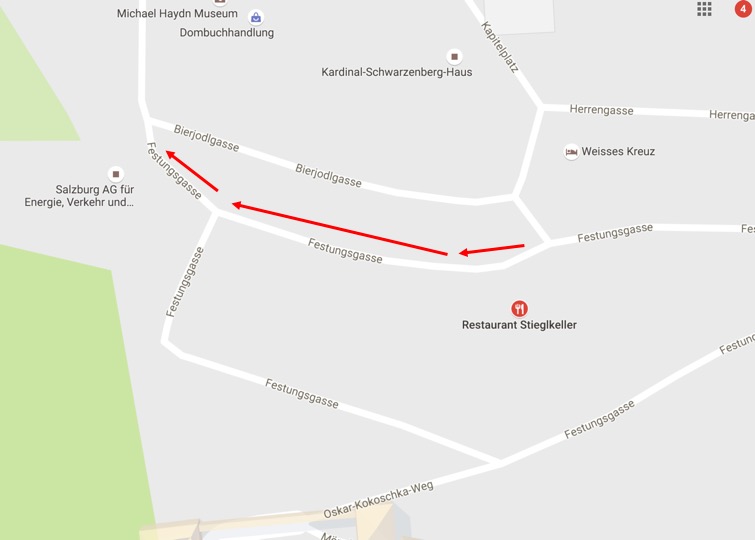
Directions: After leaving Restaurant Stiegkeller, take a left on Festungsgasse. Continue until you reach the lift to Hohensalzburg.
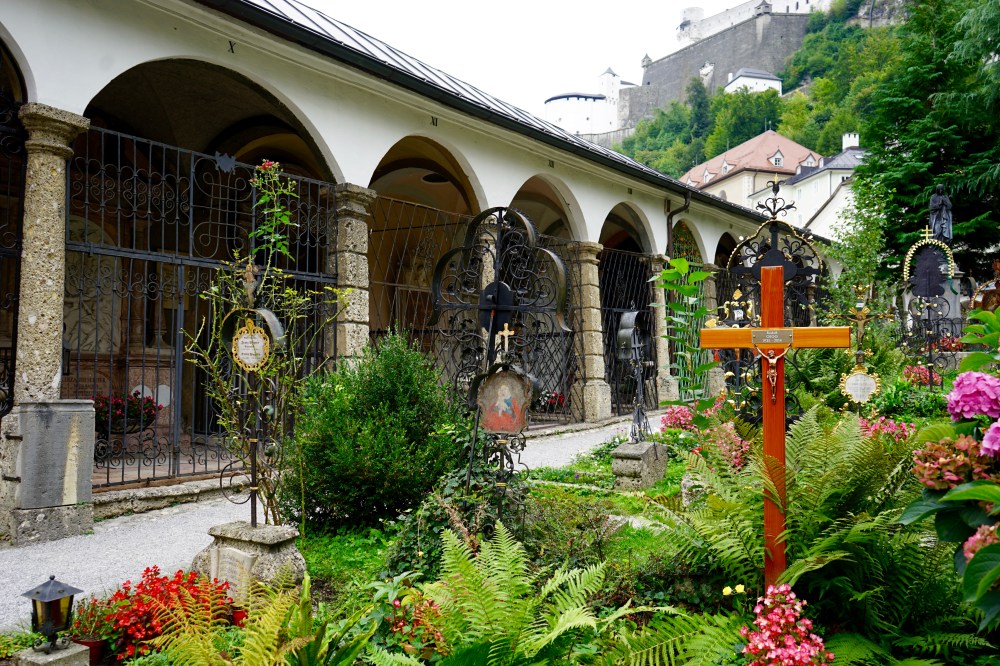
St Peter’s Cemetery
The Petersfriedhof or St. Peter’s Cemetery is – together with the burial site at Nonnberg Abbey – the oldest cemetery in the Austrian city of Salzburg. Its origins date back to about 700, when the adjacent St. Peter’s Abbey was established. The abbey’s cemetery, probably at the site of an even earlier burial place, was first mentioned in an 1139 deed, the oldest tombstone dates to 1288.
Directions: Exit through the left after you leave the lift. Then continue forward until you reach the entrance to St. Peter’s Cemetery.
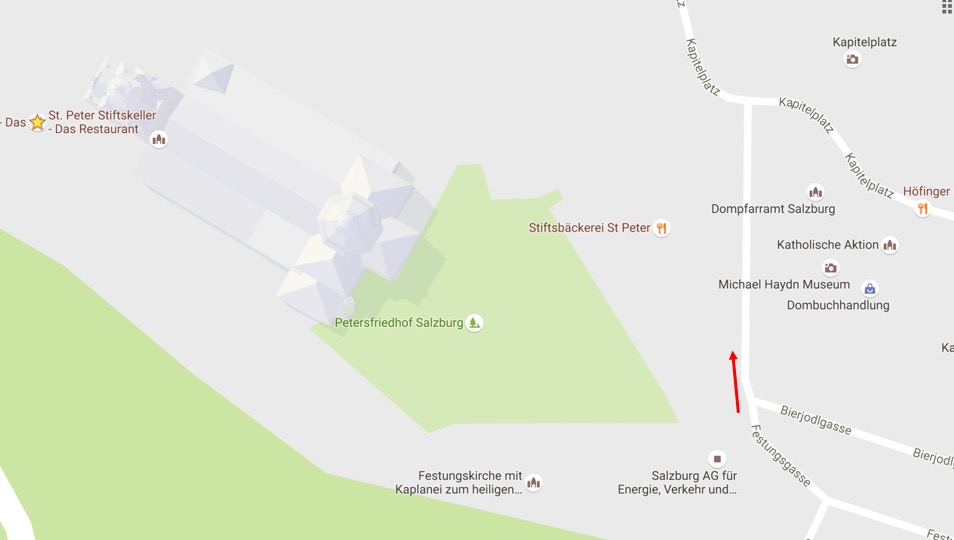
St. Peter’s Abbey
St Peter’s Abbey (German: Stift Sankt Peter) is a Benedictine monastery. It is considered one of the oldest monasteries in the German-speaking area, and the oldest with a continuous history since its foundation in 696.

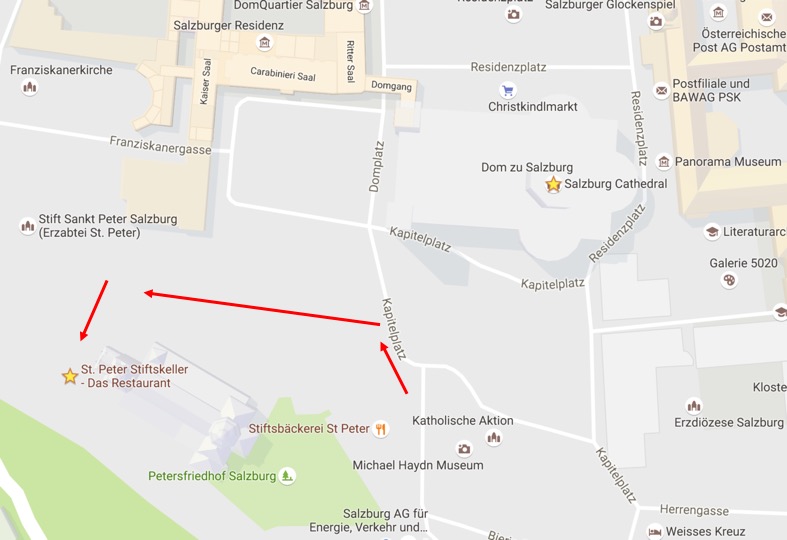
Salzburg Cathedral
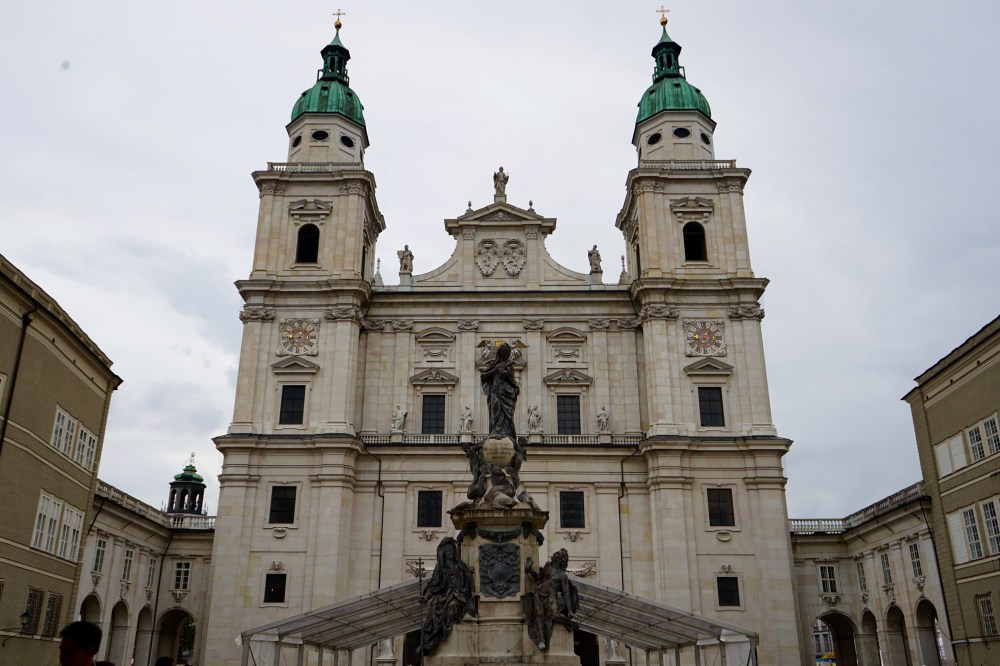
Salzburg Cathedral (German: Salzburger Dom) is the seventeenth-century Baroque cathedral dedicated to Saint Rupert and Saint Vergilius. Saint Rupert founded the church in 774 on the remnants of a Roman town, the cathedral was rebuilt in 1181 after a fire. In the seventeenth century, the cathedral was completely rebuilt in the Baroque style to its present appearance. Salzburg Cathedral still contains the baptismal font in which composer Wolfgang Amadeus Mozart was baptized.

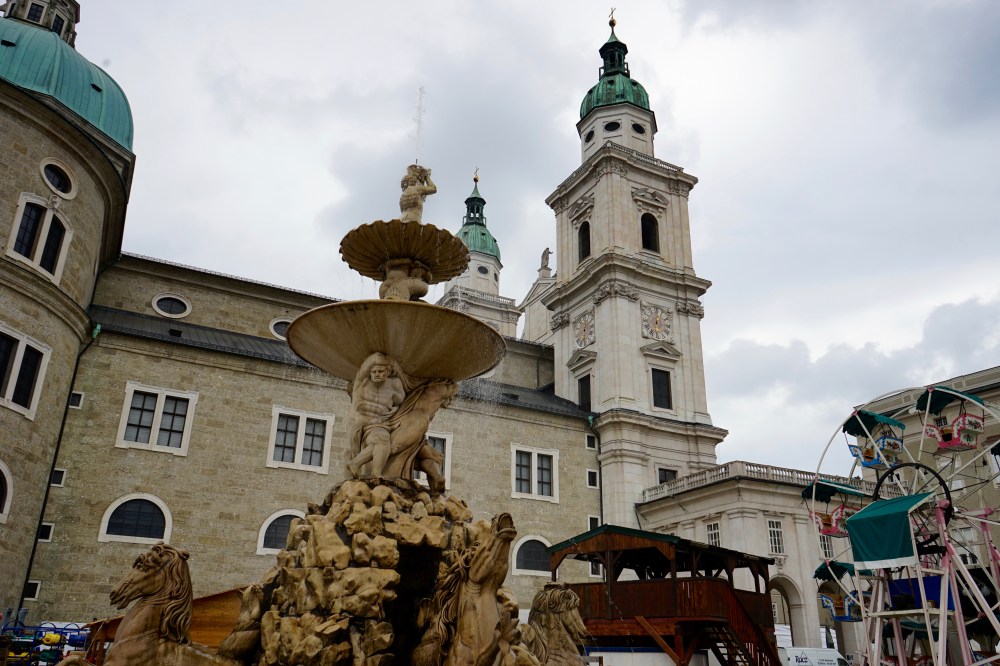
Residenzplatz
The Residenzplatz was built in 1587. In the middle of the square sits a grand baroque fountain, or ‘Residenzbrunnen’. The fountain was built between 1656 to 1661. It is made of marble, and it is considered the largest baroque fountain of Middle Europe.
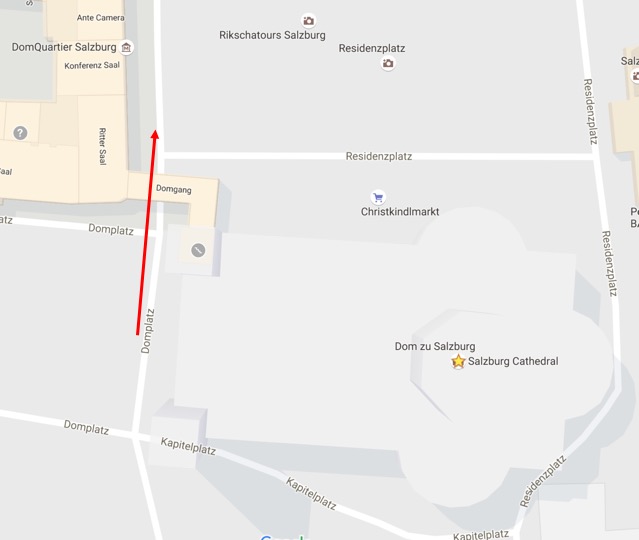
Directions: Leave Salzburg Cathedral through the front doors and turn right on Domplatz.
 Eternal Horizon