Starting point: Cafe Central
Café Central is a traditional Viennese café that occupies the ground floor of the former Bank and Stockmarket Building, today called the Palais Ferstel after its architect Heinrich von Ferstel. The café was opened in 1876, and in the late 19th century it became a key meeting place of the Viennese intellectual scene. In January 1913 alone, Josip Broz Tito, Sigmund Freud, Adolf Hitler, Vladimir Lenin, and Leon Trotsky (the latter two being regulars) were patrons of the establishment. The café closed at the end of World War II. In 1975, the Palais Ferstel was renovated and the Central was newly opened, however in a different part of the building. In 1986, it was fully renovated once again.
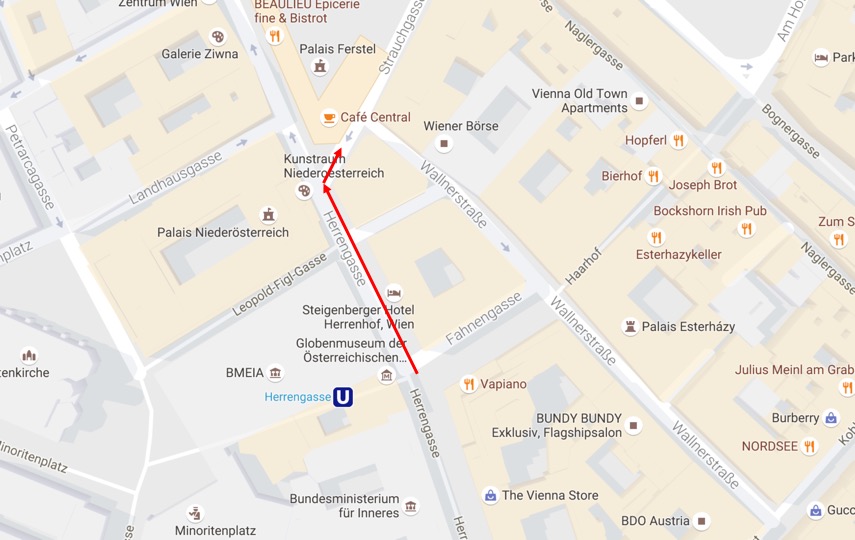
Directions: Take the U3 to Herrengasse. From the stop, walk north on Herrengasse. At Strauchgasse, you will see Cafe Central.
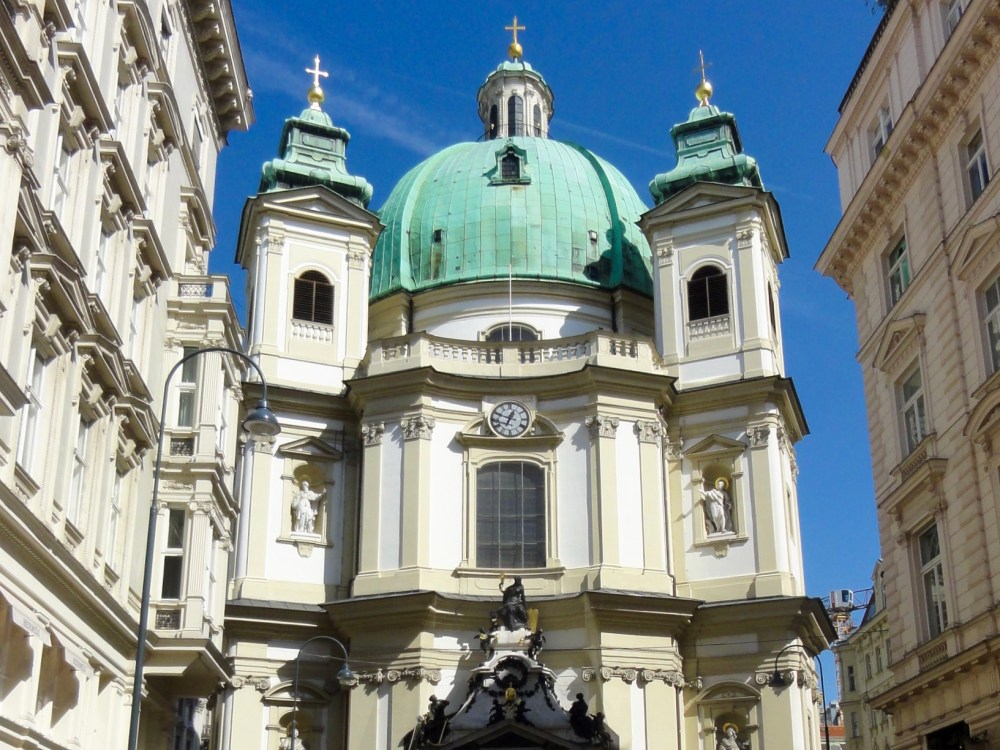
St Peter’s Church
Construction of the church began around 1701. The design was inspired by the St. Peter’s Basilica of the Vatican in Rome. By 1722, most of the building was finished, and in 1733, the Peterskirche was finally consecrated to the Holy Trinity. The new church was the first domed structure in baroque Vienna. Due to the confinement of available space, it was built in a very compact form, with its oval interior housing an astonishing amount of space and rectangular attachments. The church makes an overwhelming impression on the visitor with its surprisingly rich interior filled with golden stucco.
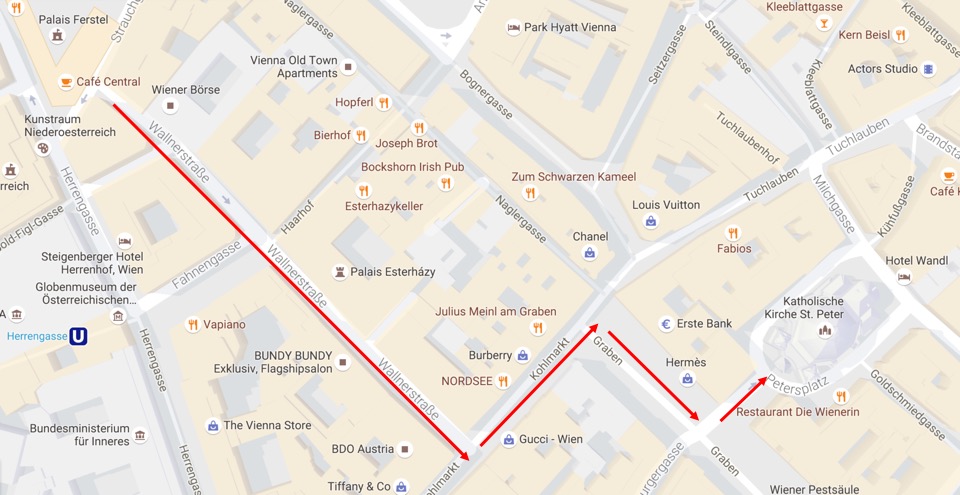
Directions: From Cafe Central, take a right on Wallnerstrasse. Take a left on Kohlmarkt and a right on Graben. Take a left on Jungferngasse. St Peter’s Church will be directly ahead.
St Stephen’s Cathedral
St Stephen’s Cathedral (German: Stephansdom) is the mother church of the Roman Catholic Archdiocese of Vienna and the seat of the Archbishop of Vienna. The current Romanesque and Gothic form of the cathedral, seen today in the Stephansplatz, was largely initiated by Duke Rudolf IV(1339–1365) and stands on the ruins of two earlier churches, the first a parish church consecrated in 1147. The most important religious building in Vienna, St. Stephen’s Cathedral has borne witness to many important events in Habsburg and Austrian history and has, with its multi-coloured tile roof, become one of the city’s most recognizable symbols.
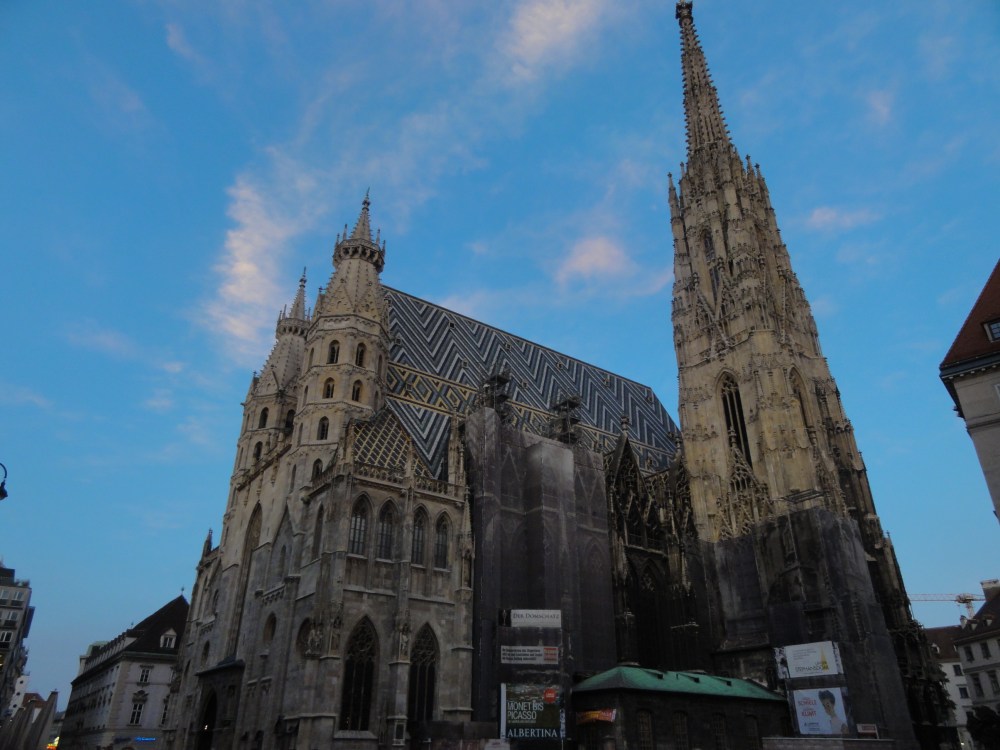
Directions: From St Peter’s Church, turn on Goldschmiedgasse until you reach Stephansplatz.
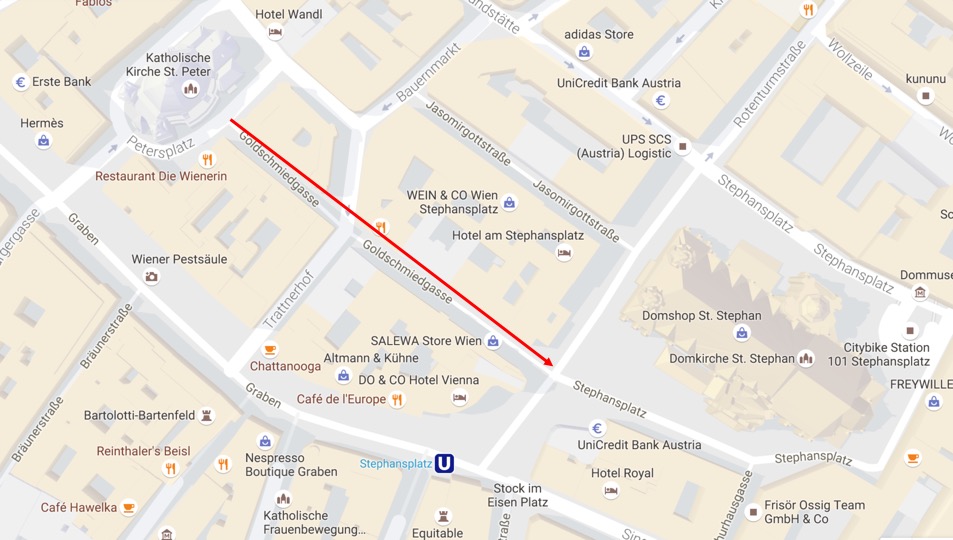
Capuchin Church
The Capuchin Church (German: Kapuzinerkirche) is a church and monastery run by the Order of Friars Minor Capuchin. Located on the Neuer Markt square in the Innere Stadt near the Hofburg Palace, the Capuchin Church is most famous for containing the Imperial Crypt, the final resting place for members of the House of Habsburg. The official name of the church is Church of Saint Mary of the Angels, but it is commonly known in Vienna as the Capuchin Church.
Directions: Leave St Stephen’s Church through the front entrance and take a left on Stephansplatz, which turns into Goldschmiedgasse Take a left on Graben/Singerstrasse and then take a quick right on Karntner Strasse. Take a right at Marco d’avians-Gasse/Neuer Markt. Capuchin Church is directly ahead.
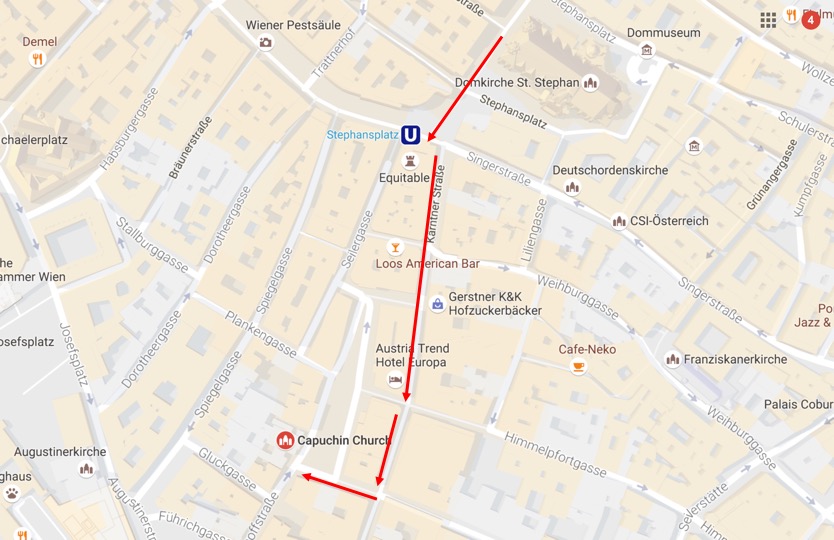
Gerstner K.U.K Hofzuckerbäcker
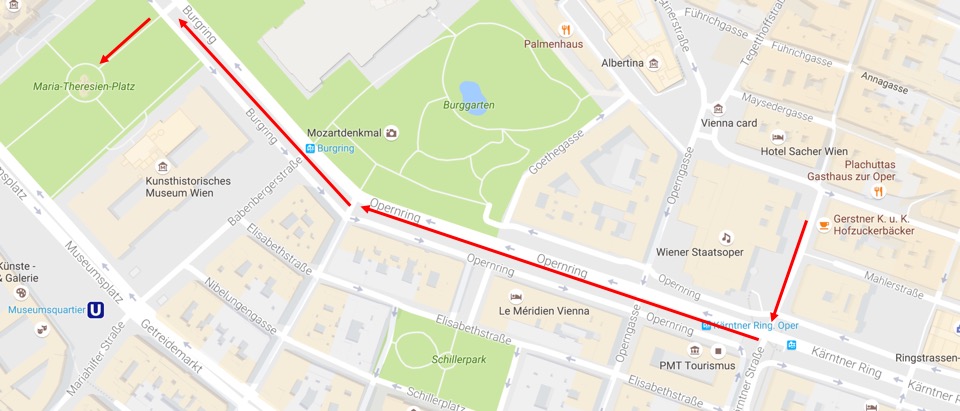
Directions: From Capuchin Church, take a right on Neuer Markt/Tegetthoffstrasse. Take a left on the Philharmoniker Strasse. Take a right on Karntner Strasse.
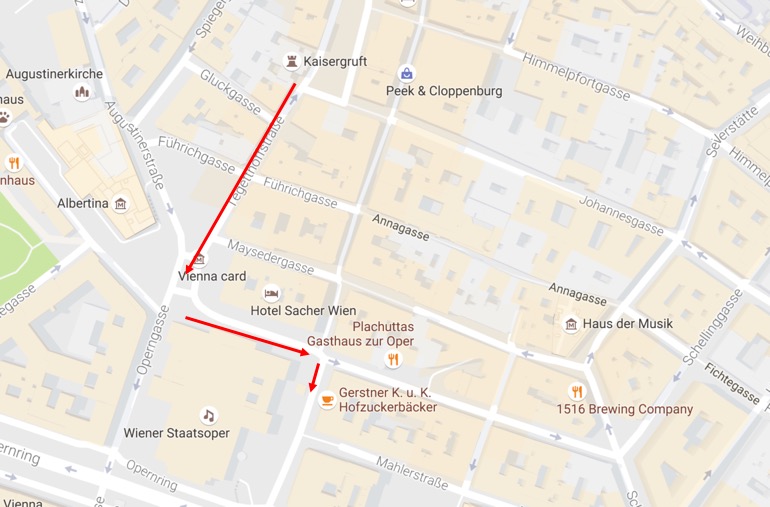
Maria-Theresien-Platz
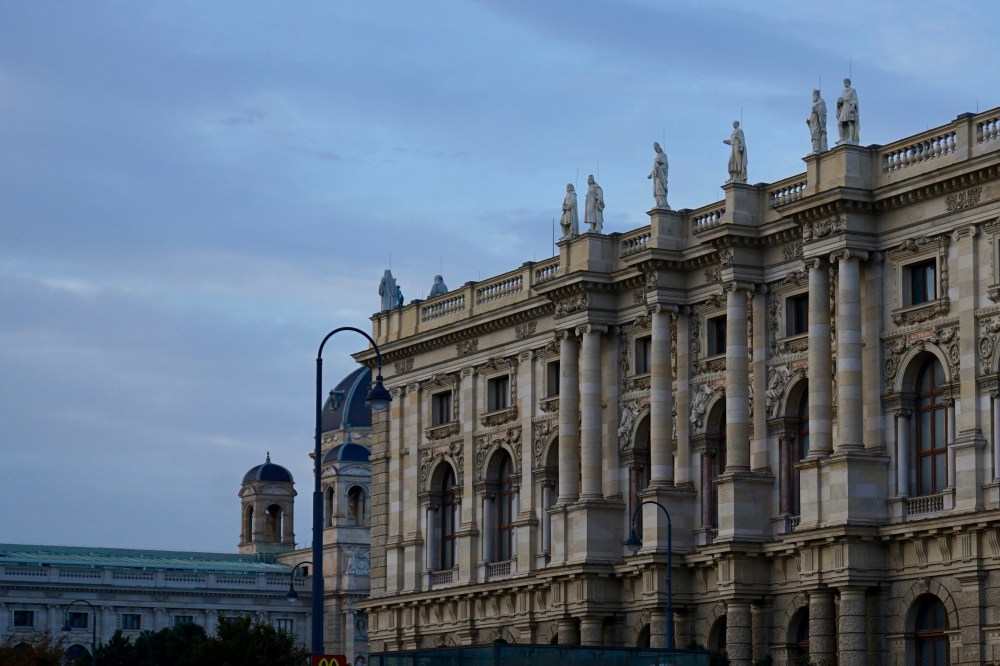
Maria-Theresien-Platz is a large public square that joins the Ringstraße with the Museumsquartier, a museum of modern arts located in the former Imperial Stables. Facing each other from the sides of the square are two near identical buildings, the Naturhistorisches Museum (Natural History Museum) and the Kunsthistorisches Museum (Art History Museum). The Naturhistorisches’ façade has statues depicting personifications of Africa, Asia, Europe, and the Americas. The Kunsthistorisches façade features famous European artists.
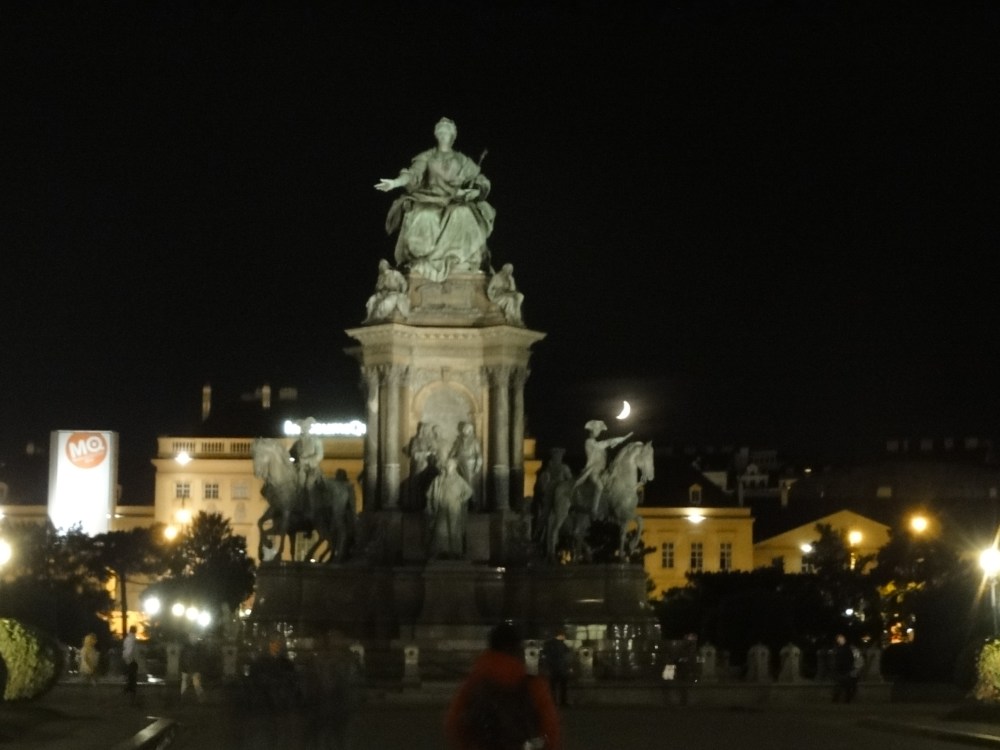
Directions: Continue down Karntner Strasse. Take a right on Opernring. Follow Opernring until it turns into Burgring. Take a left at Maria-Theresien-Platz.
MuseumsQuartier
The Museumsquartier contains Baroque buildings as well as Modern architecture. The renovation of the former court stables began in April 1998. Three years later, the Museumsquartier opened in two stages (June and September 2001). The MQ is home to a range of installations from large art museums like the Leopold Museum and the MUMOK (Museum of Modern Art Ludwig Foundation Vienna) to contemporary exhibition spaces like the Kunsthalle Wien and festivals like the Wiener Festwochen, an annual summer event that is headquartered in the MuseumsQuartier Wien.
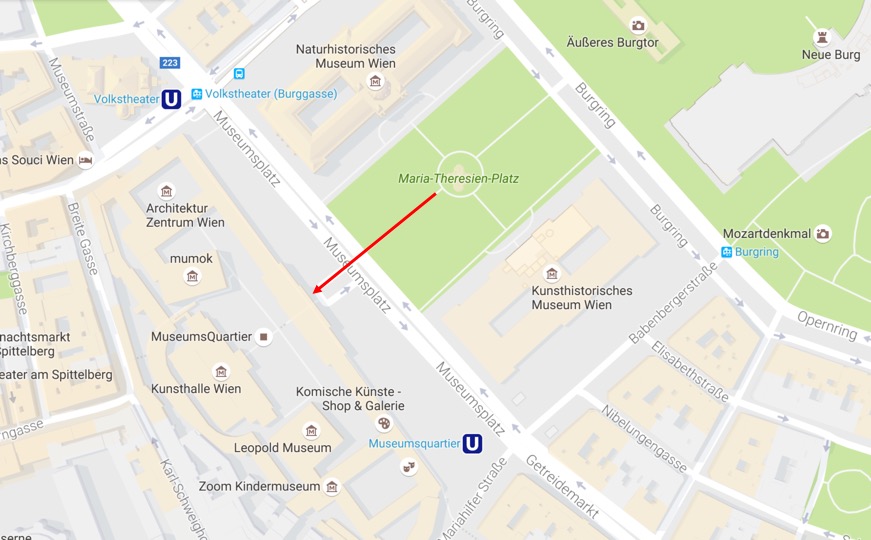
Directions: Continue walking though Maria-Theresien-Platz. Cross Museumsplatz.
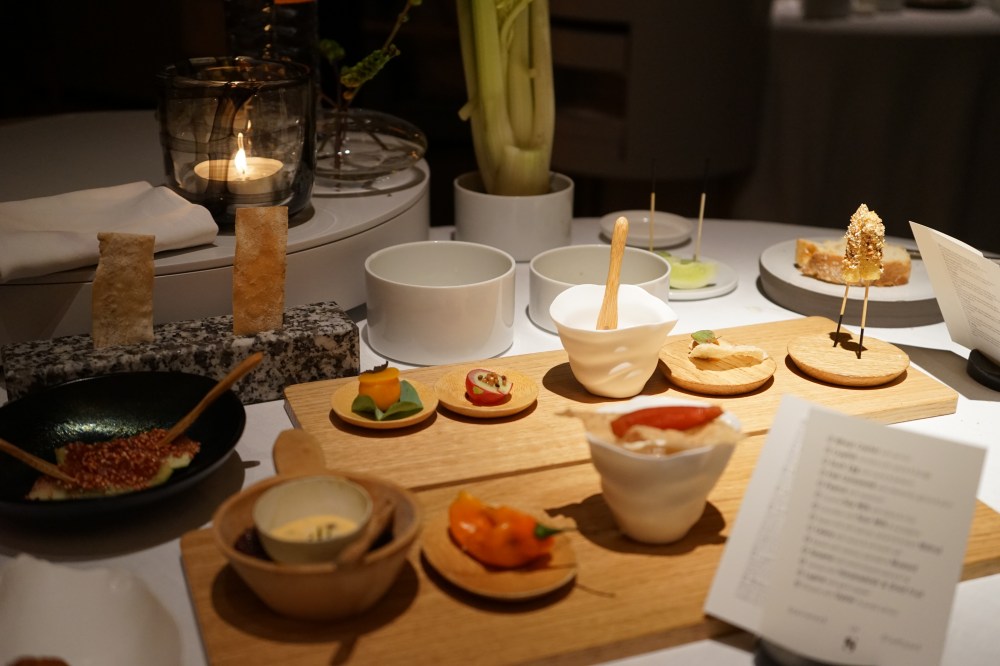
Steirereck im Stadtpark (Dinner)
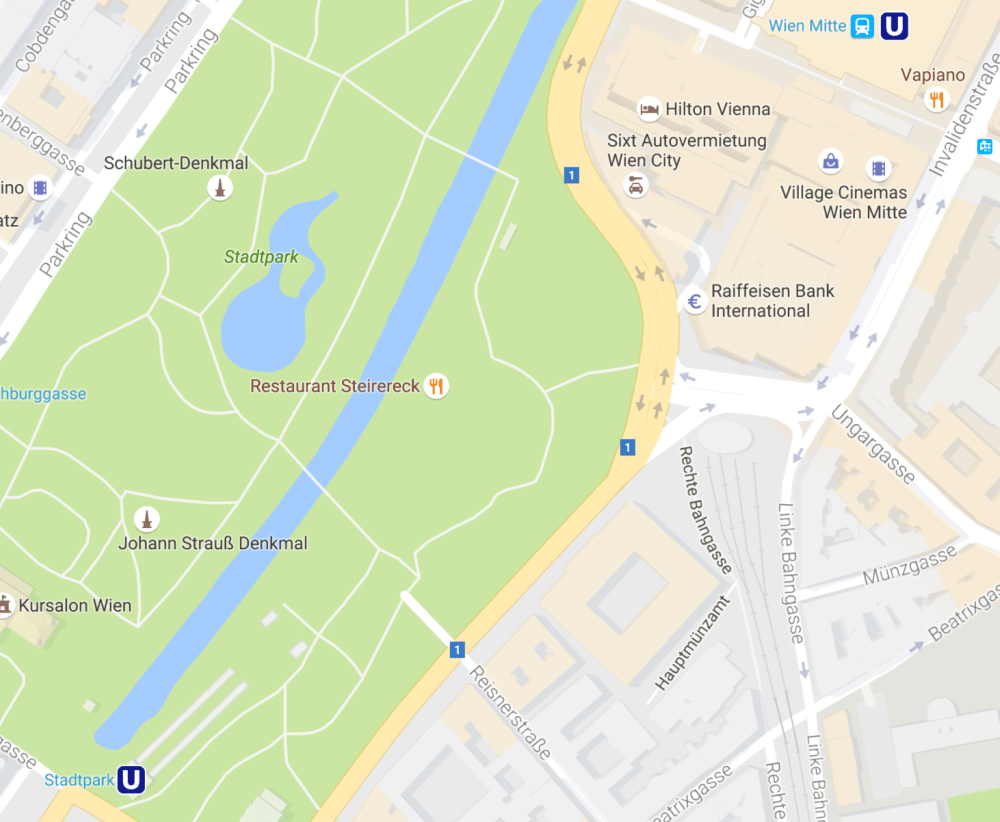
Directions: Take the U3 or U4 to Wien Mitte or the U4 to Stadtpark. The restaurant is located in the Stadtpark.
 Eternal Horizon