Starting point: Schönbrunn Palace
Schönbrunn Palace (German: Schloss Schönbrunn) is a former imperial summer residence. The 1,441-room Baroque palace is one of the most important architectural, cultural, and historical monuments in Austria. The history of the palace and its vast gardens spans over 300 years, reflecting the changing tastes, interests, and aspirations of successive Habsburg monarchs.
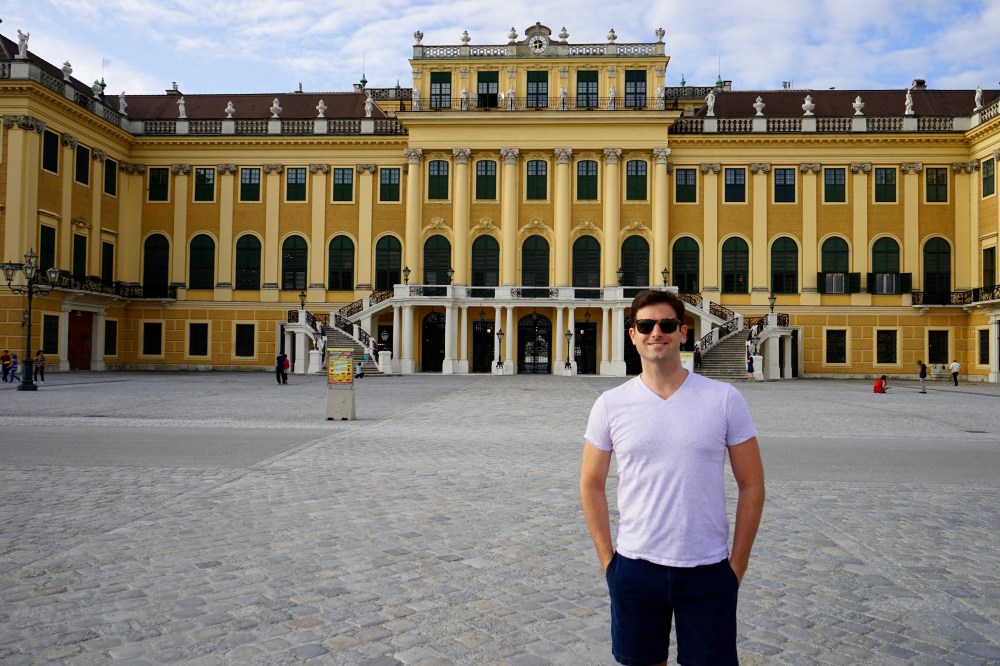
Directions: Take the U4 to Schönbrunn. From there, walk to the palace.

Demel (lunch)
Demel is a famous pastry shop and chocolaterie established in 1786 in Vienna, Austria. The company bears the title of a Purveyor to the Imperial and Royal Court (k.u.k. Hofzuckerbäcker) up to today.
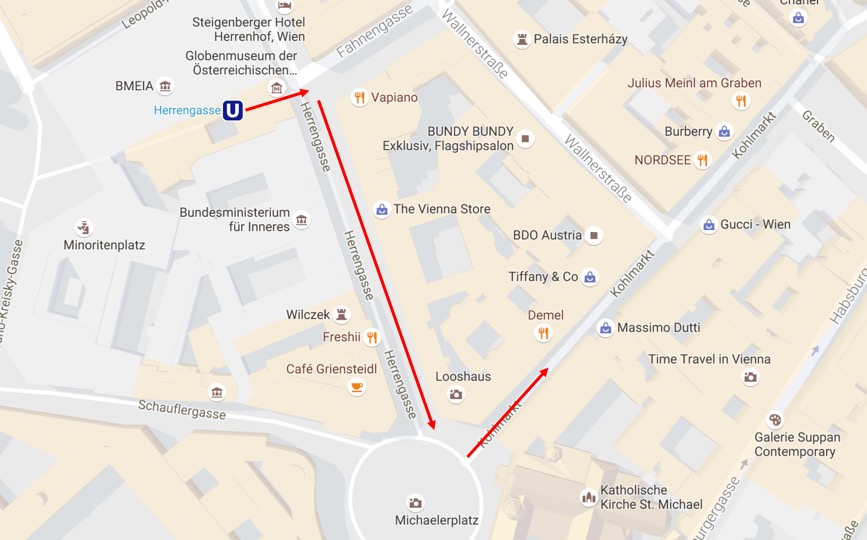
Directions: Take the U4 to Wien Mitte. From there, take the U3 to Herrengasse.
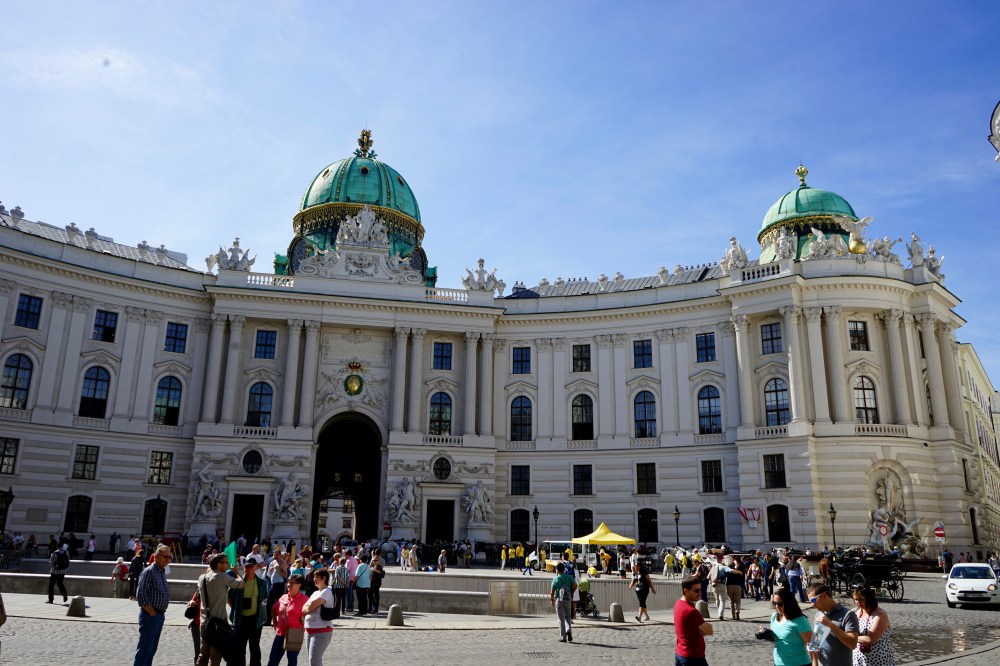
Hofburg Palace
Hofburg Palace is the former imperial palace in the centre of Vienna. Part of the palace forms the official residence and workplace of the President of Austria. Built in the 13th century and expanded in the centuries since, the palace has housed some of the most powerful people in European and Austrian history, including monarchs of the Habsburg dynasty, rulers of the Austro-Hungarian Empire. It was the principal imperial winter residence, as Schönbrunn Palace was their summer residence.
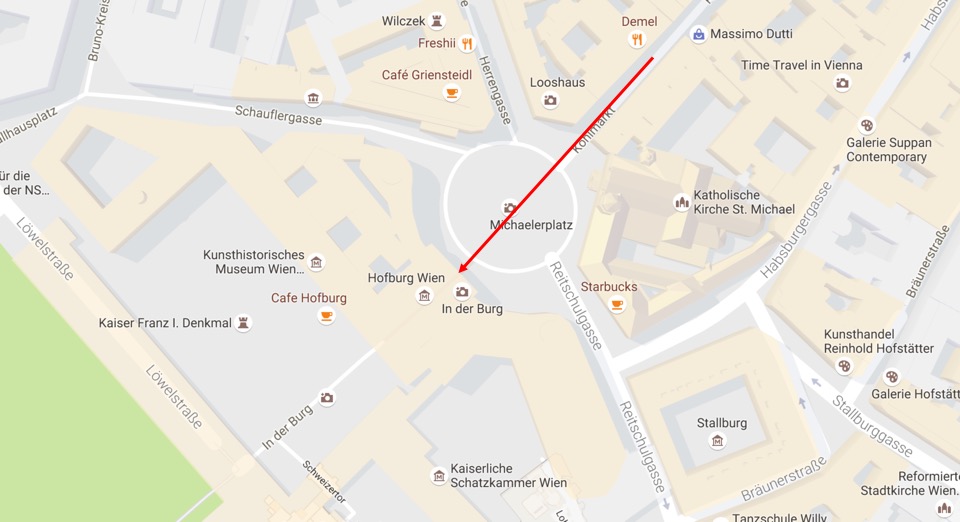
Directions: From Demel, take a right on Kohlmarkt. Continue through Michaelerplatz and enter the Homburg Palace.
Imperial Treasury
The Imperial Treasury (German: Kaiserliche Schatzkammer) at the Hofburg Palace contains a valuable collection of secular and ecclesiastical treasures covering over a thousand years of European history. The entrance to the treasury is at the Schweizerhof (Swiss Courtyard), the oldest part of the palace, which was rebuilt in the sixteenth century in the Renaissance style under Holy Roman Emperor Ferdinand I. The Imperial Treasury is affiliated with the Kunsthistorisches Museum, and houses in 21 rooms a collection of rare treasures that were compiled by the Imperial House of Habsburg over the course of centuries, including the Imperial Crown, Orb, and Sceptre of Austria, and the Imperial Regalia of the Emperors and Kings of the Holy Roman Empire, including the Imperial Crown of the Holy Roman Empire.
The Imperial Treasury is located within the Homburg Palace complex.

Spanish Riding School
The Spanish Riding School (German: Spanische Hofreitschule) is a traditional riding school for Lipizzan horses, which perform in the Winter Riding School (Winterreitschule) in the Hofburg. Not only is it a centre for classical dressage, the headquarters is a tourist attraction in Vienna that offers public performances as well as permitting public viewing of some training sessions. The presentation builds on four centuries of experience and tradition in classical dressage. The leading horses and riders of the school also periodically tour and perform worldwide.
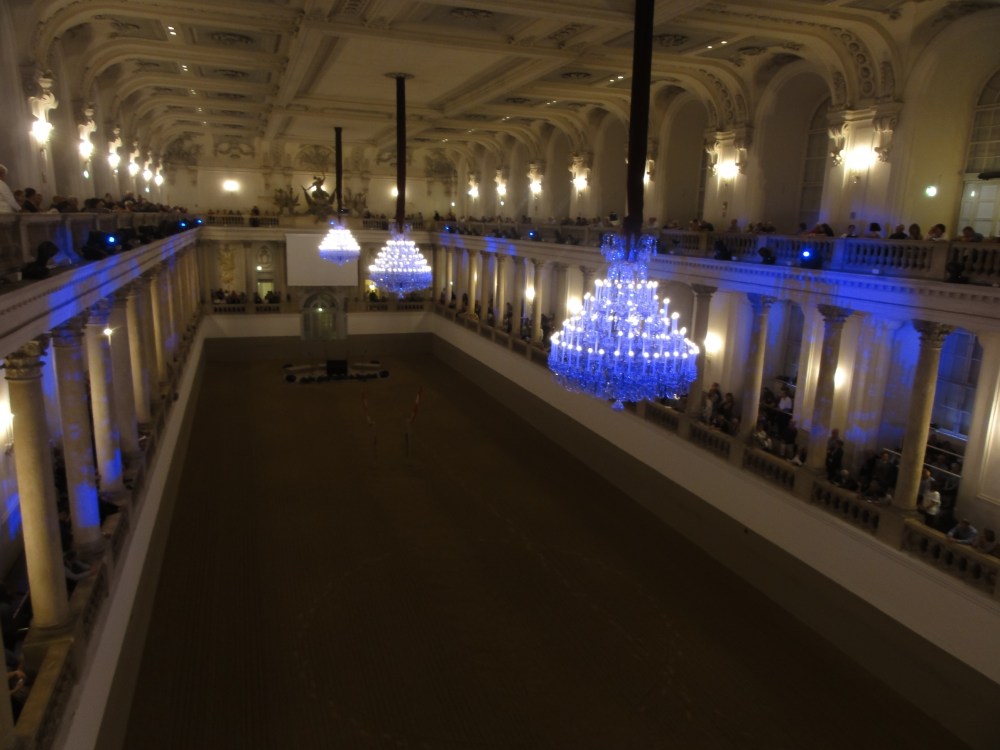
The Spanish Riding School is located within the Homburg Palace complex.
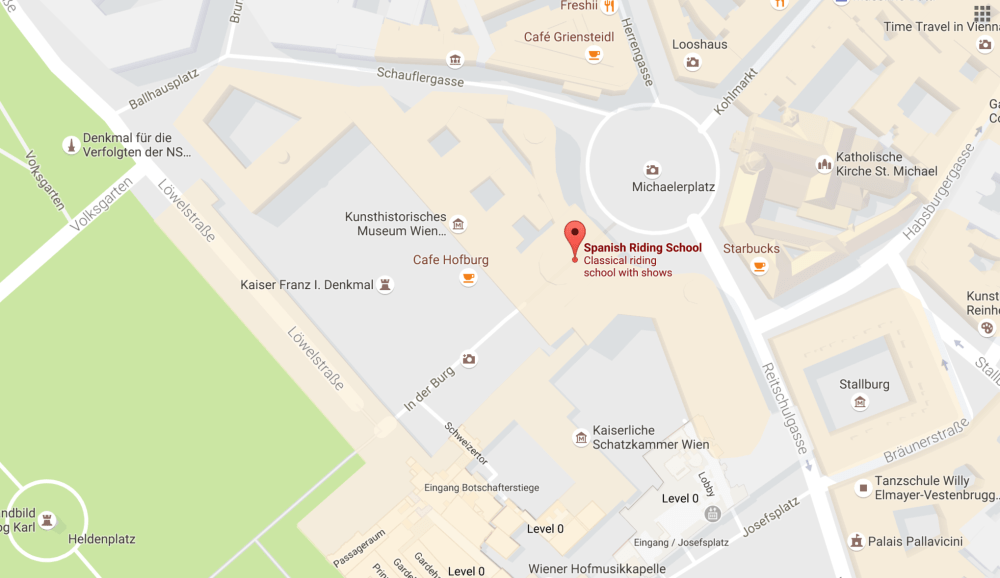
Volksgarten
The Volksgarten (English: People’s Garden) is a public park which is part of the Homburg Palace. It was laid out in 1821. The park was built over the city fortifications that were destroyed by Napoleon in 1809. The Volksgarten was opened to the public in 1823.
The Volksgarten is located just outside the Homburg Palace complex.

Universitatsring (Ringstrasse)
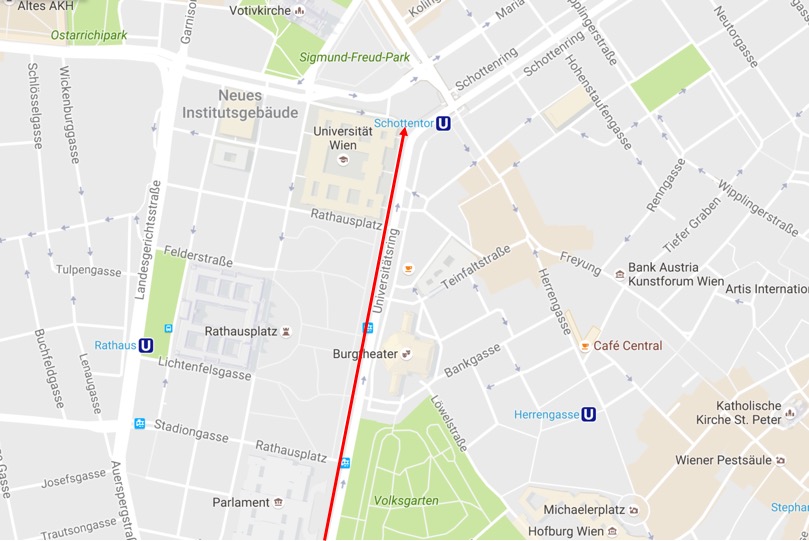
The Ring Road (German: Ringstraße) is a circular ring road surrounding the Innere Stadt district of Vienna and is one of its main sights. Constructed in the mid-19th century after the dismantling of the city fortification walls, its architecture is typical of the eclectic, historicist style called Ringstraßenstil (Ring Road Style) of the 1860s to 1890s. Known for its unique architectural beauty and history, it has also been called the “Lord of the ring roads”, and is inscribed by UNESCO as part of Vienna’s World Heritage Site.
Directions: From the outer perimeter of the park, take a right on Burgring, Doctor-Karl-Renner-Ring, or Universitatsring.
 Eternal Horizon