Starting Point: Spanish Synagogue
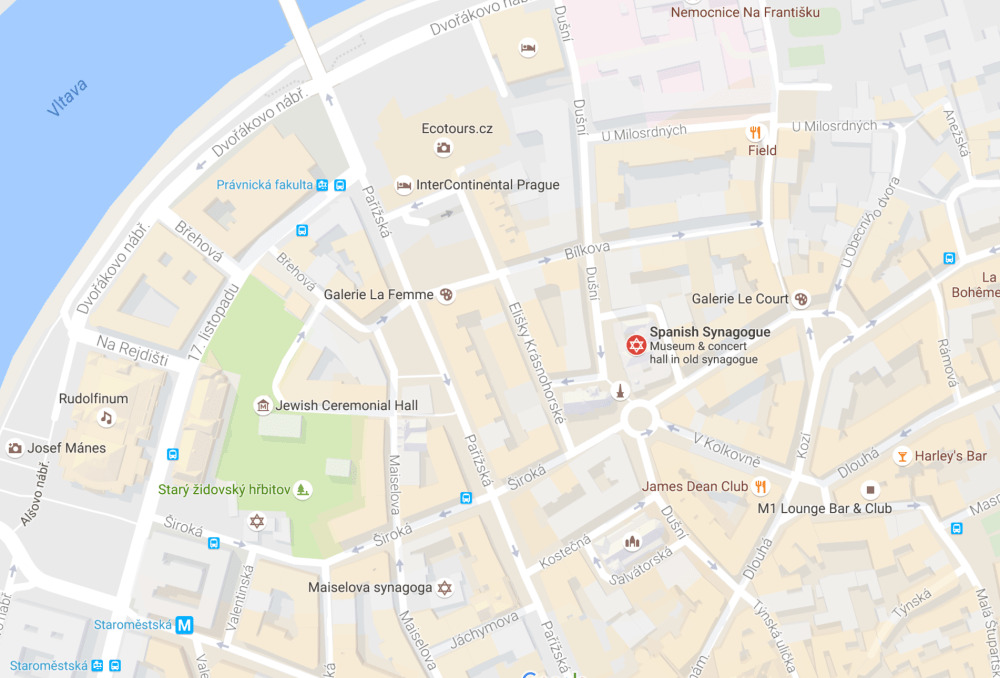
The Spanish Synagogue (Czech: Španělská synagoga) is the newest synagogue in the area of the Jewish Town. The Spanish Synagogue is not the first synagogue at the site. Before it there stood probably the oldest synagogue in Prague, Old School. In the second half of 19th century, capacity of the Old School did not suffice. The Reform Jewish Community, which used it by the time, therefore decided to demolish the synagogue in 1867 and one year later it was replaced by the new, Spanish Synagogue. During the Second World War, confiscated properties of Czech Jewish Communities were stored in the synagogue.

High Synagogue
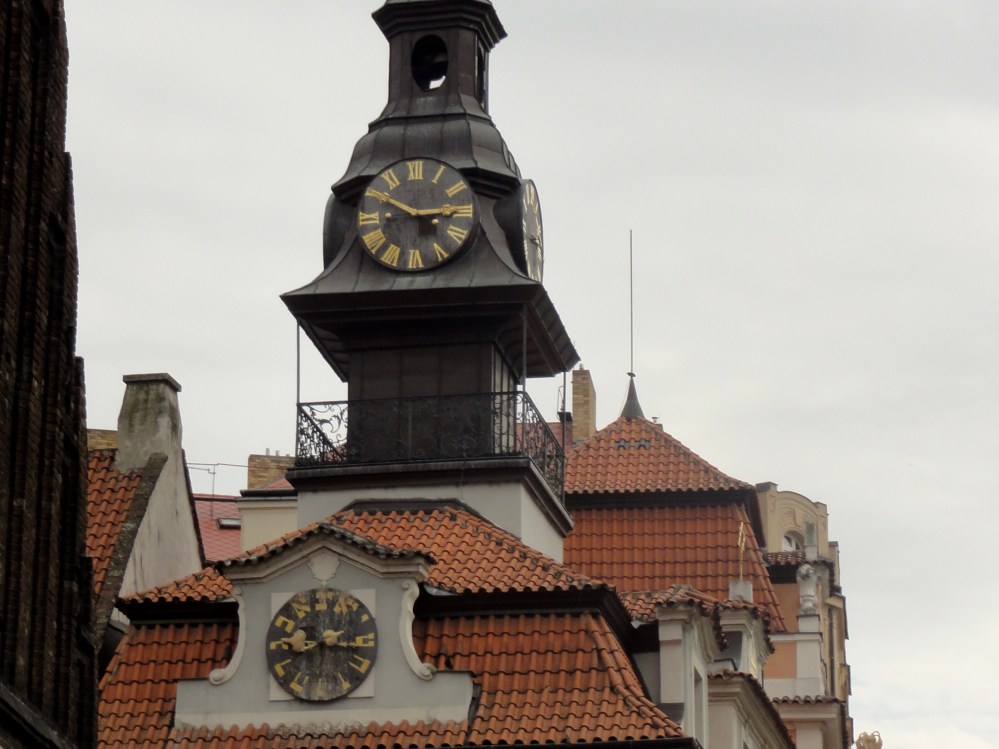
The original High Synagogue (Czech: Vysoká synagoga) was finished in 1568, the same year as the Jewish Town Hall. Probably it was modelled after High Synagogue, Kraków which was built in 1556 in Poland. In 1689 it was destroyed by the Great Fire. In 1883 the synagogue was rebuilt. During this modification the facade was simplified to the modern appearance.
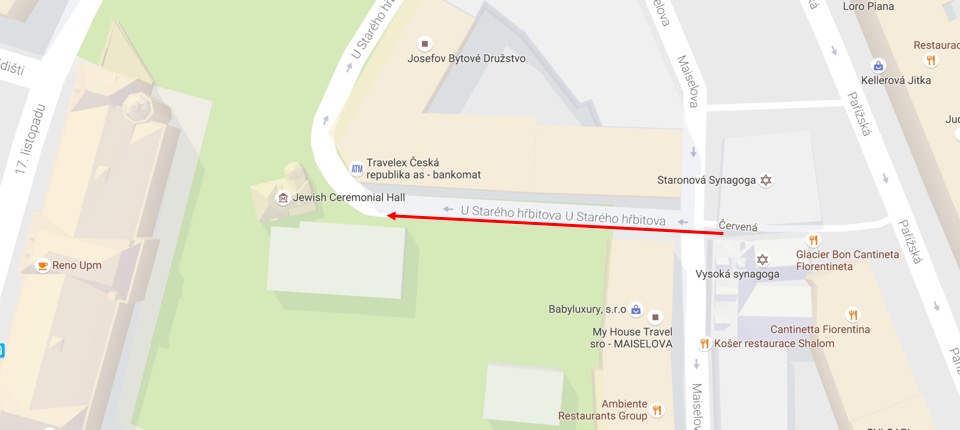
Directions: From the Spanish Synagogue, turn left on Dušní and then turn right on Široká. Take a right on Pařížská and a left on Červená.

Jewish Ceremonial Hall
The Jewish Ceremonial Hall (Czech: Obřadní síň) was built in 1911-12 for the Jewish Burial Society. Originally used as a ceremonial hall and mortuary it now forms part of The Jewish Museum of Prague holding exhibitions relating to Jewish history.

Old Jewish Cemetery
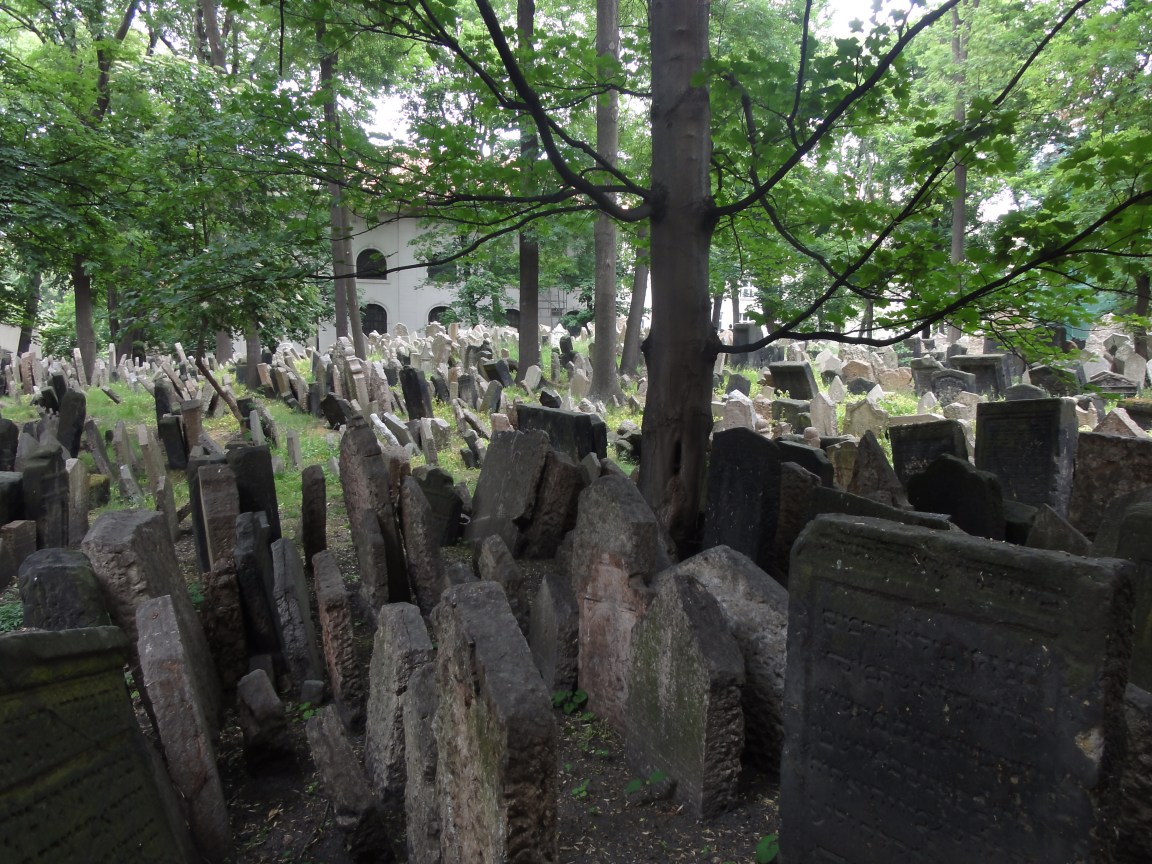
The Old Jewish Cemetery is the largest Jewish cemetery in Europe and one of the most important Jewish historical monuments in Prague. During the more than three centuries (1439 – 1787) in which it was in active use, the cemetery continually struggled with the lack of space. Piety and respect for the deceased ancestors does not allow Jews to abolish old graves. Only occasionally the Jewish Community was allowed to purchase grounds to expand the cemetery and so many times it had to gain space in other ways; if necessary, a new layer of soil was heaped up on the available area. For this reason, there are places where as many as twelve layers now exist. Thanks to this solution the older graves themselves remained intact. However, as new levels were added it was necessary either to lay over the gravestones associated with the older (and lower) graves to protect them, or else to elevate the stones to the new, higher surface. This explains the dense forest of gravestones that one sees today; many of them commemorate an individual who is buried several layers further down. This also explains why the surface of the cemetery is raised several meters higher than the surrounding streets; retaining walls are necessary to hold the soil and the graves in place.
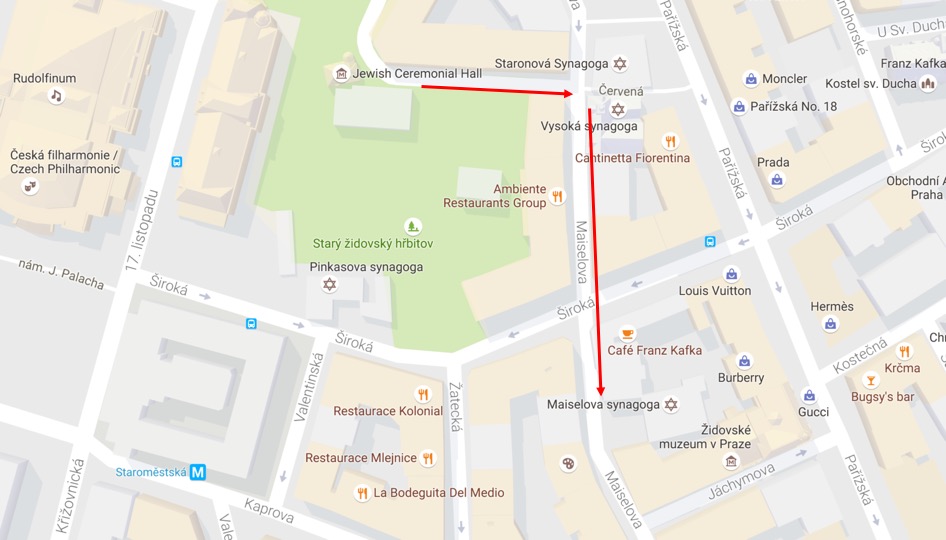
Directions: The Old Jewish Cemetery is located by the Jewish Ceremonial Hall.
Maisel Synagogue
Maisel Synagogue (Czech: Maiselova synagoga) is one of the historical monuments of the former Prague Jewish Ghetto. It was built at the end of the 16th century which is considered to be the golden age of the ghetto.
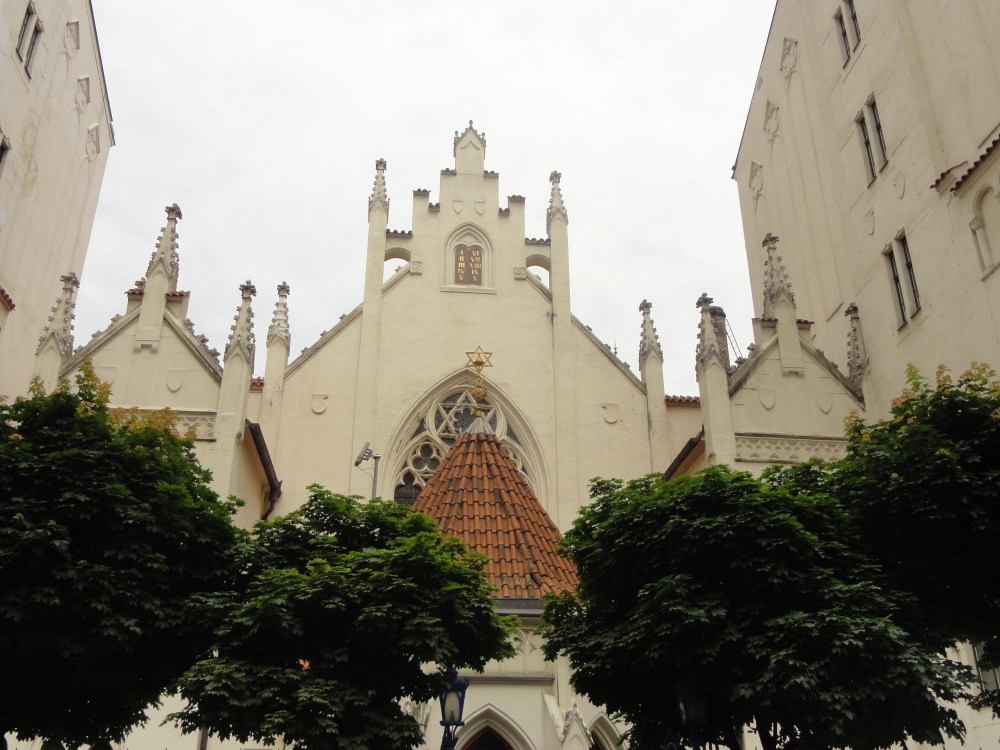
Directions: Follow Maiselova from the Old Jewish Cemetery to the Maisel Synagogue.
St Nicolas Church (Old Town)
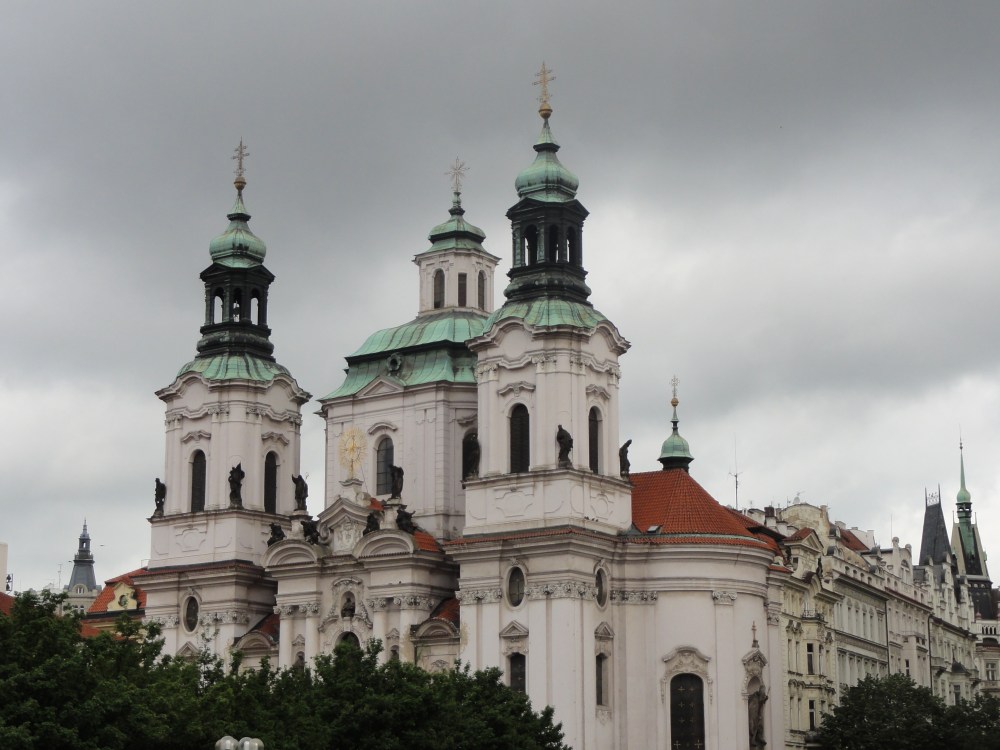
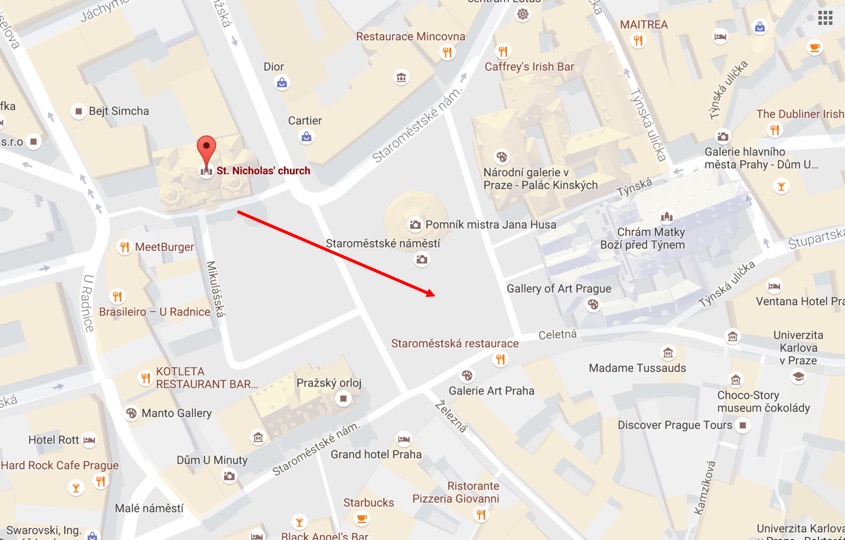
St. Nicholas Church at the Old Town Square was completed in 1735, and replaced a parish church mentioned in records dating back to 1273.
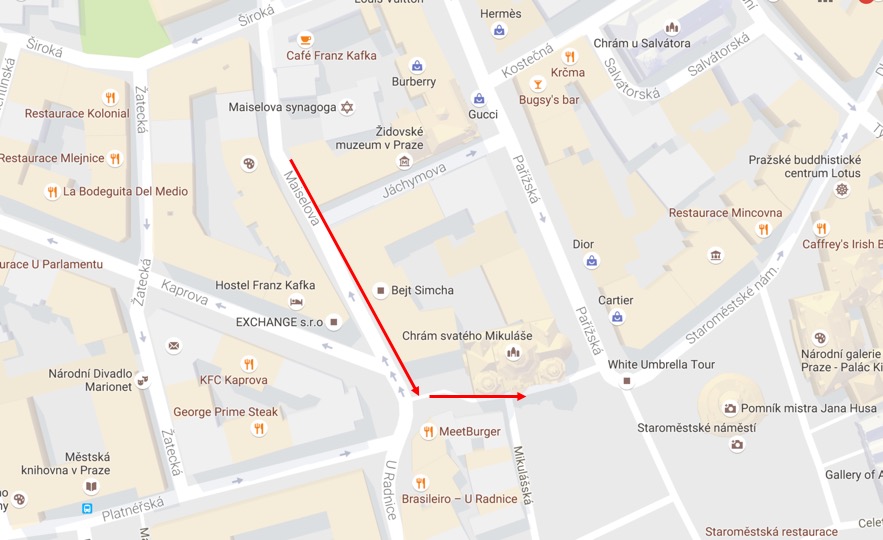
Directions: Continue on Maiselova and turn left on Nám. Franze Kafky.
Old Town Square
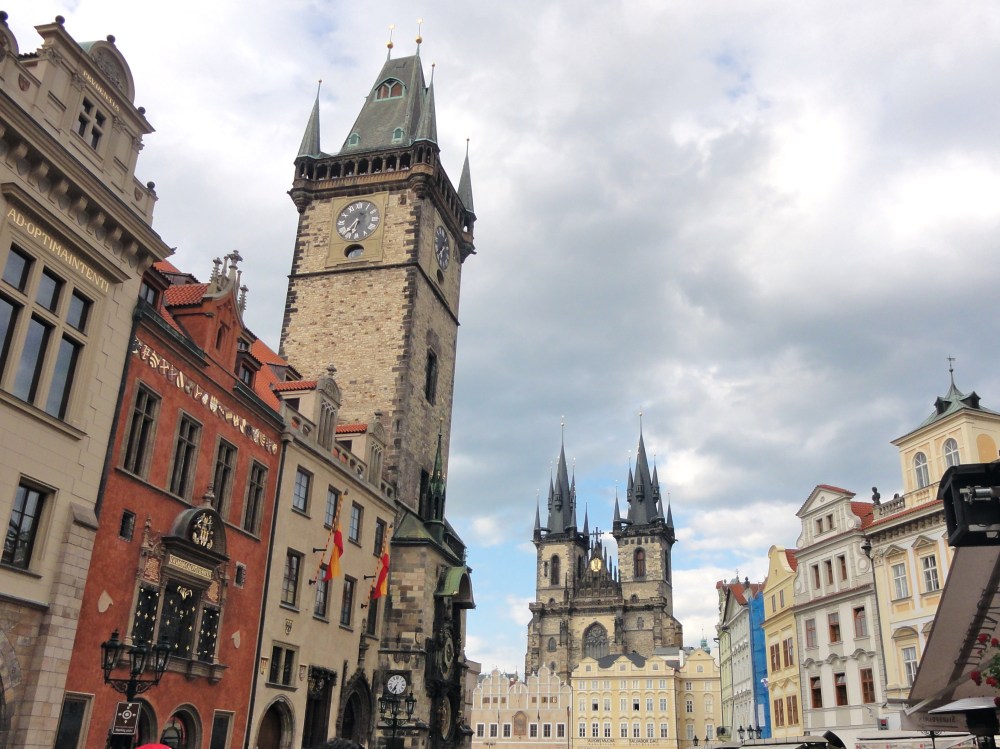
Old Town Square (Czech: Staroměstské náměstí) is a historic square in the Old Town quarter of Prague. The square features various architectural styles including the Gothic Church of Our Lady before Týn, which has been the main church of this part of the city since the 14th century.
Prague Astronomical Clock
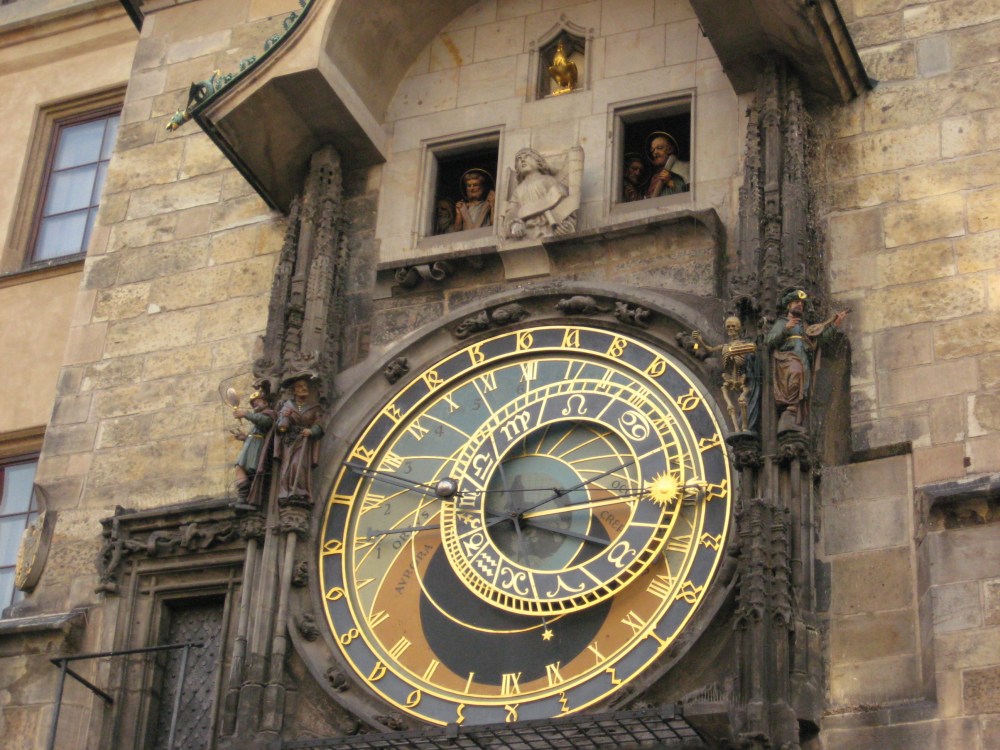
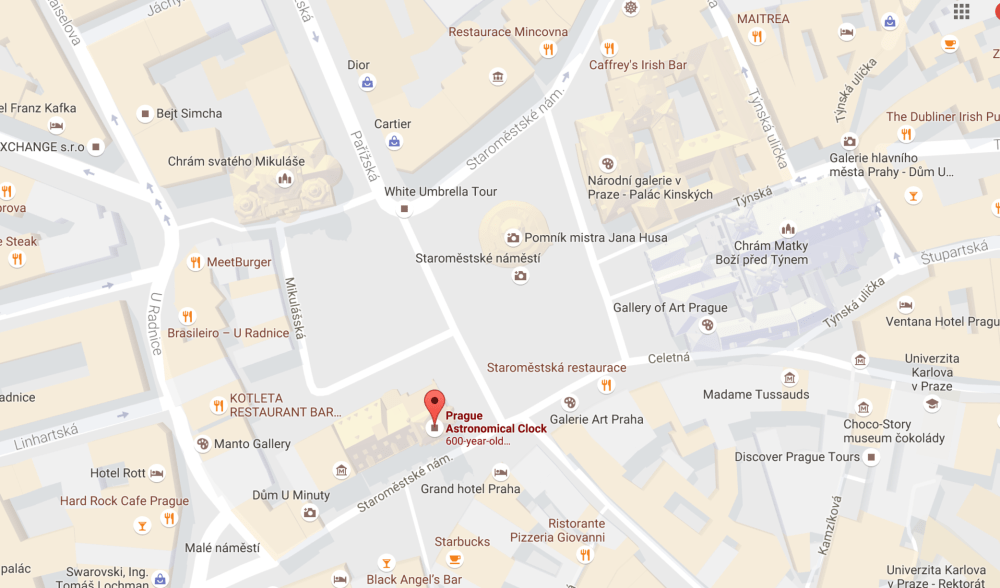
The Prague astronomical clock (Czech: Pražský orloj), is a medieval astronomical clock located in Prague’s Old Town Square. The clock was first installed in 1410, making it the third-oldest astronomical clock in the world and the oldest one still operating. The clock mechanism itself is composed of three main components: the astronomical dial, representing the position of the Sun and Moon in the sky and displaying various astronomical details; “The Walk of the Apostles”, a clockwork hourly show of figures of the Apostles and other moving sculptures—notably a figure of Death (represented by a skeleton) striking the time; and a calendar dial with medallions representing the months.
Previous Day Main Page Next Day
 Eternal Horizon