
The Palace of Versailles was the seat of political power in the Kingdom of France from 1682, when Louis XIV moved the royal court from Paris, until the royal family was forced to return to the capital in October 1789, within three months after the beginning of the French Revolution.
Getting There
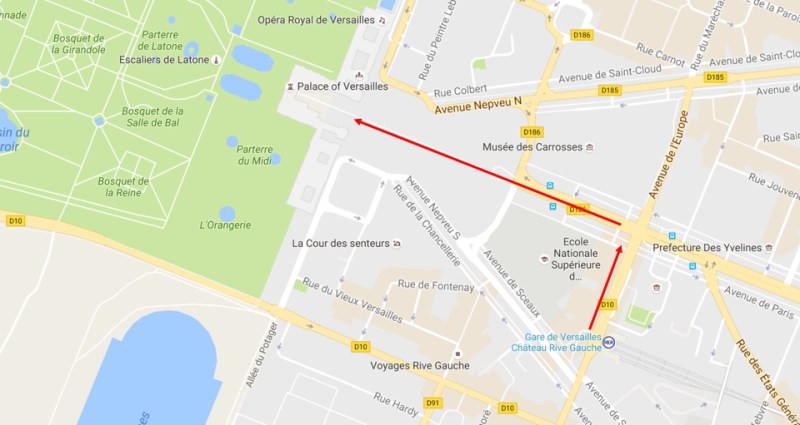
Take the RER C from Paris to Gare de Versailles Chateau Rive Gauche. Walk on Avenue de l’Europe and turn left on Avenue de Paris. There are several RER C stops in Paris.
Palace State Rooms




Grand Trianon
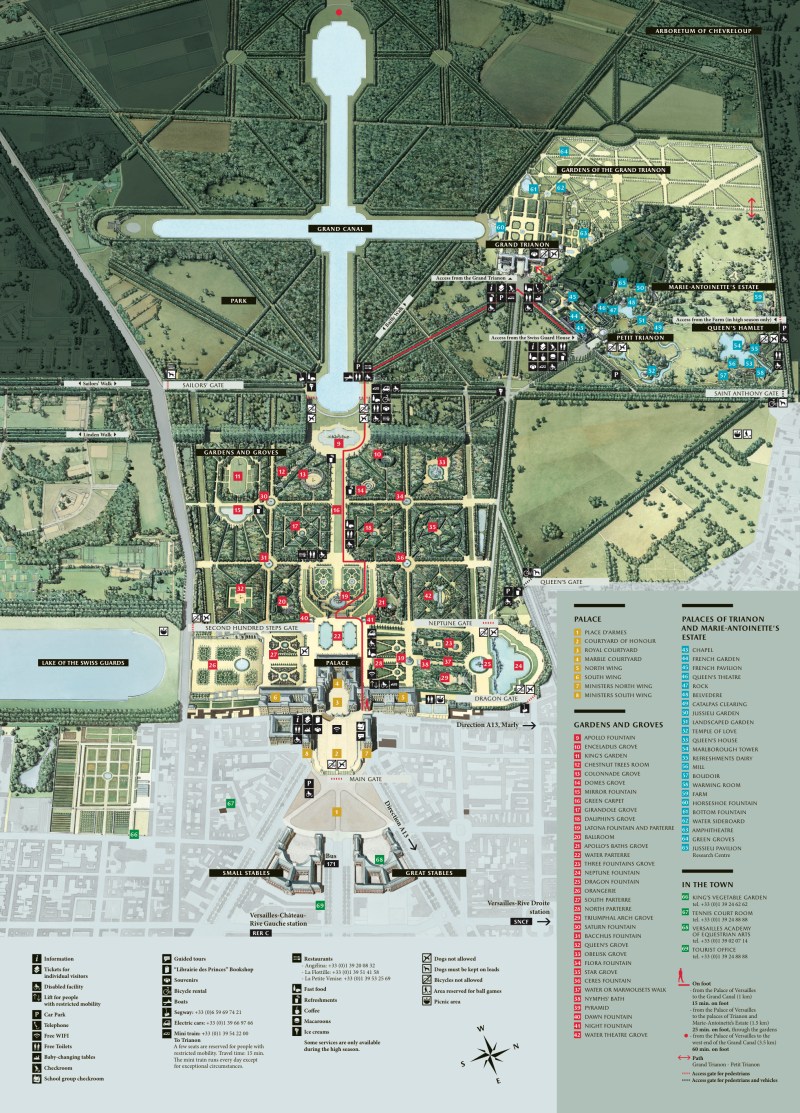
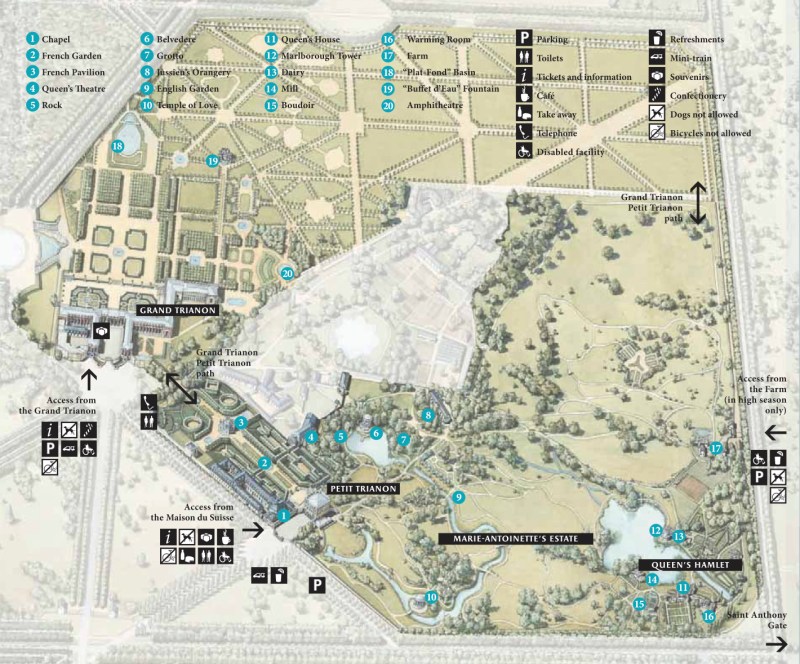
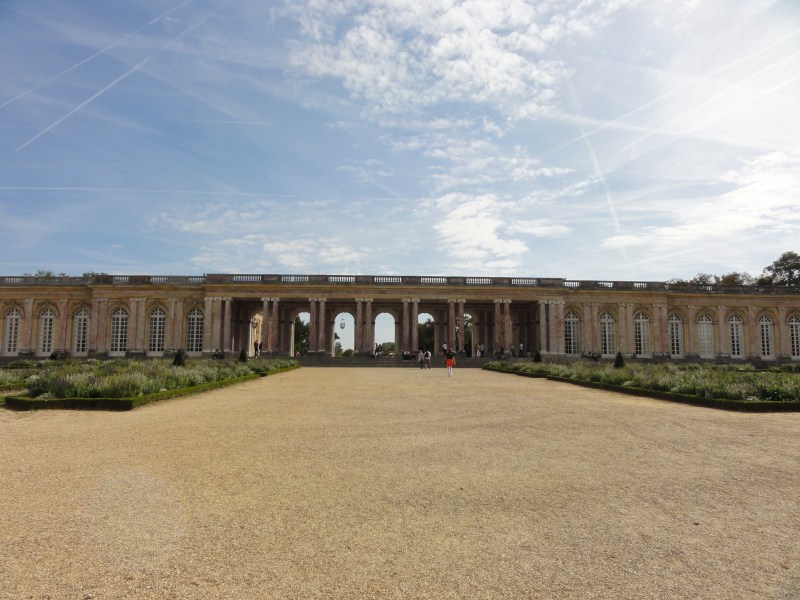
The Grand Trianon is a château situated in the northwestern part of the Domain of Versailles. It was built at the request of King Louis XIV of France (r. 1643–1715), as a retreat for himself and his maîtresse en titre of the time, and as a place where he and invited guests could take light meals away from the strict étiquette of the Court. During the French Revolution of 1789, the Grand Trianon was left to neglect. At the time of the First French Empire, Napoleon made it one of his residences, and furnished it in the Empire Style.
Petite Trianon
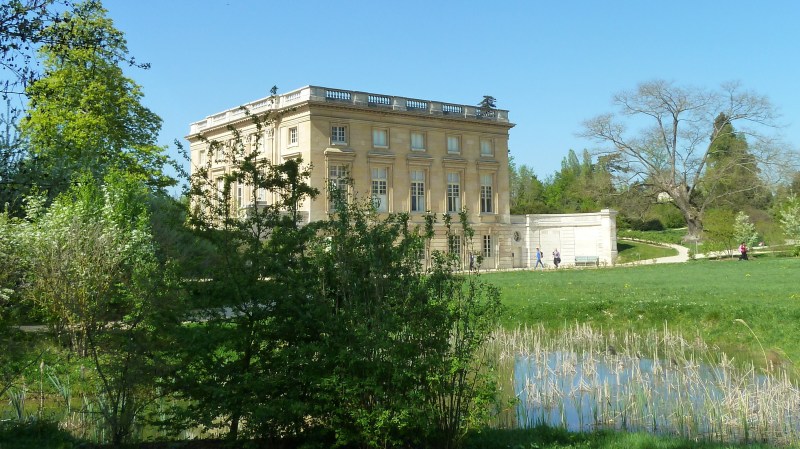
The Petit Trianon was designed by the order of Louis XV for his long-term mistress, Madame de Pompadour, and was constructed between 1762 and 1768. Madame de Pompadour died four years before its completion, and the Petit Trianon was subsequently occupied by her successor, Madame du Barry. Upon his accession to the throne in 1774, the 20-year-old Louis XVI gave the château and its surrounding park to his 19-year-old Queen Marie Antoinette for her exclusive use and enjoyment.
Marie Antoinette’s Hamlet
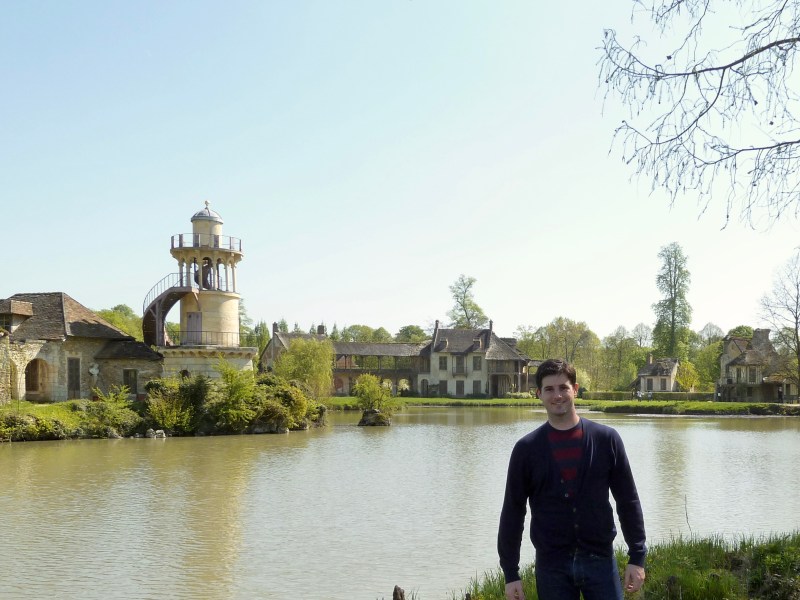
The Hameau de la Reine is a rustic retreat in the park of the Château de Versailles built for Marie Antoinette in 1783 near the Petit Trianon. It served as a private meeting place for the Queen and her closest friends, a place of leisure. The building scheme included a farmhouse, (the farm was to produce milk and eggs for the queen), a dairy, a dovecote, a boudoir, a barn that was burned down during the French Revolution, a mill and a tower in the form of a lighthouse. Each building is decorated with a garden, an orchard or a flower garden. The largest and most famous of these houses is the “Queen’s House” that is connected to the Billiard house by a wooden gallery, at the center of the village. A working farm was close to the idyllic, fantasy-like setting of the Queen’s Hamlet.
LOUVRE MAIN PAGE FOUNTAINEBLEAU
 Eternal Horizon