Museum Island
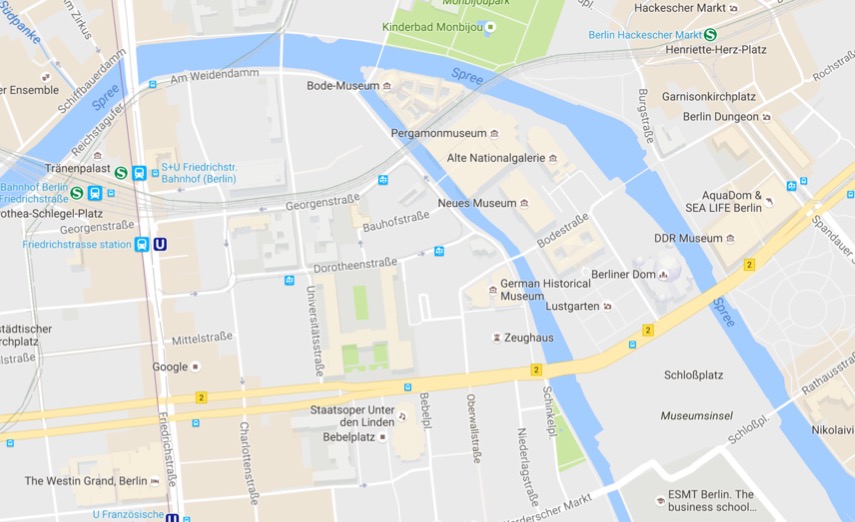
Museum Island (German: Museumsinsel) is the name of the northern half of an island in the Spree river named for the complex of five internationally significant museums, all part of the Berlin State Museums, that occupy the island’s northern part.
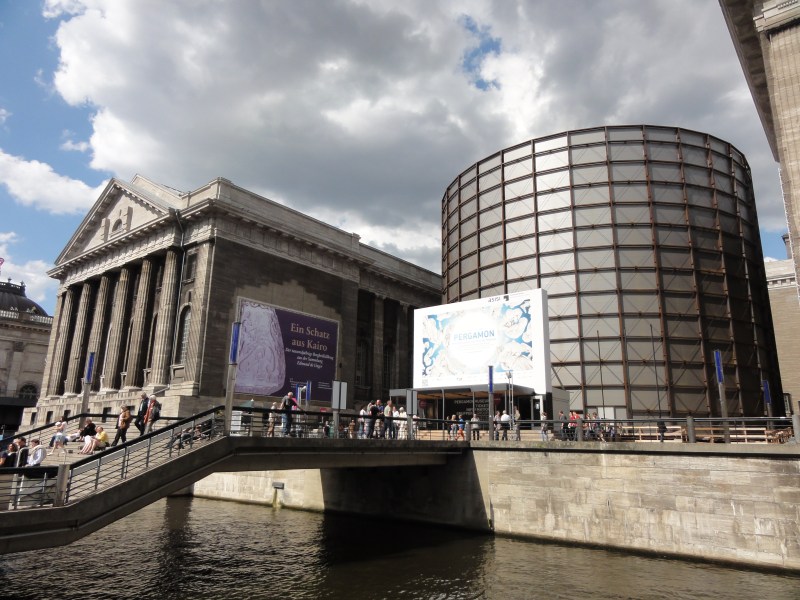
Altes Museum – This museum was built between 1823 and 1830 to house the Prussian royal family’s art collection. Today it houses the Berlin State Museum’s antiquities collection.
Neues Museum – This museum was built between 1843 and 1855 and was heavily damaged during World War II. It was rebuilt and reopened in 2009. The museum houses the Egyptian and Prehistory and Early History collections. The ionic bust of Egyptian queen Nefertiti is displayed here.
Alte Nationalgalerie – This museum was completed in 1876 to host a collection of 19th-century art donated by banker Joachim H. W. Wagener.
Bode Museum – Located on the island’s northern tip and opened in 1904, this museum exhibits the sculpture collections and late Antique and Byzantine art.
Pergamon Museum – The final museum of the complex was constructed in 1930. It contains multiple reconstructed immense and historically significant buildings such as the Pergamon Altar and the Ishtar Gate of Babylon.
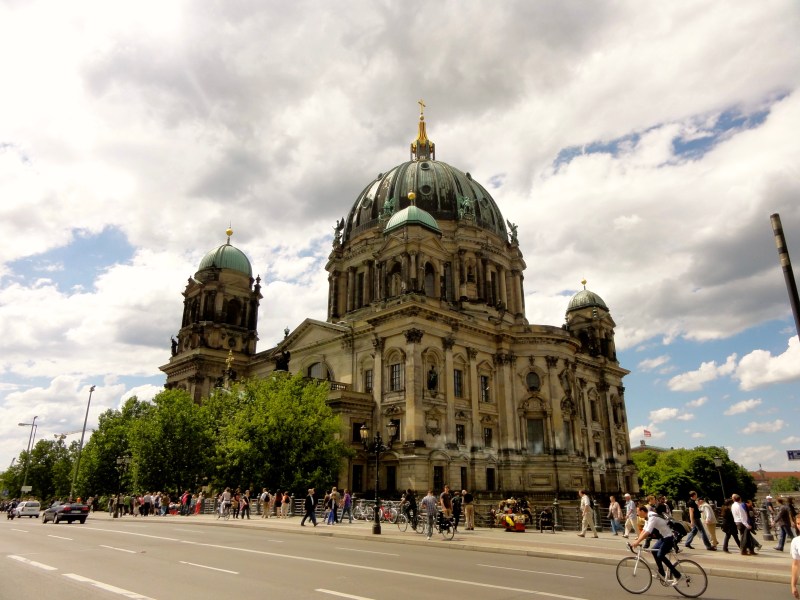
Berliner Dom
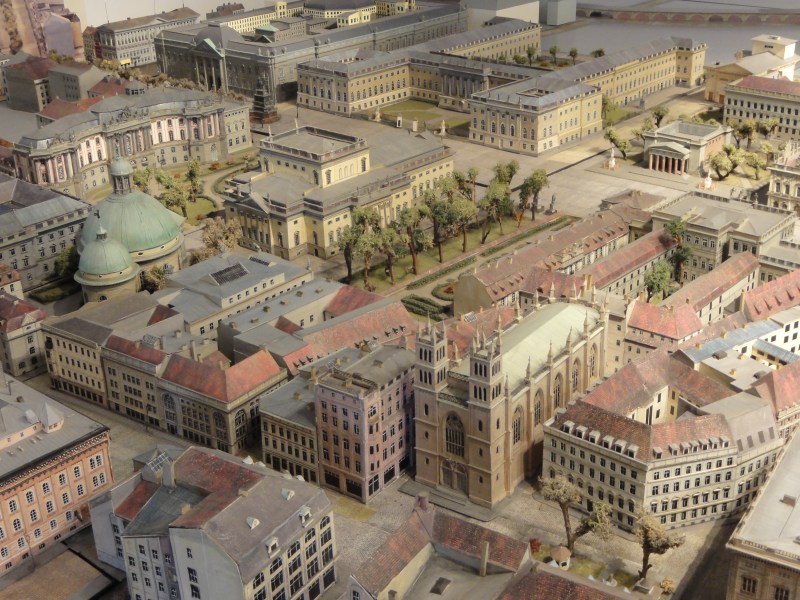
Berlin Cathedral (German: Berliner Dom) is the short name for the Evangelical Supreme Parish and Collegiate Church located on Museum Island. The current building was finished in 1905.
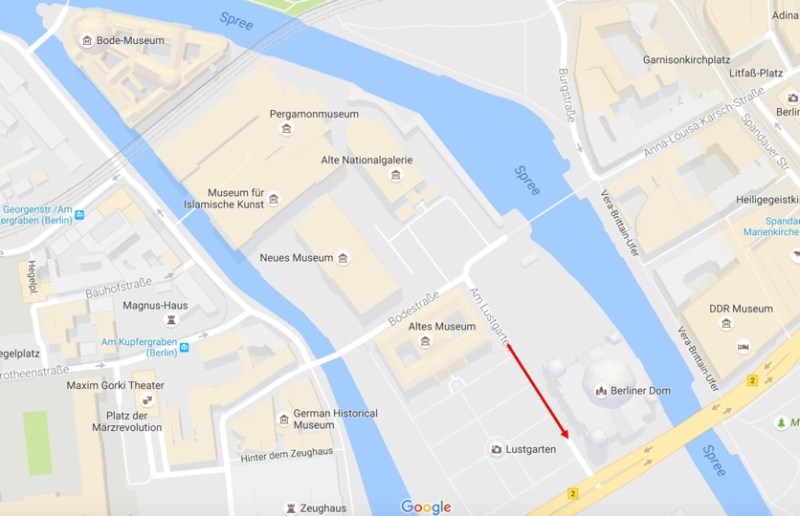
From the Altes Museum, take a right on Am Lustgarten.
Humboldt Box
The Humboldt Box is a futuristic museum structure built as a temporary exhibition space and viewing platform for the Humboldt Forum construction project and to inform the public about its future use.
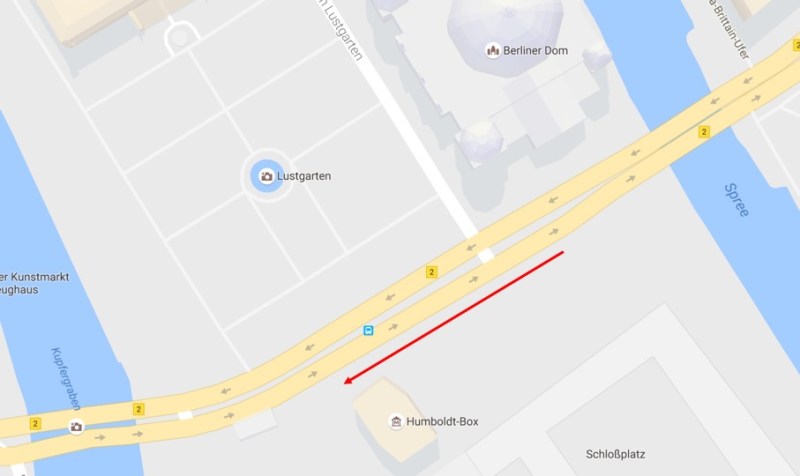
From Berliner Dom, take a right on Schlossplatz.
Berlin City Hall
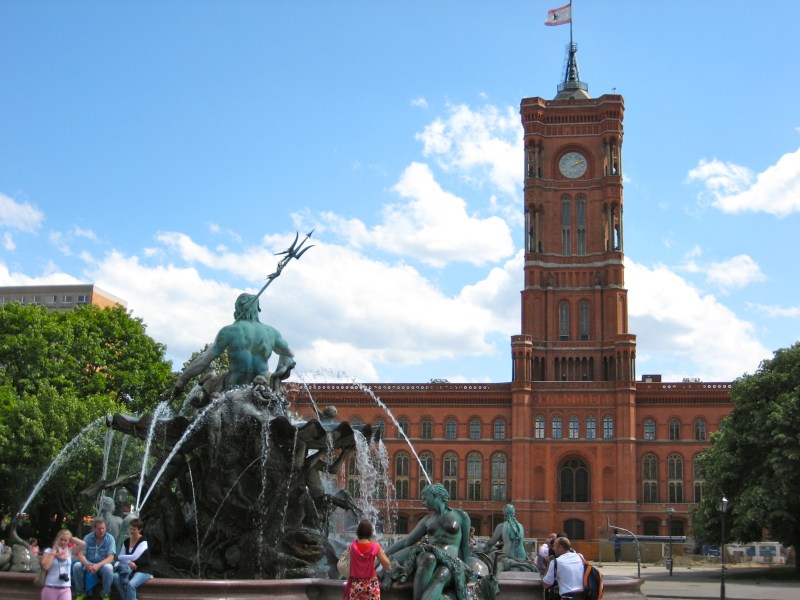
The Rotes Rathaus (English: Red City Hall) is the town hall of Berlin and the home to the governing mayor and the government (the Senate of Berlin) of the Federal state of Berlin. The Rathaus was built between 1861 and 1869. The building was heavily damaged by Allied bombing in World War II and rebuilt to the original plans between 1951 and 1956. The reconstructed Rotes Rathaus, then located in the Soviet sector, served as the town hall of East Berlin, while the Rathaus Schöneberg was the town hall of West Berlin. After German reunification, the administration of reunified Berlin officially moved into the Rotes Rathaus on 1 October 1991.
From Humboldt Box, take a right on Schlossplatz. Take a right after the bridge and walk through Marx-Engels Forum. At Rathausstrasse, take a left.

St. Mary’s Church
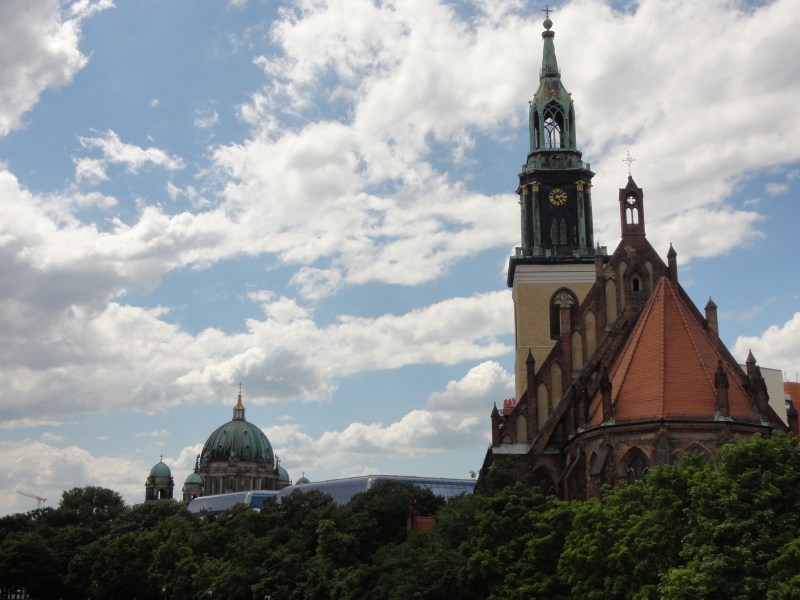
St. Mary’s Church (German: Marienkirche) is a church in central Berlin. The exact age of the original church site and structure is not precisely known, but it was first mentioned in German chronicles in 1292. It is presumed to date from earlier in the 13th century. The architecture of the building is now largely composed of comparatively modern restoration work which took place in the late 19th century and in the post-war period. The church was originally a Roman Catholic church, but has been a Lutheran Protestant church since the Protestant Reformation.

Alexanderplatz
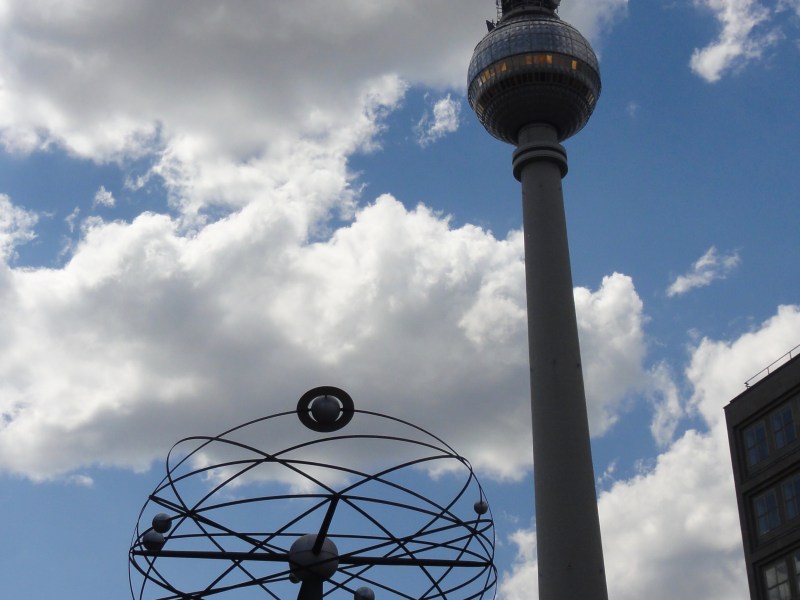
Alexanderplatz is a large public square and transport hub. Berliners often call it simply Alex. Alexanderplatz has been subject to redevelopment several times in its history, most recently during the 1960s, when it was turned into a pedestrian zone and enlarged as part of the German Democratic Republic’s redevelopment of the city centre. It is surrounded by several notable structures including the Fernsehturm (TV Tower), the Park Inn Berlin, and the World Time Clock, a continually rotating installation that shows the time throughout the globe. During the Peaceful Revolution of 1989, the Alexanderplatz demonstration on November 4th was the largest demonstration in the history of East Germany. Since German reunification, Alexanderplatz has undergone a gradual process of change with many of the surrounding buildings being renovated. Despite the reconstruction of the tram line crossing, it has retained its socialist character, including the much-graffitied “Fountain of Friendship between Peoples” (Brunnen der Völkerfreundschaft).
Karl Marx Allee
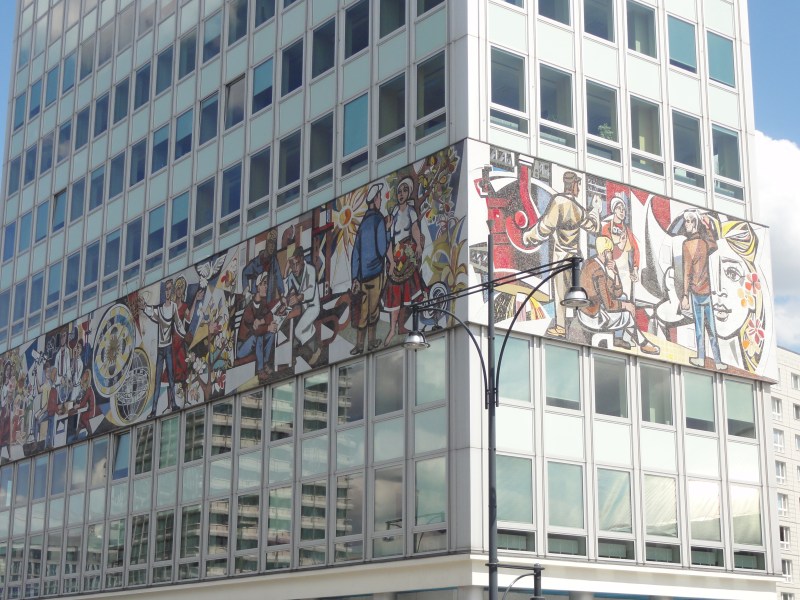
The Karl-Marx-Allee is a monumental socialist boulevard built by the GDR between 1952 and 1960 in Berlin Friedrichshainand Mitte. The boulevard was named Stalinallee between 1949 and 1961, and was a flagship building project of East Germany’s reconstruction programme after World War II. It was designed to contain spacious and luxurious apartments for plain workers, as well as shops, restaurants, cafés, a tourist hotel and an enormous cinema. The avenue is lined with monumental eight-storey buildings designed in the wedding-cake style, the socialist classicism of the Soviet Union.
On June 17, 1953 the Stalinallee became the focus of a worker uprising which endangered the young state’s existence. Builders and construction workers demonstrated against the communist government, leading to a national uprising. The rebellion was quashed with Soviet tanks and troops, resulting in the loss of at least 125 lives. Later the street was used for East Germany’s annual May Day parade, featuring thousands of soldiers along with tanks and other military vehicles to showcase the power of the communist government. De-Stalinization led to the renaming of the street, after the founder of Marxism, in late 1961.
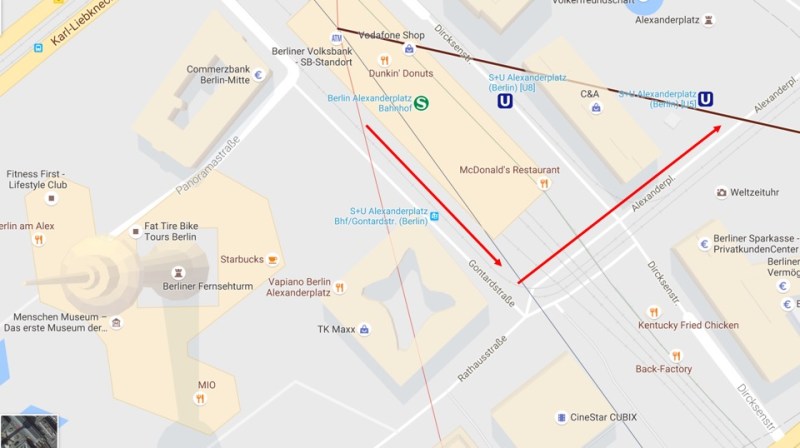
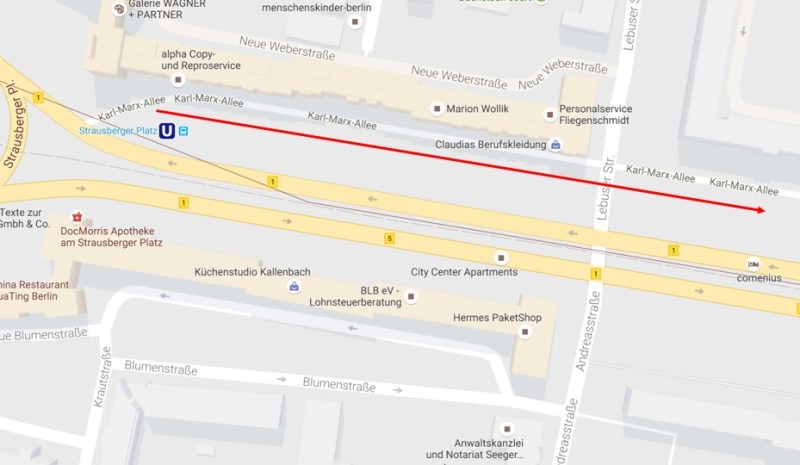
Directions: Take the U5 line from Alexanderplatz to Strausbergerplatz. Then walk down Karl Marx Allee.
East Side Gallery
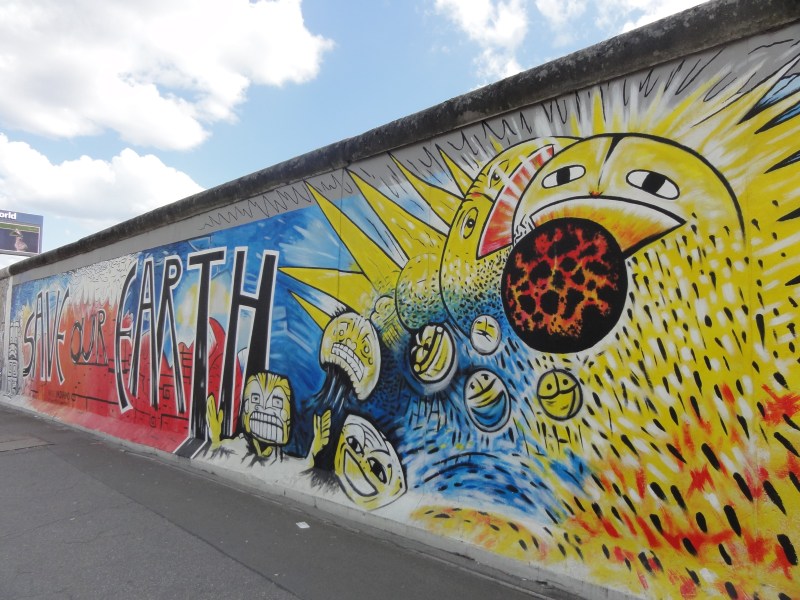
The East Side Gallery is an international memorial for freedom. It is a 1.3 km long section of the Berlin Wall. The actual border at this point was the river Spree. The gallery is located on the so-called “hinterland mauer”, which closed the border to West Berlin. The Gallery consists of 105 paintings by artists from all over the world, painted in 1990 on the east side of the Berlin Wall.
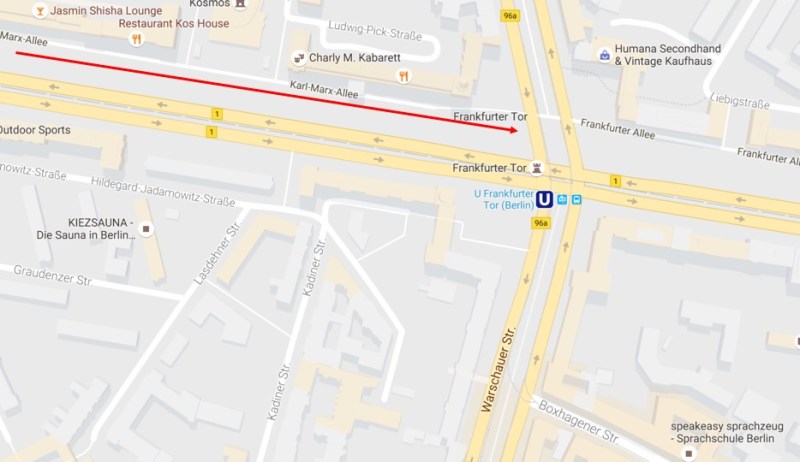
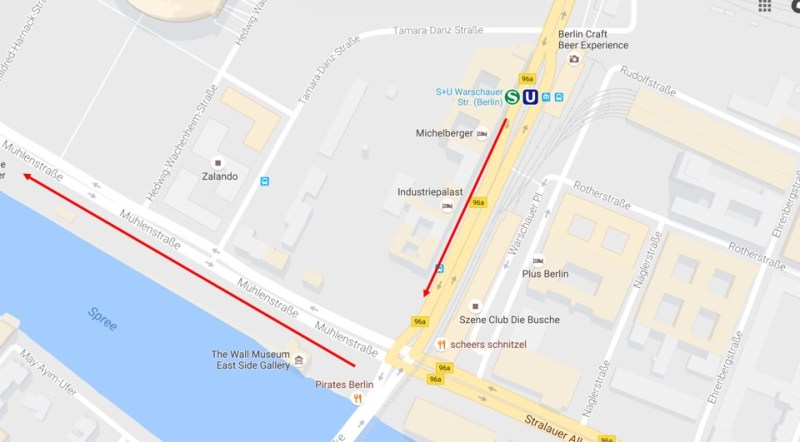
Directions: At the end of Karl-Marx-Allee, take Tram 10 from U Frankfurter to Warschauer. Walk towards the river on Warschauer Strasse. Take a right just before you reach the water.
 Eternal Horizon