Starting point: Gendarmenmarkt
The Gendarmenmarkt is a square that includes the Concert Hall, French Church, and German Church. The square was created at the end of the seventeenth century as the Linden-Markt and reconstructed in 1773. During World War II, most of the buildings were badly damaged or destroyed. Today all of them have been restored.
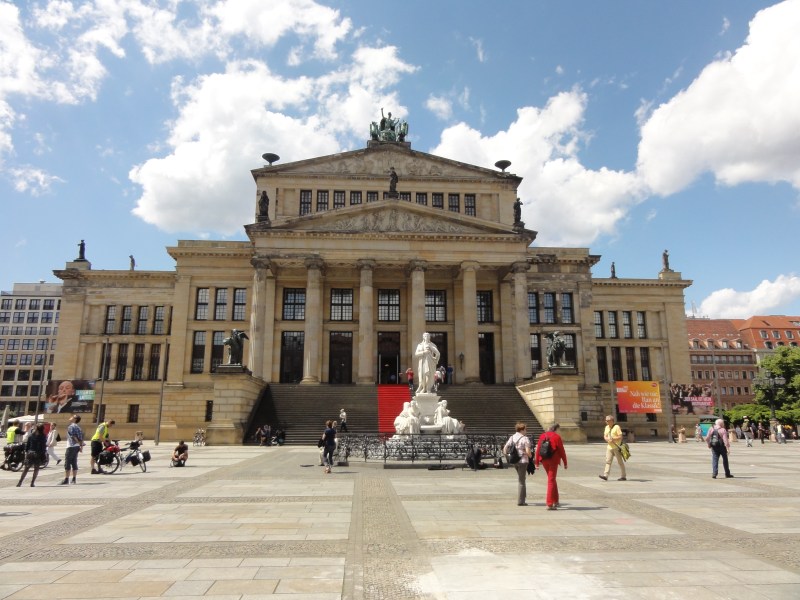
Directions: Take the U2 to U-Bhf Hausvogteiplatz or the U6 to U Französische Strasse.
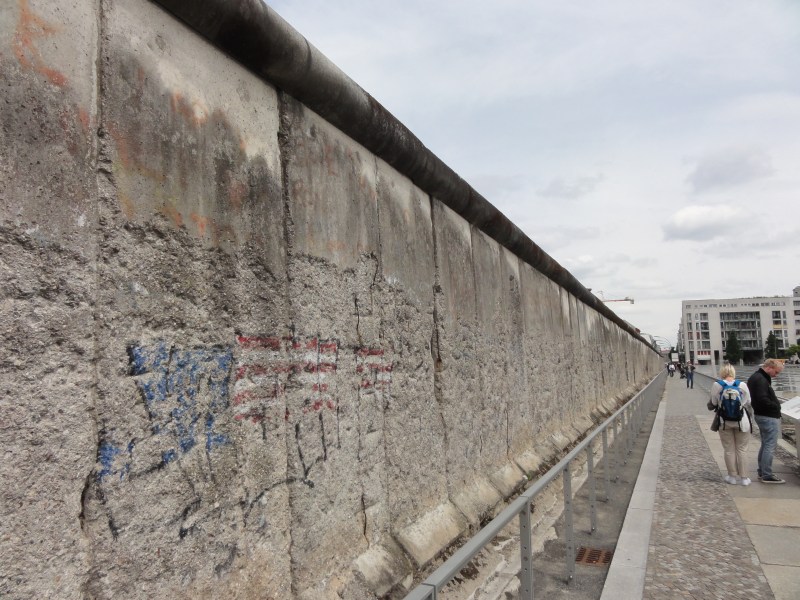
Checkpoint Charlie
Checkpoint Charlie (or “Checkpoint C”) was the name given by the Western Allies to the best-known Berlin Wall crossing point between East Berlin and West Berlin during the Cold War. Checkpoint Charlie became a symbol of the Cold War, representing the separation of East and West. Soviet and American tanks briefly faced each other at the location during the Berlin Crisis of 1961.

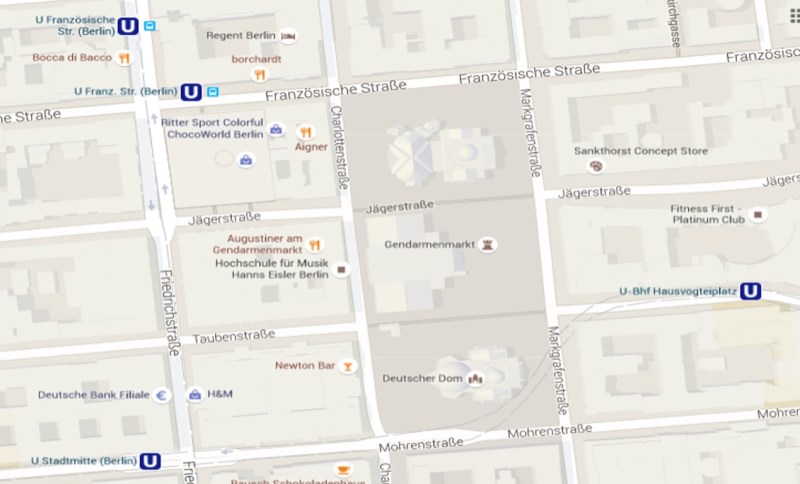
Directions: From Deutscher Dom, take a right on Mohrenstrasse. At Friedrichstrasse, take a left. Continue 5 blocks and arrive at Checkpoint Charlie.

Topography of Terror
The Topography of Terror museum is located on the site of buildings which during the Nazi regime from 1933 to 1945 were the headquarters of the Gestapo and the SS, the principal instruments of repression during the Nazi era.
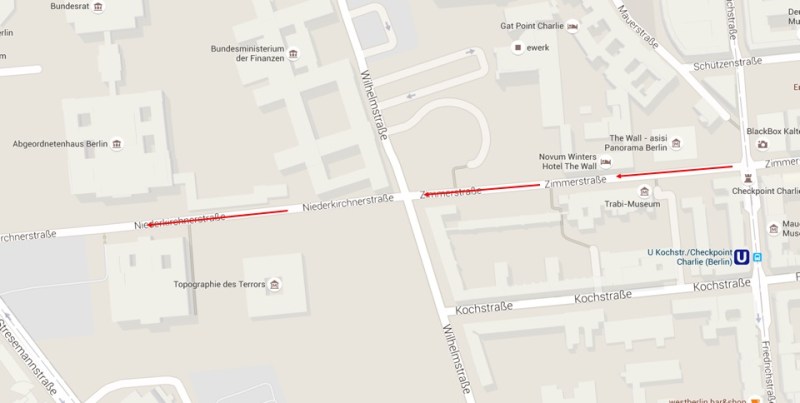
Directions: From Checkpoint Charlie, take a left on Zimmerstrasse. Note that at Wilhelmstrasse, Zimmerstrasse turns to Niederkirchnerstrasse. The Topography of Terror museum is located on the left side of the street.
Potsdamer Platz
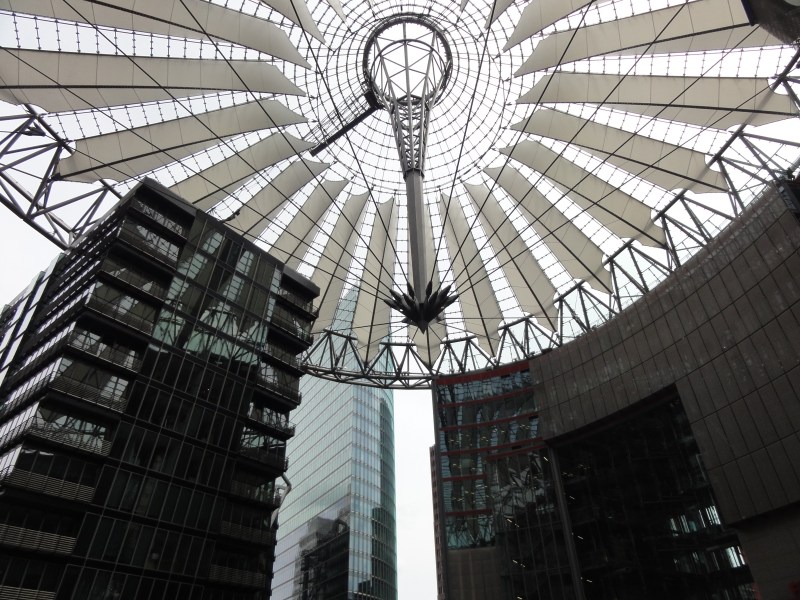
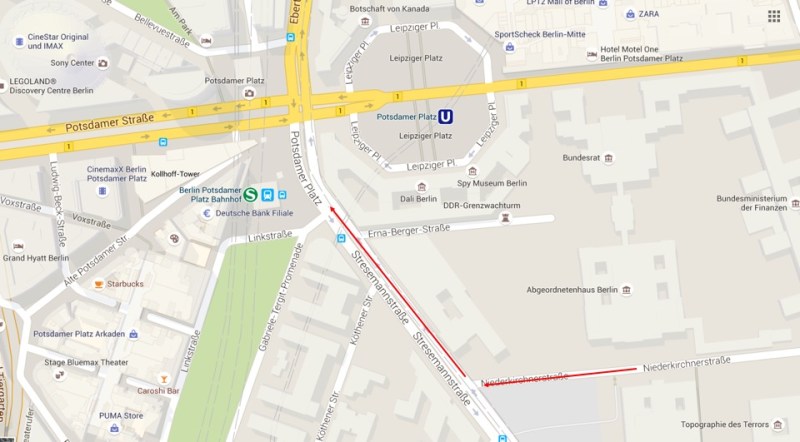
Directions: From Topography of Terror, go left on Niederkirchnerstrasse. At Stresemannstrasse, take a left.
Memorial to the Murdered Jews of Europe
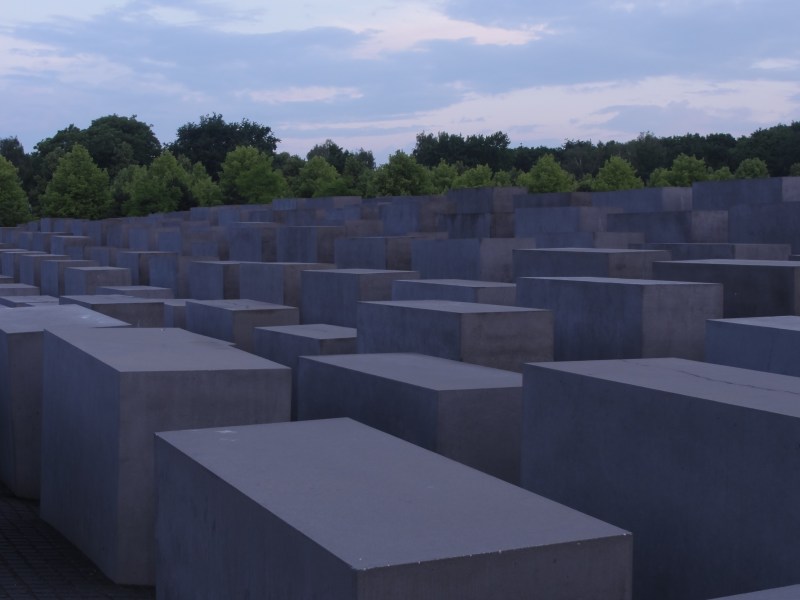
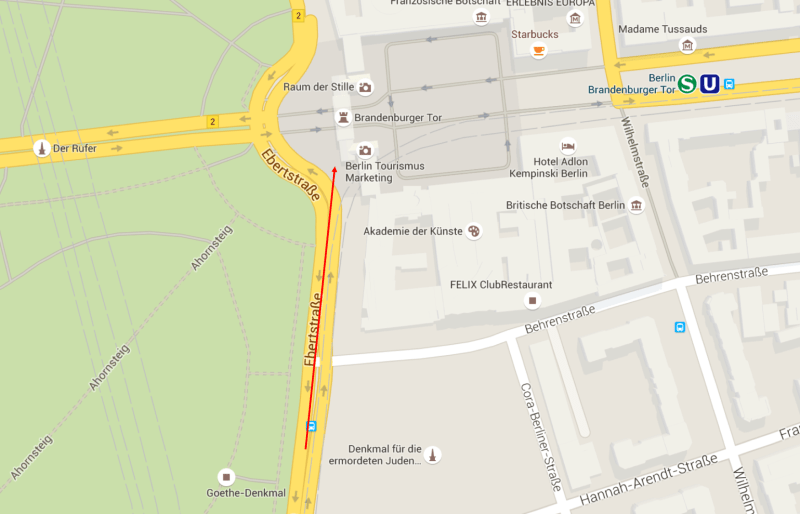
Directions: From Potsdamer Platz, walk north on Ebertstrasse.

Brandenburg Gate
The Brandenburg Gate (German: Brandenburger Tor) is an 18th-century neoclassical monument built on the site of a former city gate that marked the start of the road from Berlin to the town of Brandenburg an der Havel. It was commissioned by King Frederick William II of Prussia as a sign of peace and built from 1788 to 1791. Having suffered considerable damage in World War II, the Brandenburg Gate was restored from 2000 to 2002. During the post-war partition of Germany, the gate was isolated and inaccessible immediately next to the Berlin Wall. The area around the gate was featured most prominently in the media coverage of the tearing down of the wall in 1989, and the subsequent German reunification in 1990.
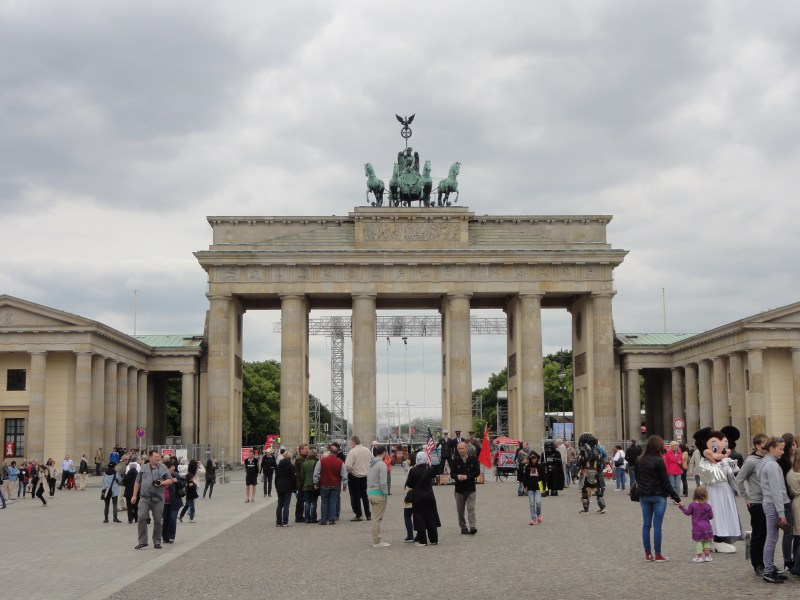
Directions: From the Memorial to the Murdered Jews of Europe, continue north on Ebertstrasse.
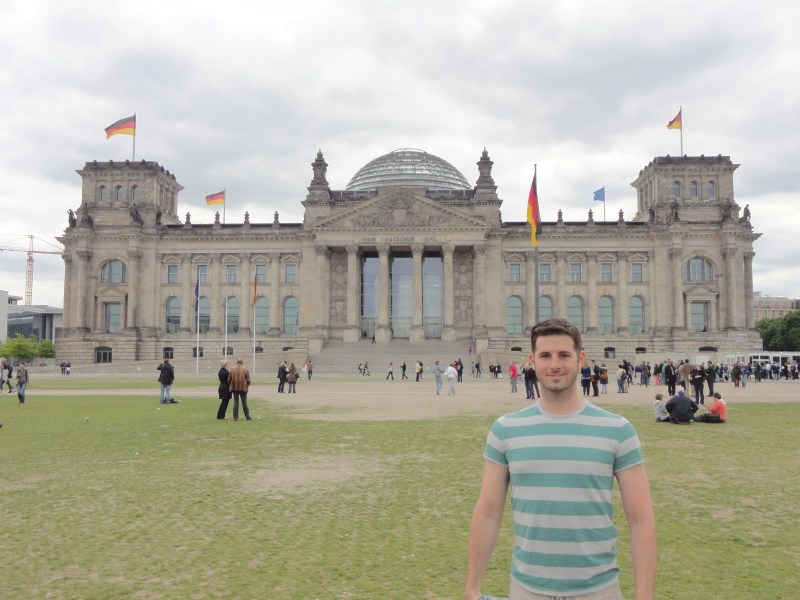
Reichstag
The Reichstag building was opened in 1894 to house the assembly of the German Empire. It was set on fire and severely damaged in 1933. The building was not fully restored until after German reunification in 1990. After it’s completion in 1999, it once again became the meeting place of the German parliament.
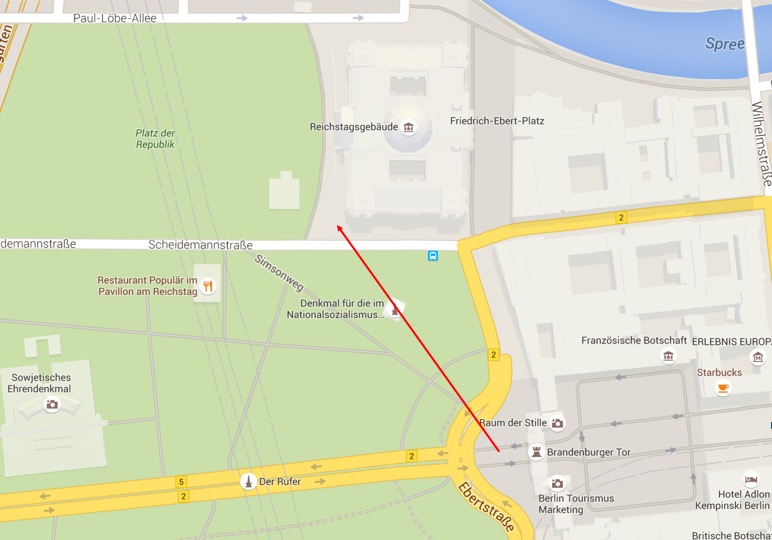
Directions: From Brandenburg Gate, was through the Tiergarten on Simsonweg until you reach the Reichstag Building on Scheidemannstrasse. You will pass by the Memorial to the Sinti and Roma Victims of National Socialism. The Soviet War Memorial is also close by in the Tiergarten. Both can be seen on the map below.
 Eternal Horizon