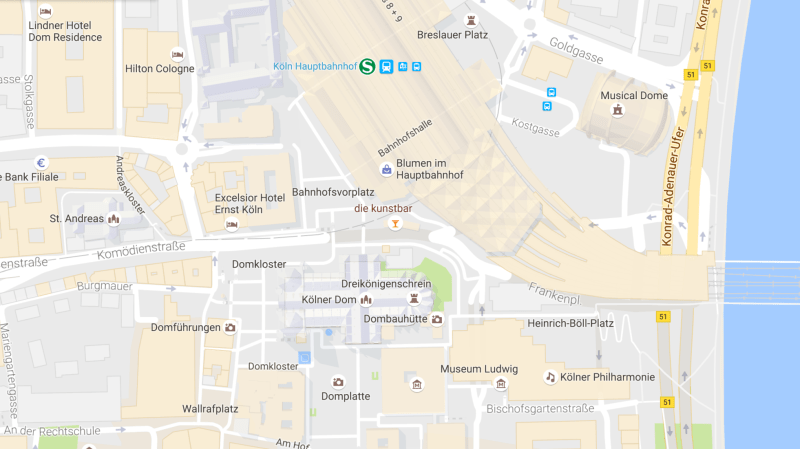
Starting point: Cologne Cathedral
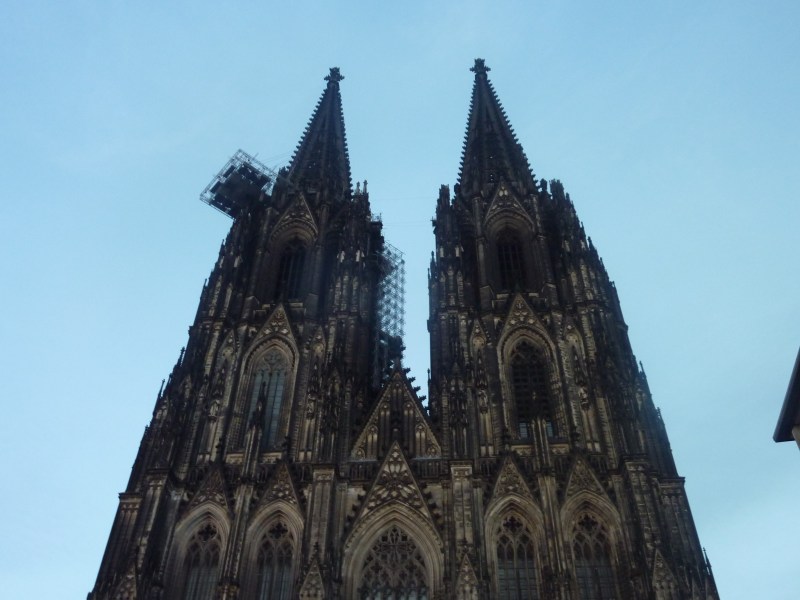
Cologne Cathedral (German: Kölner Dom) is a Roman Catholic cathedral in Cologne, Germany. It is Germany’s most visited landmark, attracting an average of 20,000 people a day. It was the tallest building in the world from 1880 – 1884 and is currently the tallest twin-spired church. Construction of Cologne Cathedral commenced in 1248 and was halted in 1473, leaving it unfinished. Work restarted in the 19th century and was completed, to the original plan, in 1880. The cathedral is the largest Gothic church in Northern Europe. The towers for its two huge spires give the cathedral the largest façade of any church in the world. The medieval builders planned the church to house the reliquary of the Three Kings and fit its role as a place of worship for the Holy Roman Emperor.
Roman-Germanic Museum
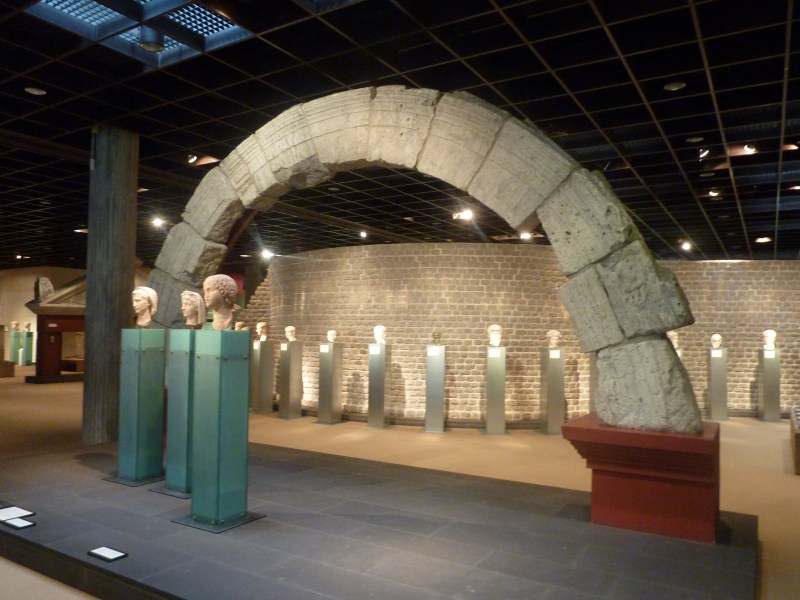
The Roman-Germanic Museum is an archaeological museum that houses a large collection of Roman artifacts from the Roman settlement of Colonia Claudia Ara Agrippinensium, on which modern Cologne is built. The museum protects the original site of a Roman town villa, from which a large Dionysus mosaic remains in its original place in the basement, and the related Roman Road just outside. In the front of the museum the former northern town gate of Cologne with the inscription CCAA (for Colonia Claudia Ara Agrippinensium) is on display in the building.
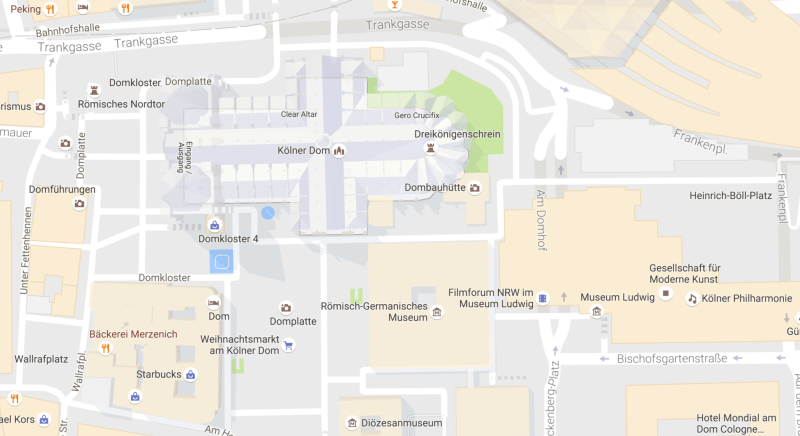
Directions: The Roman-Germanic Museum is located next to the Cologne Cathedral, on the south side. If you leave the church through the front exit, take a left and then take another left. Continue forward along the south side of the church. The museum is directly ahead.
Roman Town Wall
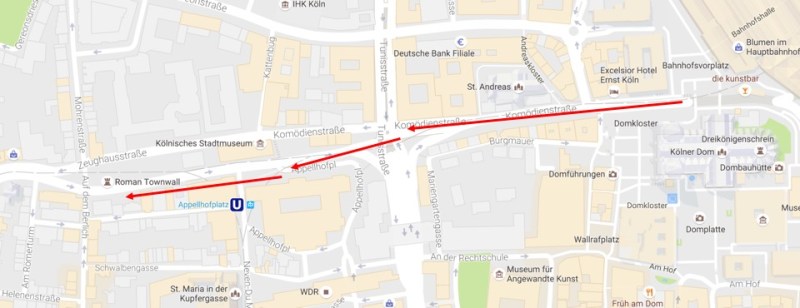
Directions: After leaving The Roman-Germanic Museum, return to the front of the Cologne Cathedral. Take a left on Komodienstrasse. At Tunisstrasse, veer left on Burgmauer.
St Gereon’s Basilica
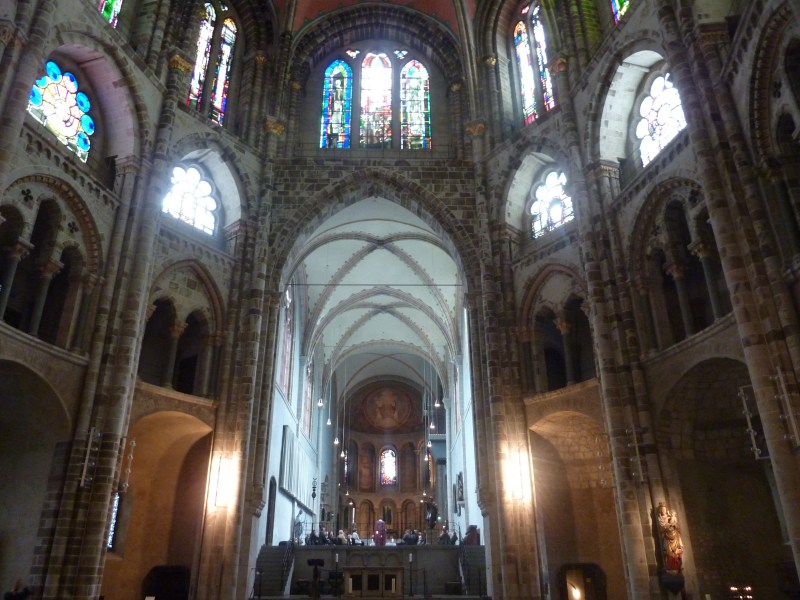
St. Gereon’s Basilica (Basilika Sankt Gereon) is one of twelve great churches in Cologne that were built in the Romanesque style. The first mention of a church at the site, dedicated to St. Gereon, appears in 612. However, the building of the choir gallery, apse, and transepts occurred later, beginning in 1151 and ending in 1227. St. Gereon has a highly irregular plan, the nave being covered by a decagonal oval dome which was completed in 1227 on the remains of Roman walls, which are still visible. It is the largest dome built in the West between the erection of the Hagia Sophia in the 6th century and the Duomo of Florence in the 15th century.
Directions: Take a right on Auf dem Berlich, which becomes Mohrenstrasse. Take a left on Gereonstrasse.

 Eternal Horizon