STARTING POINT: Dresden Main Train Station
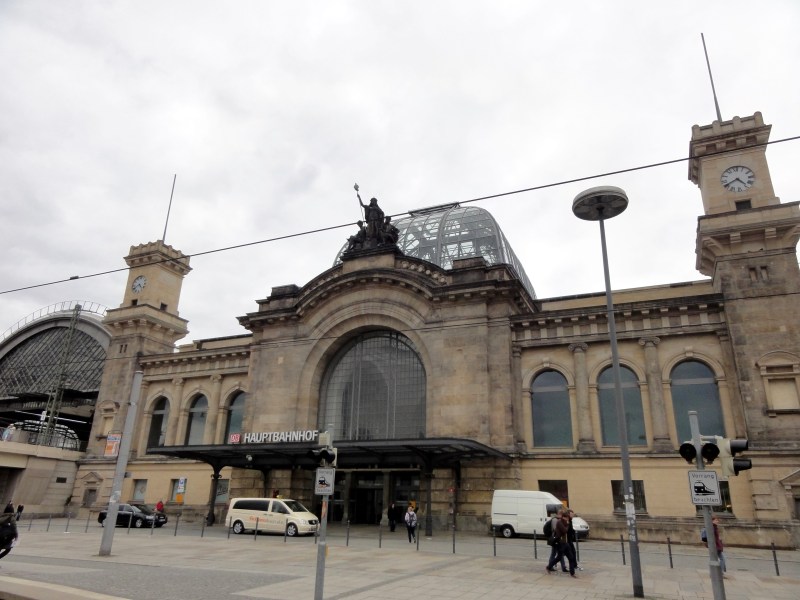
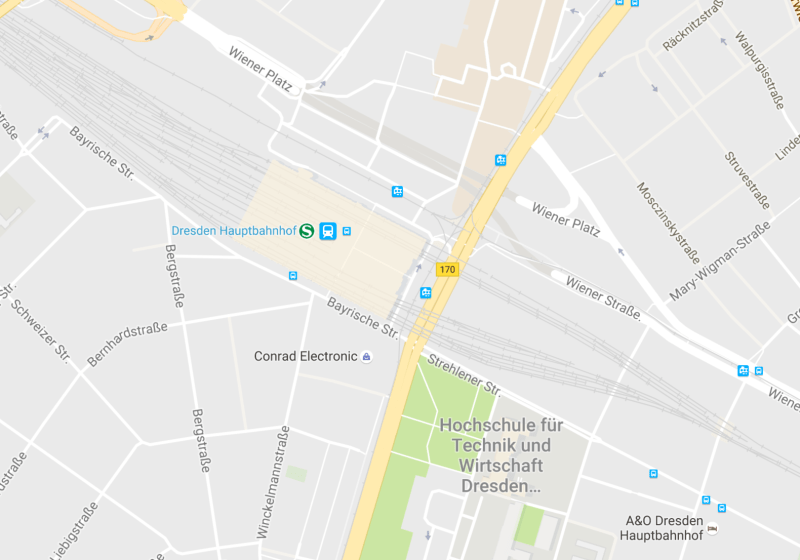
Dresden Hauptbahnhof (English: Dresden main station) is the largest passenger station in the Saxon capital of Dresden. In 1898, it replaced the Böhmischen Bahnhof (“Bohemian station”) of the former Saxon-Bohemian State Railway (Sächsisch-Böhmische Staatseisenbahn), and was designed with its formal layout as the central station of the city. The combination of a station building on an island between the tracks and a terminal station on two different levels is unique. The building is notable for its halls that are roofed with Teflon-coated glass fibremembranes. This translucent roof design, installed during the comprehensive rehabilitation of the station at the beginning of the 21st century, allows more daylight to reach the concourses than was previously possible.
Brühl’s Terrace
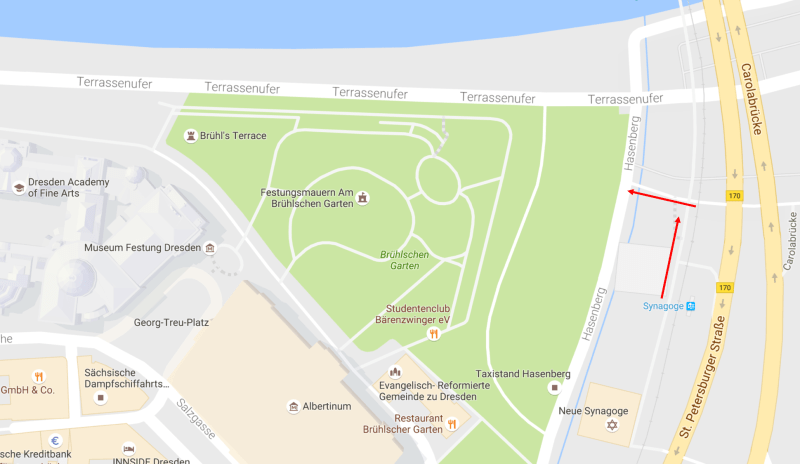
Brühl’s Terrace (German: Brühlsche Terrasse) is a historic architectural ensemble nicknamed “The Balcony of Europe.” The terrace stretches high above the shore of the river Elbe. Located north of the recently rebuilt Neumarkt Square and the Frauenkirche, is one of the favourite inner-city places of both locals and tourists for walking, people watching, and having a coffee.

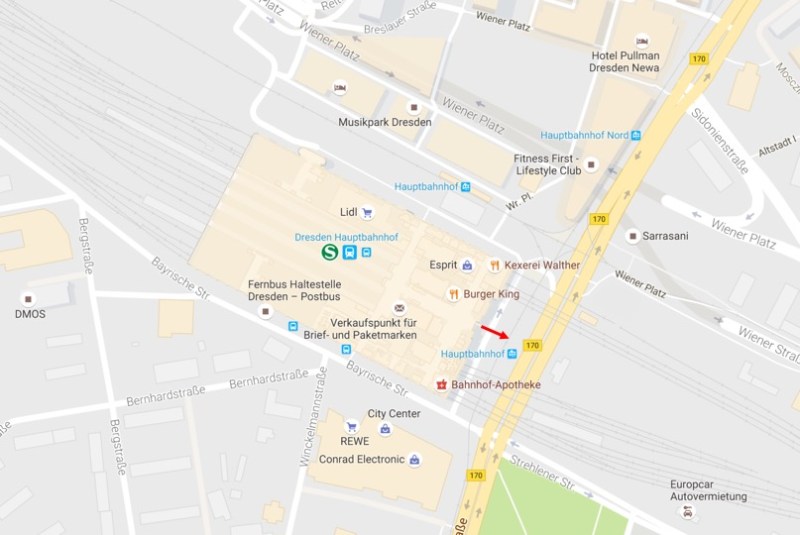
Directions: Take Light Rail 3 from Hauptbahnhof to Synagogue.
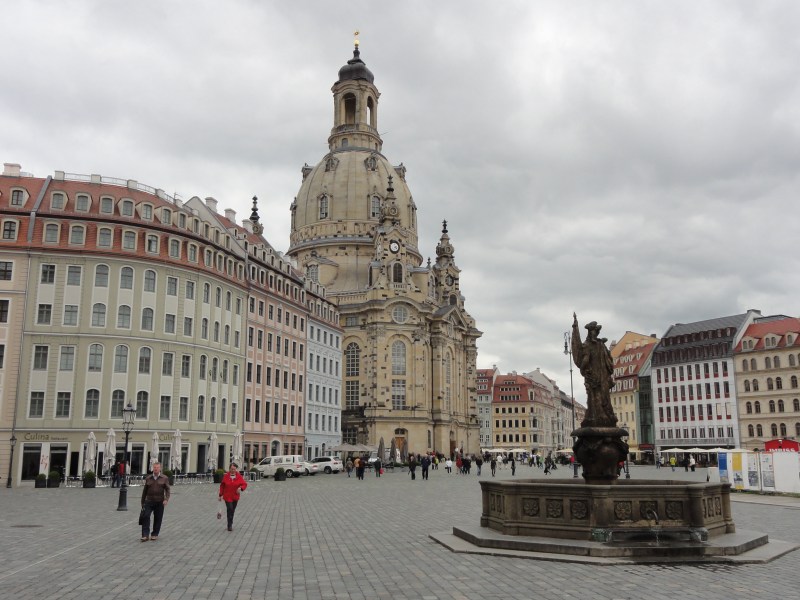
Frauenkirche
The Dresdner Frauenkirche (English: Dresden Church of Our Lady) is a baroque Lutheran church in built in the 18th century. It is considered an outstanding example of Protestant sacred architecture, featuring one of the largest domes in Europe. The church was destroyed in the bombing of Dresden during World War II. The remaining ruins were left for 50 years as a war memorial, following decisions of local East German leaders. The church was rebuilt after the reunification of Germany, starting in 1994. The reconstruction of its exterior was completed in 2004, and the interior in 2005. The surrounding Neumarkt square with its many valuable baroque buildings was also reconstructed in 2004.
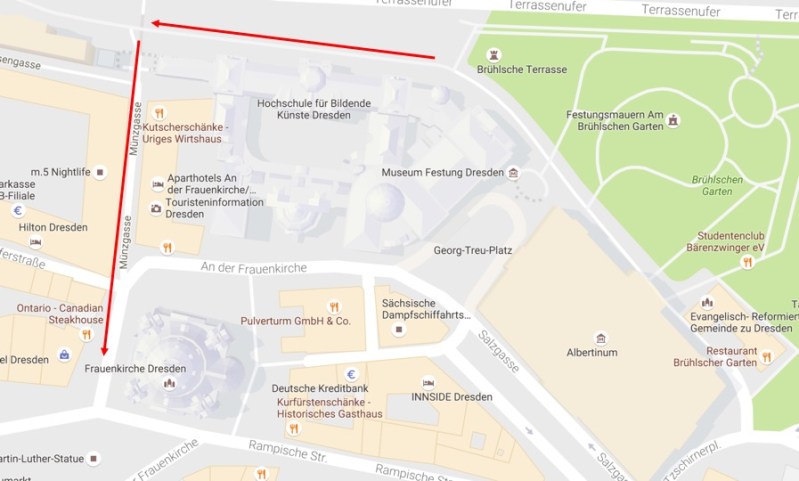
Directions: Wak west along the elevated terrace and take a left on Munzgasse.
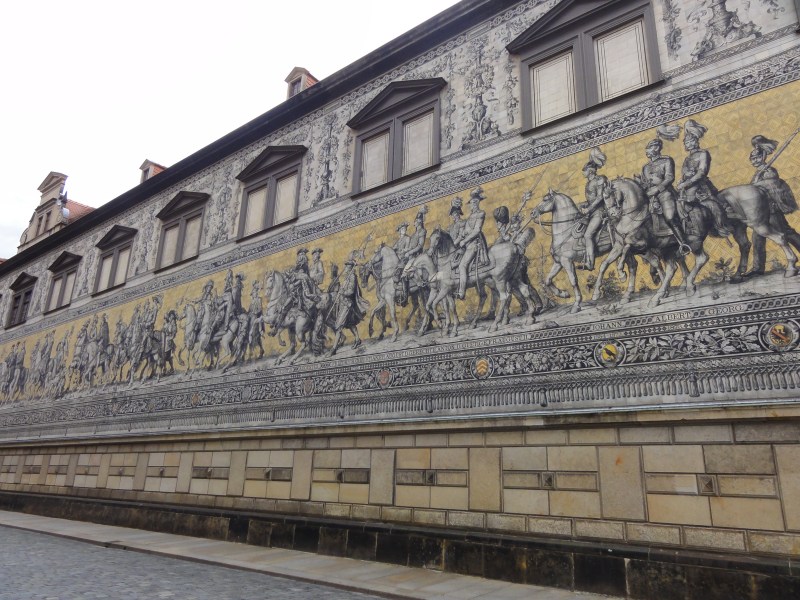
Fürstenzug
The Fürstenzug (English: Procession of Princes) is a large mural of a mounted procession of the rulers of Saxony. It was originally painted between 1871 and 1876 to celebrate the 800th anniversary of the Wettin Dynasty, Saxony’s ruling family. In order to make the work weatherproof, it was replaced with approximately 23,000 Meissen porcelain tiles between 1904 and 1907. With a length of 102 metres (335 ft), it is known as the largest porcelain artwork in the world. The mural displays the ancestral portraits of the 35 margraves, electors, dukes and kings of the House of Wettin between 1127 and 1904. The Fürstenzug is located on the outer wall of the Stallhof (Stables Courtyard) of Dresden Castle.
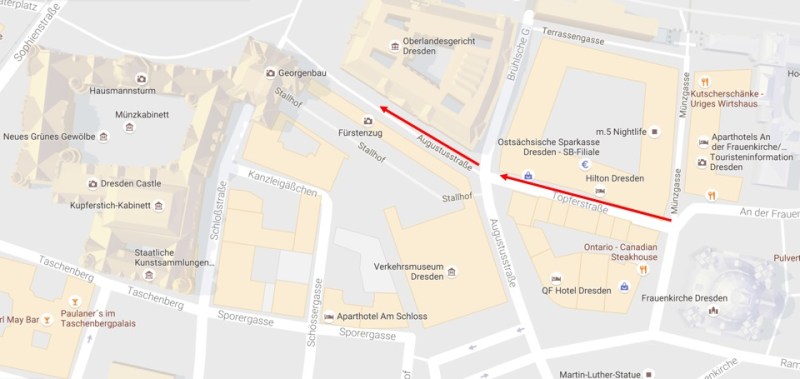
Directions: Walk west on Topferstrasse and continue on Augustusstrasse.
Dresden Castle
Dresden Castle (German: Dresdner Residenzschloss) is one of the oldest buildings in Dresden. For almost 400 years, it has been the residence of the electors (1547–1806) and kings (1806–1918) of Saxony of the Albertine line of the House of Wettin. It is known for the different architectural styles employed, from Baroque to Neo-renaissance. Today, the residential castle is a museum complex that contains the Historic and New Green Vault, the Numismatic Cabinet, the Collection of Prints, Drawings and Photographs and the Dresden Armory with the Turkish Chamber. It also houses an art library and the management of the Dresden State Art Collections.
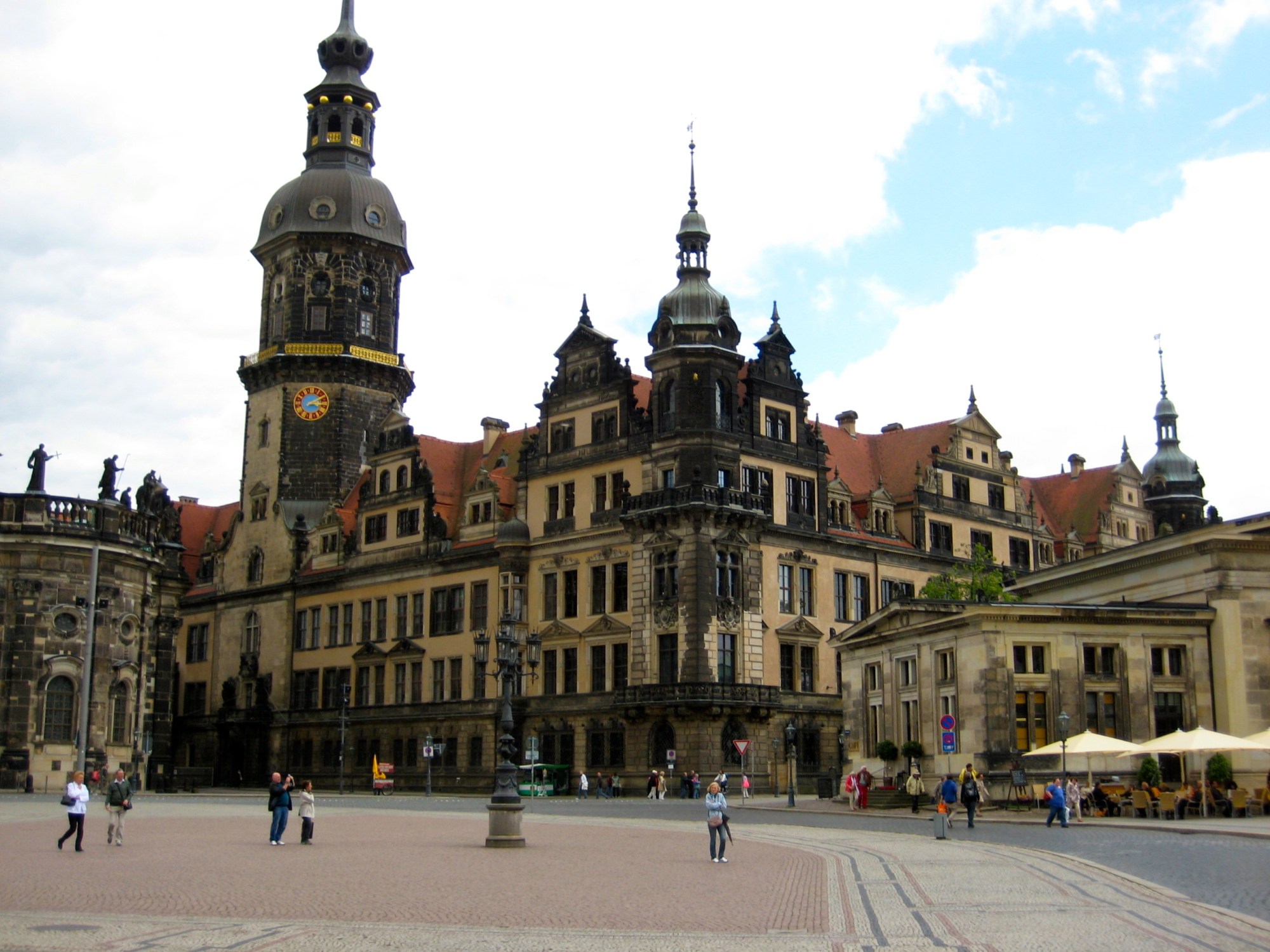
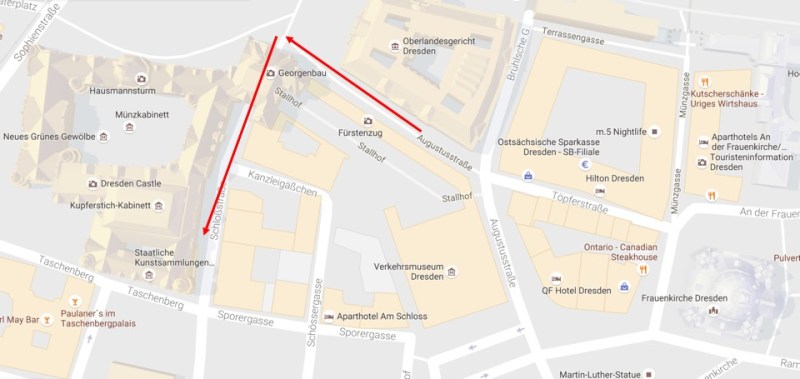
Directions: Continue on Augustusstrasse and take a left on Schlossstrasse.
Dresden Cathedral
The Hofkirche was designed from 1738 to 1751. The church was commissioned by Augustus III, Elector of Saxony and King of Poland while the Protestant city of Dresden built the Frauenkirche (Church of Our Lady) between 1726 and 1743. The Catholic Elector decided that a Catholic church was needed in order to counterbalance the Protestant Frauenkirche. In the crypt the heart of King Augustus the Strong is buried along with the last King of Saxony and the remains of 49 other members of the Wettin family, as well as the remains of people who married into the family, such as Princess Maria Carolina of Savoy, wife of Anthony of Saxony. The church was badly damaged during the bombing of Dresden of the Second World War and was restored during the mid-1980s by the East German government.
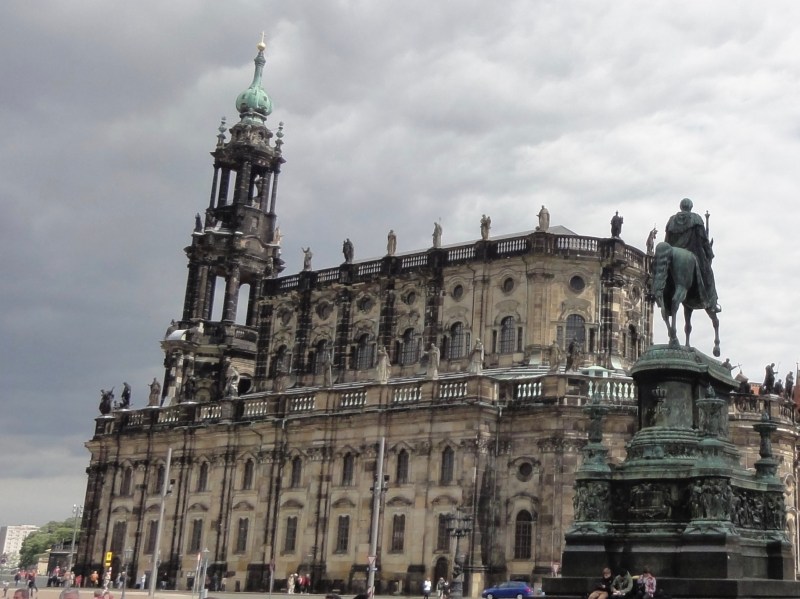
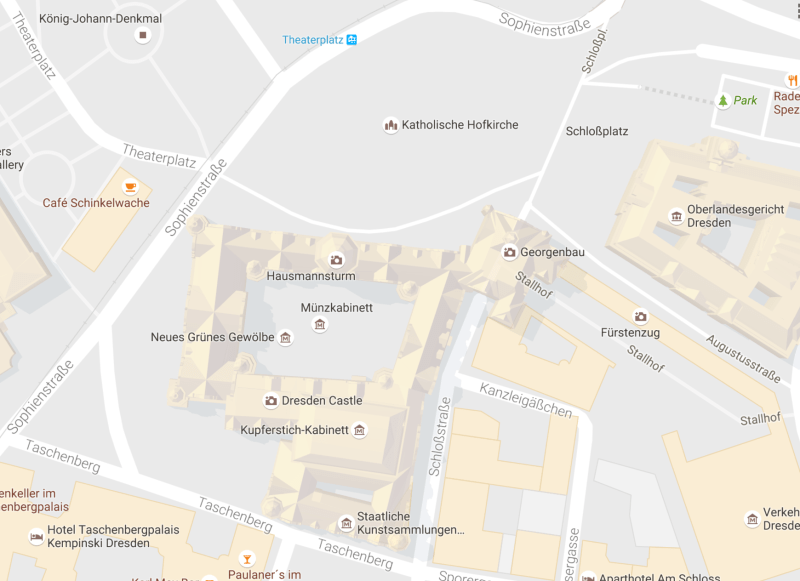
Directions: The Dresden Cathedral/Katholische Hofkirche is located on the north side of Dresden Castle.
Zwinger
The Zwinger is a Rococo style palace. It served as the orangery, exhibition gallery and festival arena of the Dresden Court. The location was formerly part of the Dresden fortress of which the outer wall is conserved. The name derives from the German word Zwinger (an enclosed killing ground in front of a castle or city gate); it was for the cannons that were placed between the outer wall and the major wall. Today, the Zwinger is a museum complex that contains the Gemäldegalerie Alte Meister (Old Masters Picture Gallery), the Dresden Porcelain Collection (Porzellansammlung) and the Mathematisch-Physikalischer Salon (Royal Cabinet of Mathematical and Physical Instruments).

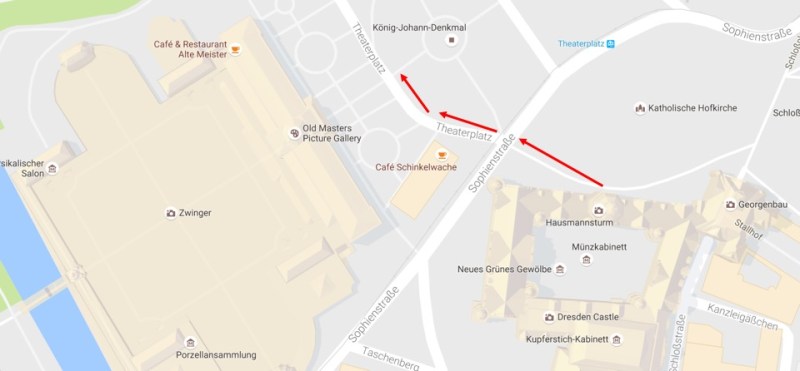
Directions: From Dresden Cathedral, cross Sophienstrasse to Theaterplatz. take a left and enter the Zwinger.
Semperoper
The Semperoper is the opera house of the Saxon State Opera and the concert hall of the Saxon State Orchestra. It is also home to the Semperoper ballet. The opera house was originally built in 1841. After a devastating fire in 1869, the opera house was rebuilt and completed in 1878. The opera house has a long history of premieres, including major works by Richard Wagner and Richard Strauss.
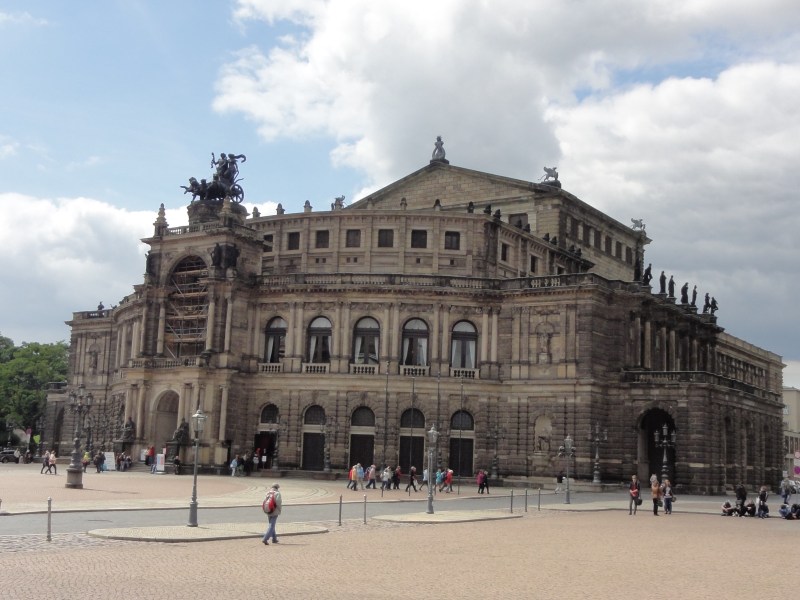
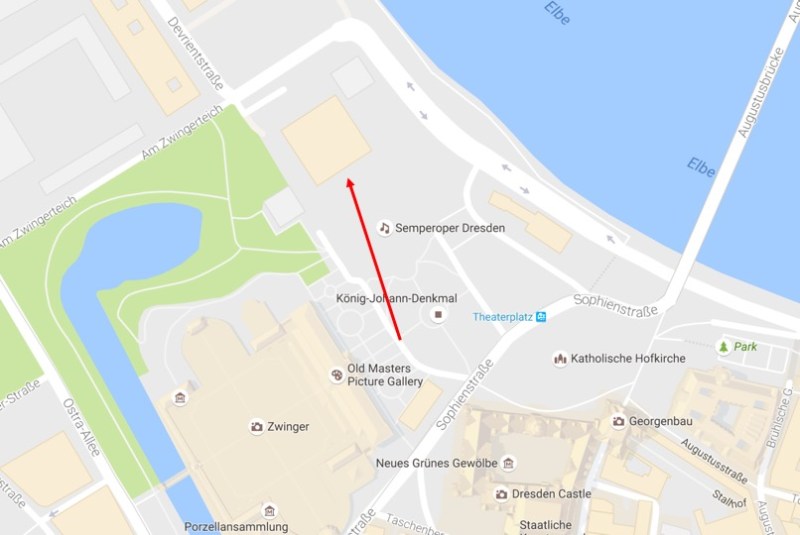
Directions: From Zwinger, cross Theaterplatz to the Opera House.
Augustusbrücke
The Augustus Bridge is the oldest bridge in the city of Dresden. It was built between 1907 and 1910. Crossing the river Elbe, the road bridge connects the Innere Neustadt in the north with the historic area of the city in the south. There has been a bridge at the same location since at least the 12th century. Three tram lines of the Dresdner Verkehrsbetriebe pass over the Augustus Bridge.
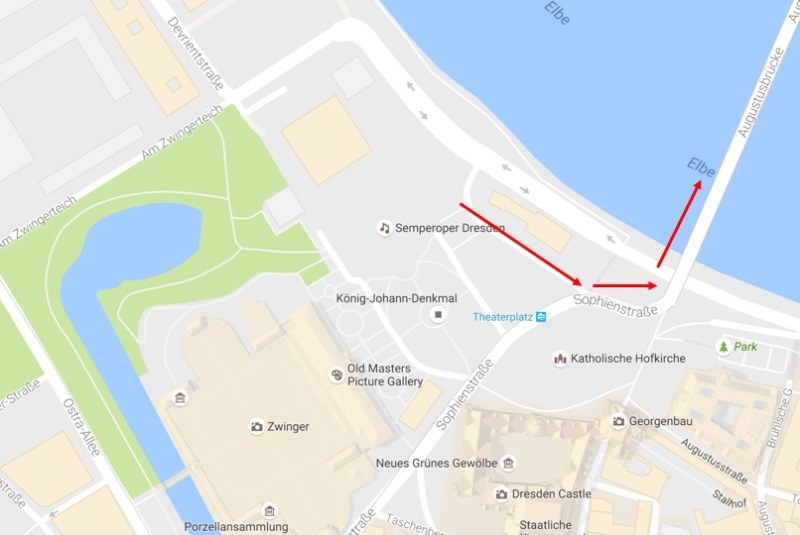
Directions: From the Opera House, walk through Theaterplatz and veer to the left on Sophienstrasse. Take a left on Augutubrucke.
Military History Museum
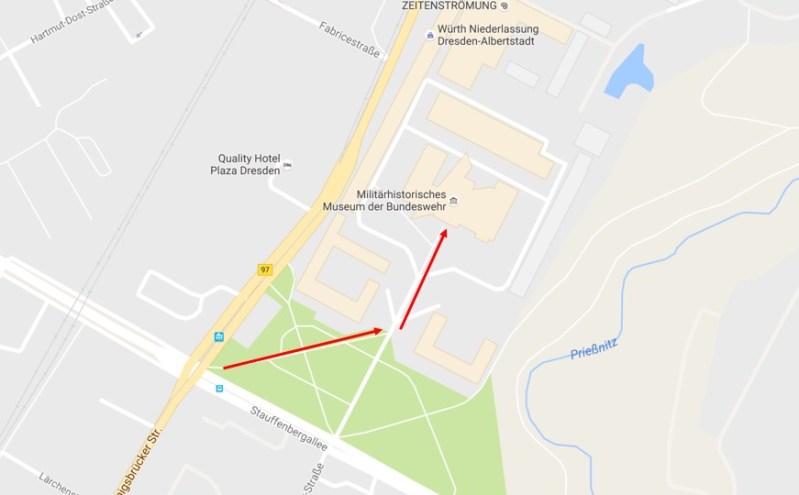
The Bundeswehr Military History Museum (German: Militärhistorisches Museum der Bundeswehr) is the military museum of the German Armed Forces, the Bundeswehr, and one of the major military history museums in Germany. It is located in a former military arsenal. After a long history of switching titles and approaches to military history, the museum was re-opened in 2011 with a new internal and external concept. The museum focuses on the human aspects of war, while also showcasing the evolution of German military technology.
Directions: After walking across Augustusbrucke, take Light Rail 8 from Neustädter Markt to Stauffenbergallee. Walk through Olbrichtplatz to Hans-Oster-Straße, which is the street in the middle. Take left and continue forward to the museum.
 Eternal Horizon