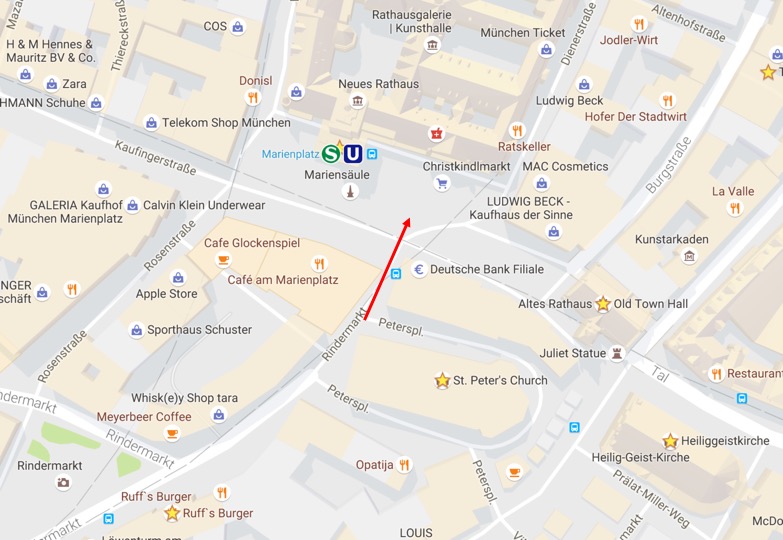
Starting point: Heiliggeistkirche
Of the original Gothic church only the choir buttresses and the north wall of the nave remain. It was remodeled in 1724-30. The church suffered severe damage during World War II and its interior furnishings were largely destroyed; extensive rebuilding and restoration was carried out after the war.

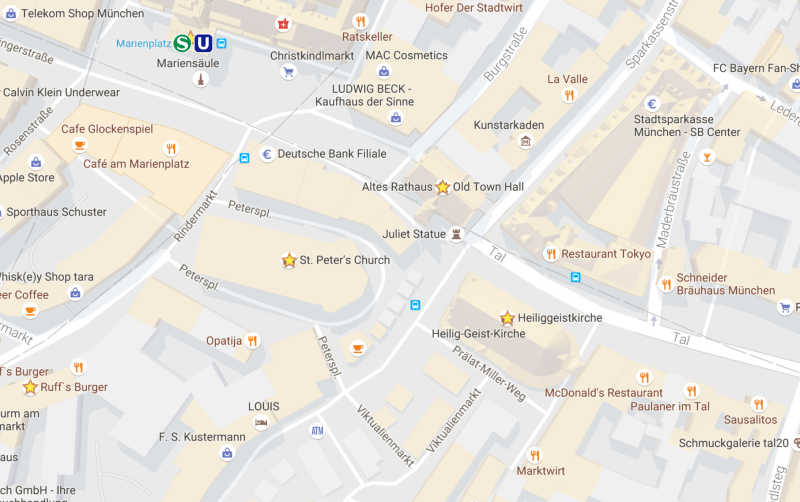
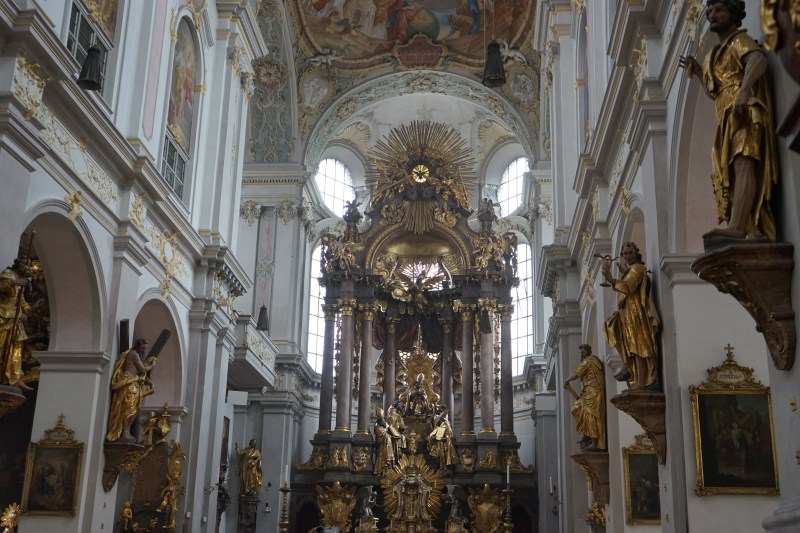
Peterskirche
Before the foundation of Munich as a city in 1158, there had been a pre-Merovingian church on this site. The current church was built in 1368. In the early 17th century the 91 meter spire received its Renaissance steeple top and a new Baroque choir was added.
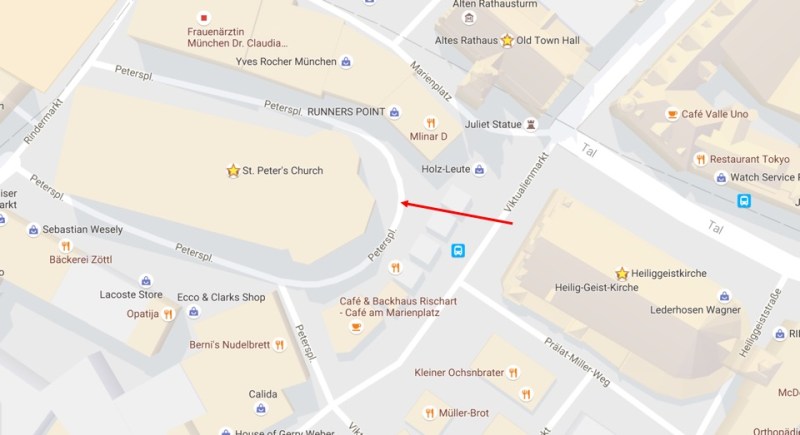
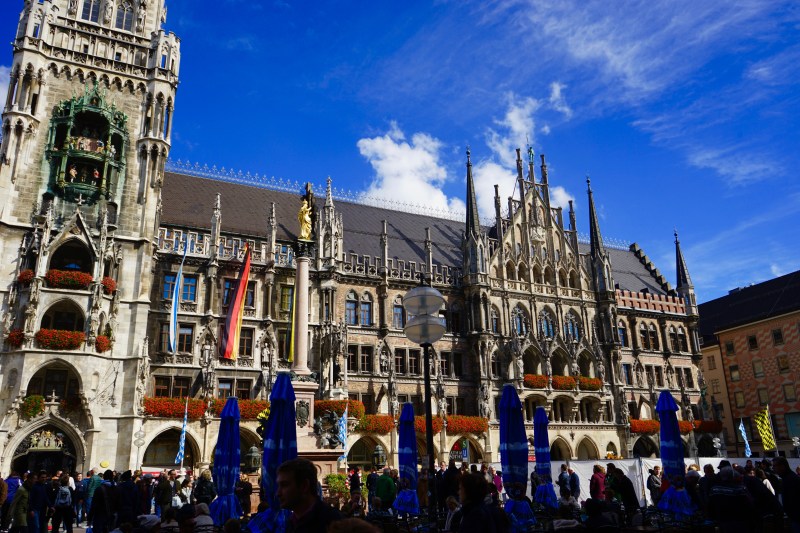
Marienplatz
Marienplatz has been Munich’s main square since 1158. In the Middle Ages, markets and tournaments were held in this city square. The Glockenspiel in the tower of the new city hall was inspired by these tournaments, and draws millions of tourists a year. Marienplatz was named after the Mariensäule, a Marian column erected in its centre in 1638 to celebrate the end of Swedish occupation. Today the Marienplatz is dominated by the New City Hall (Neues Rathaus) on the north side and Munich’s Old City Hall (Altes Rathaus) at the east side.
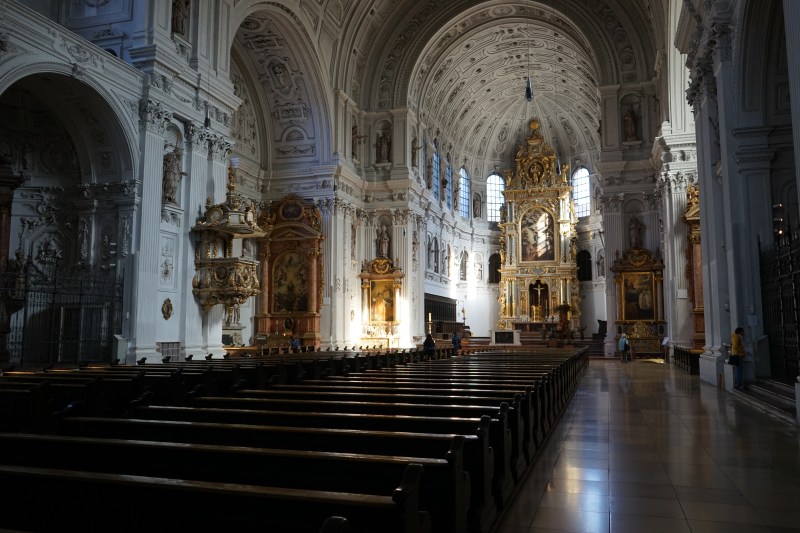
Michaelskirche
St Michael is the largest Renaissance church north of the Alps. The church was finally consecrated in 1597, after fourteen years of construction. It contains the tombs of several members of the Wittelsbach dynasty.
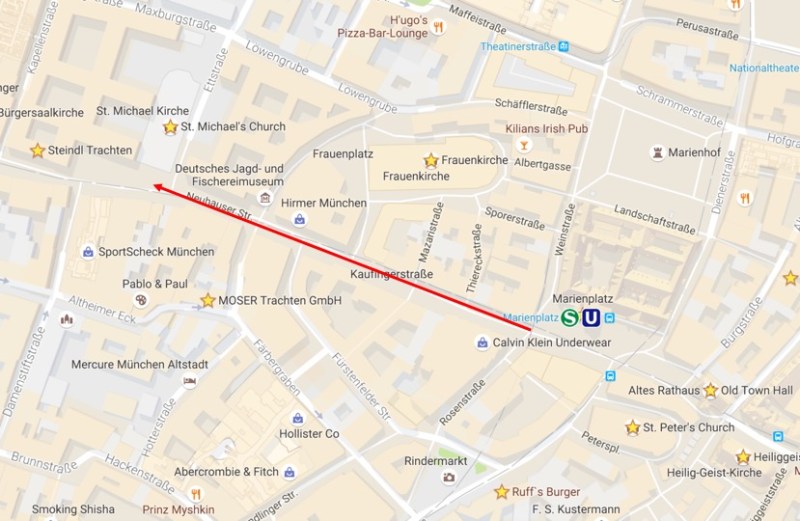
Directions: Walk west on Kaufingerstraße, which becomes Neuhauser Str.
Asamkirche
St. Johann Nepomuk, better known as the Asam Church (German: Asamkirche) is a Baroque church built from 1733 to 1746 by the brothers, sculptor Egid Quirin Asam, and painter Cosmas Damian Asam as their private church. It is considered to be one of the most important buildings of the southern German Late Baroque.

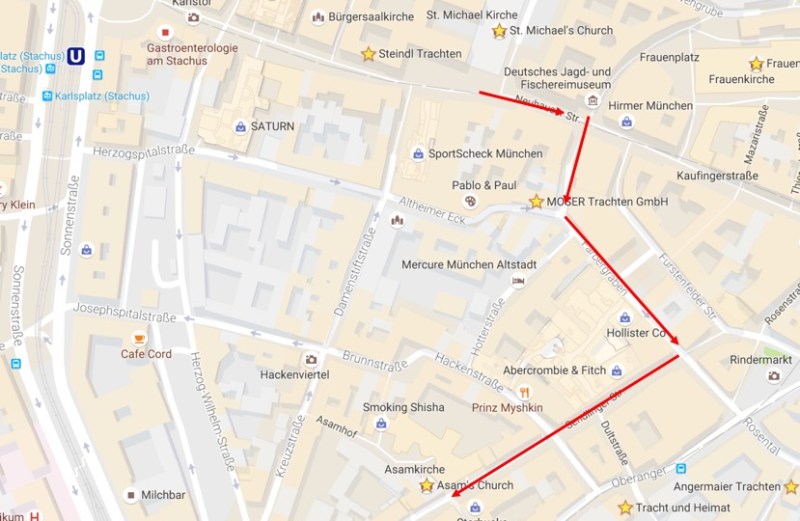
Directions: From the church, turn left on Neuhauser Str. and then right on Färbergraben, which forks to the left. Take a right on Sendlinger Str.
Sendlinger Tor
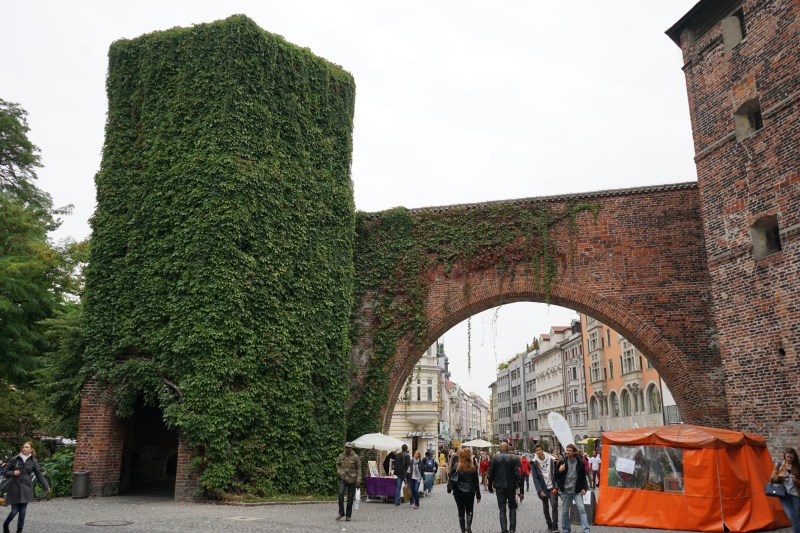
The Sendlinger Tor (English: Sendling Gate) is a city gate at the southern extremity of the historic old town area of Munich. It served as a fortification for the defence and is one of Munich’s three remaining gothic town gates. As part of the great urban expansion by Ludwig the Bavarian (from 1285 to 1337), a second city wall with four town gates was built, of which Sendlinger Tor was one. In 1318, Sendlinger Tor was first mentioned as a starting point for the road to Italy.
Directions: After leaving the church, turn right on Sendlinger Str.

 Eternal Horizon