Starting Point: Café de Oriente
Directions: Take Line 2 or Line 5 to Opera. Take Calle de Vergara. Continue forward on Calle Carlos III. Turn left on Plaza de Ote.
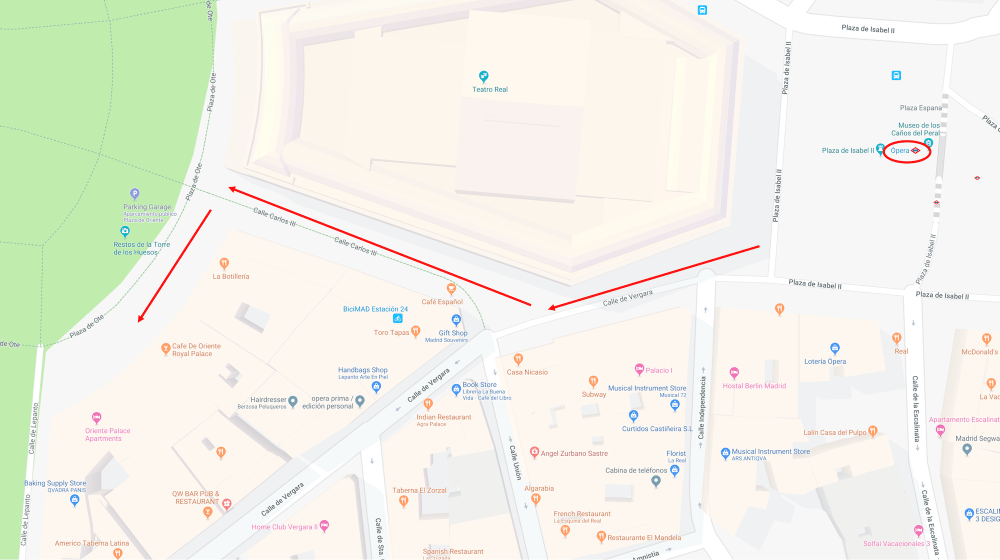
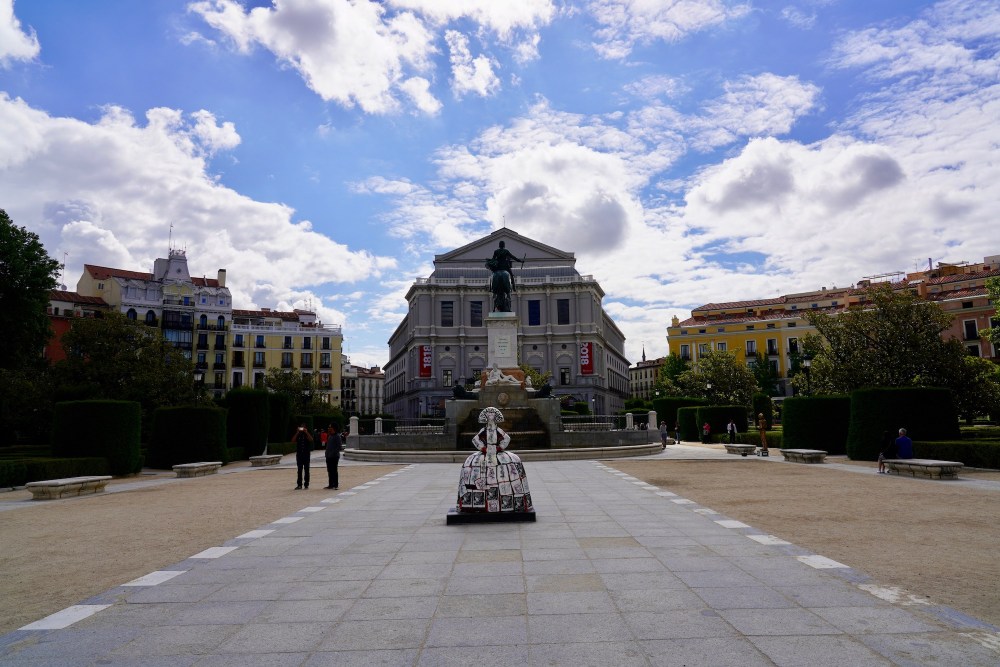
Teatro Real
Teatro Real is a major opera house founded in 1818. It closed in 1925 and reopened in 1997 with a capacity of 1,746 seats. Today, the Teatro Real opera is one of the great theaters of Europe and its seasons are home productions involving leading figures of the international singing, musical direction, stage direction and dance. The theater also offers guided tours in several languages, including the auditorium, stage, workshops and rehearsal rooms.
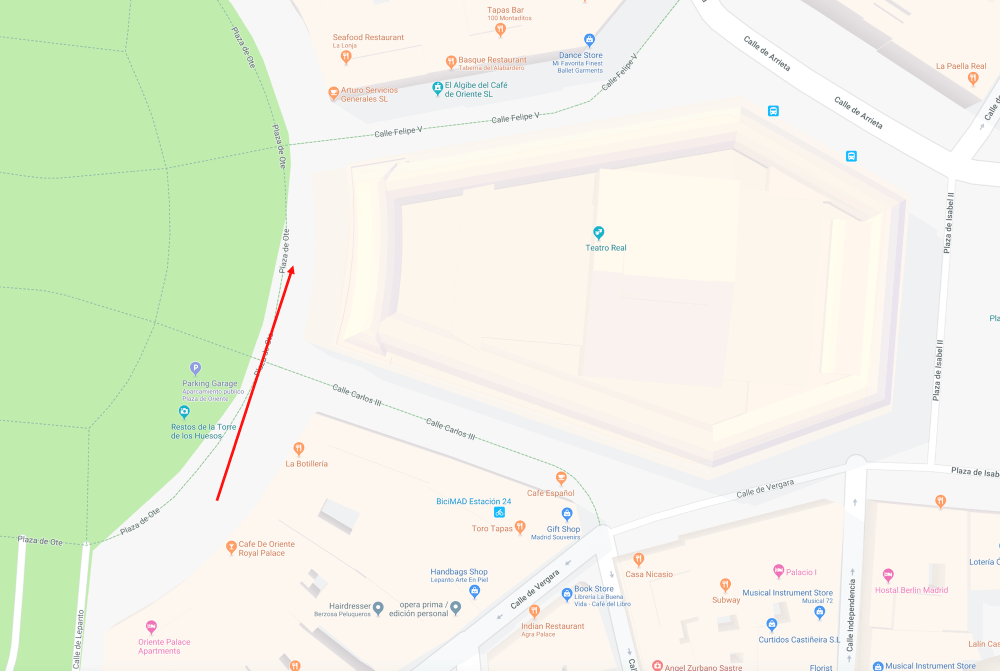
Directions: Return on Plaza de Ote.
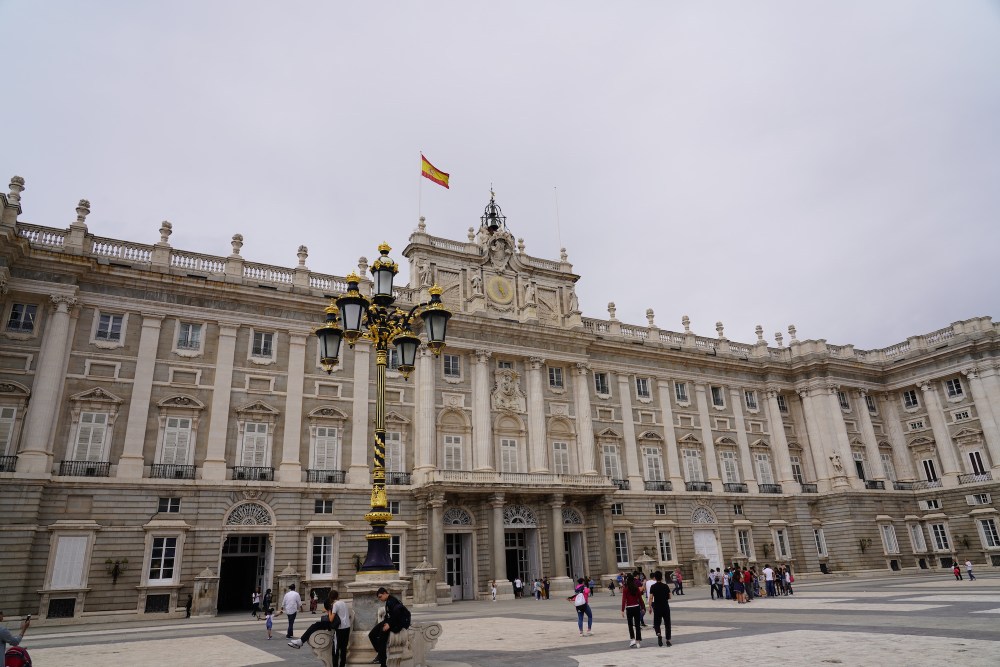
Royal Palace of Madrid
The Royal Palace of Madrid is the official residence of the Spanish Royal Family at the city of Madrid, but it is only used for state ceremonies. The palace has 1,450,000 sq ft of floor space and contains 3,418 rooms. It is the largest royal palace in Europe by floor area. Construction spanned the years 1738 to 1755. King Carlos III first occupied the new palace in 1764.
Directions: Cross through the Plaza de Oriente. Turn left on Calle de Bailén. Follow the palace to the end and take a right into the courtyard and take a right.
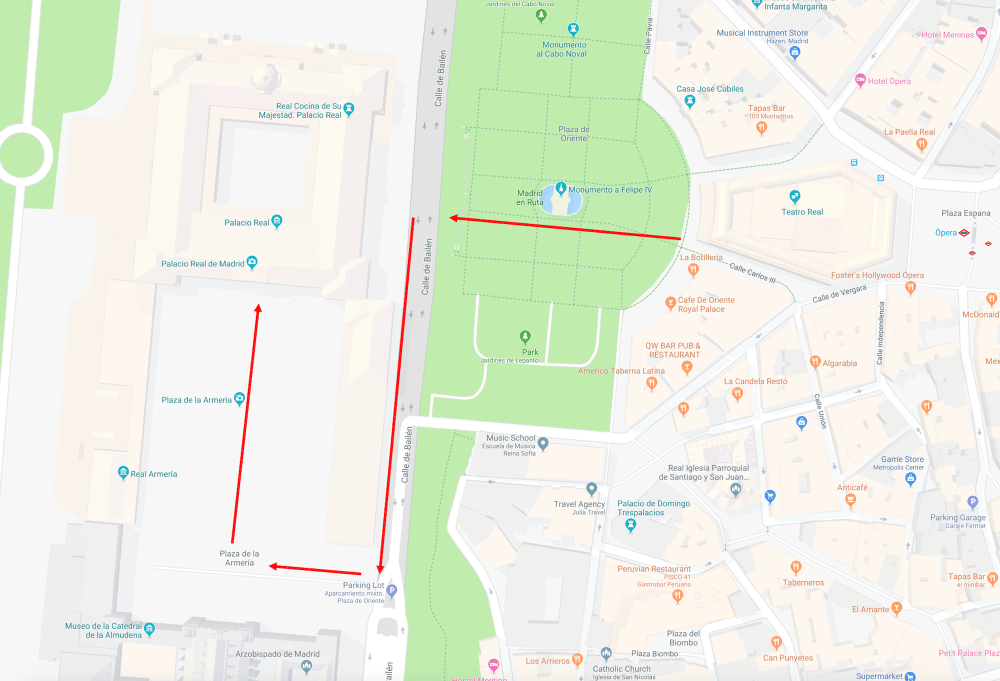
Catedral de la Almudena
Construction of Almudena began in 1879. Construction ceased completely during the Spanish Civil War, and the project was abandoned until 1950. The cathedral was not completed until 1993.
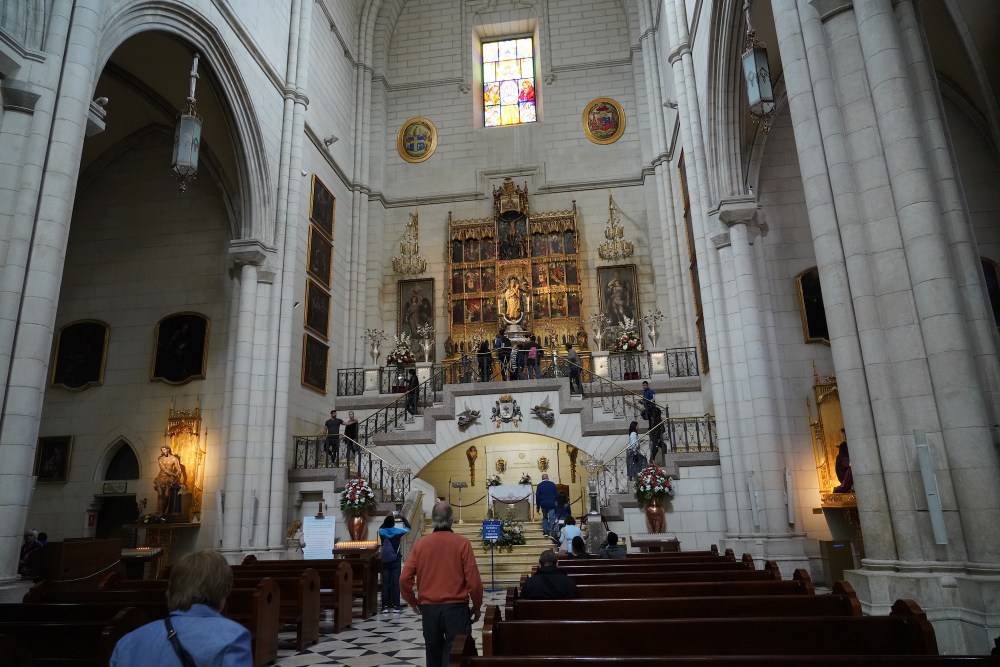
Directions: Leave the courtyard and take a right on Calle de Bailén.
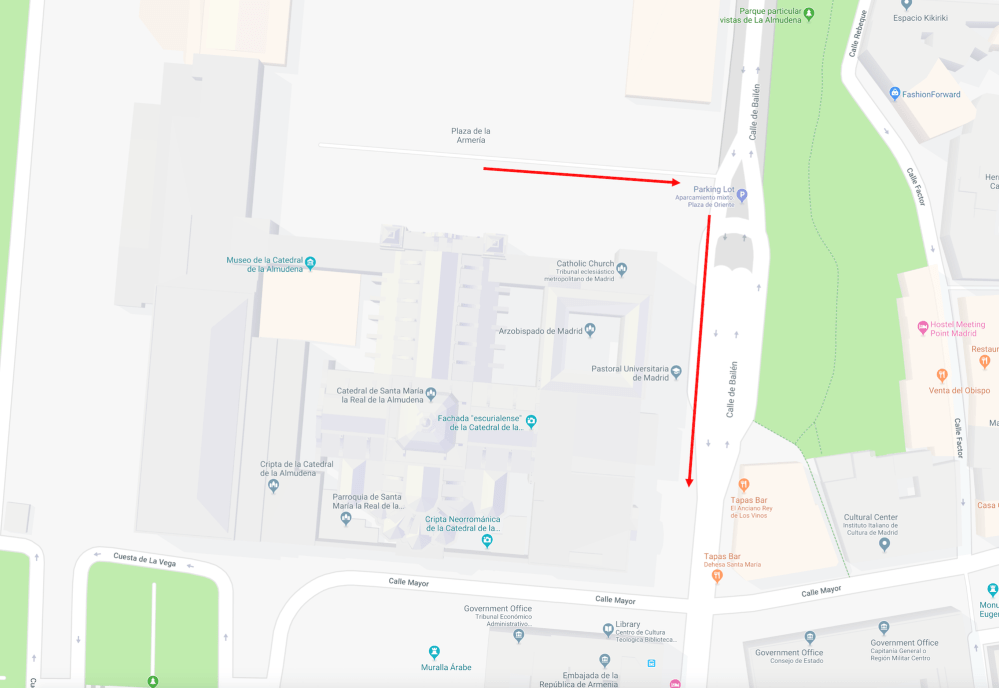
Catedral de la Almudena Crypt

Directions: Continue on Calle de Bailén and turn right on Calle Mayor.
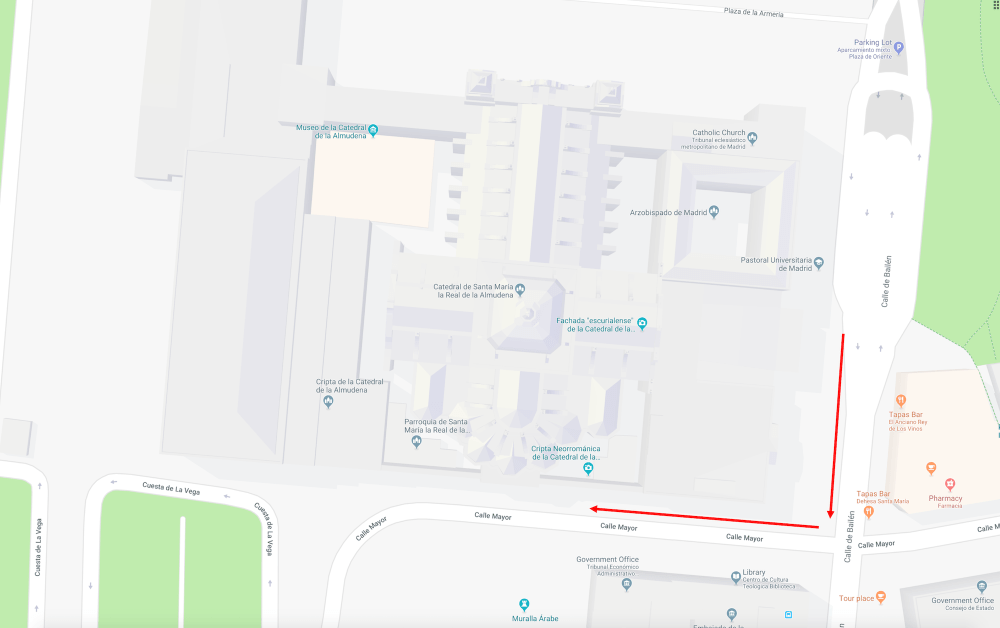
Jardines de Sabatina
Directions: Go left on Calle Mayor and turn left on Calle de Bailén.
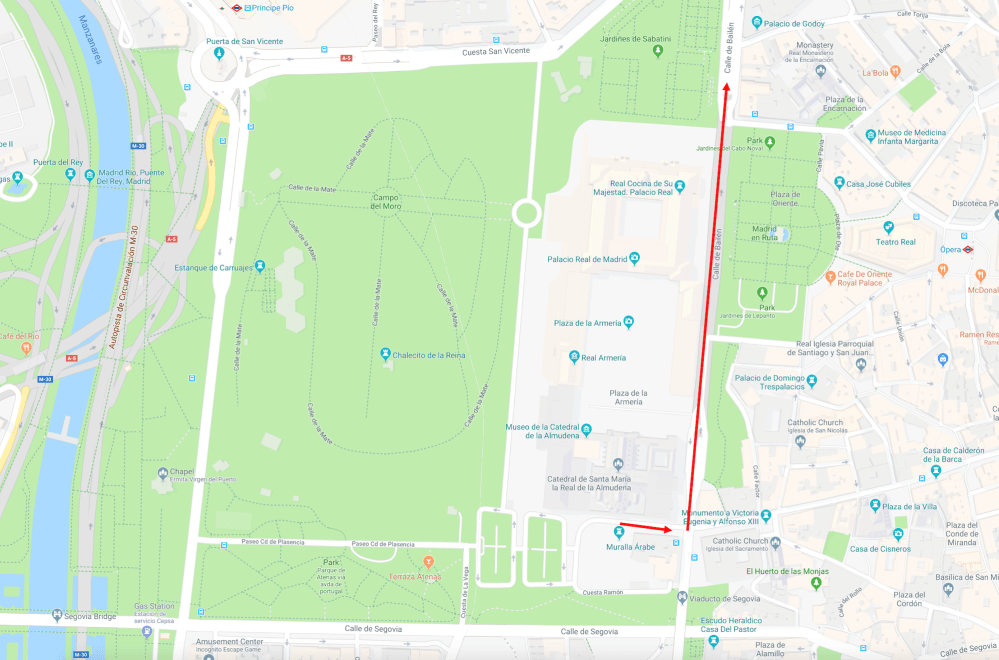
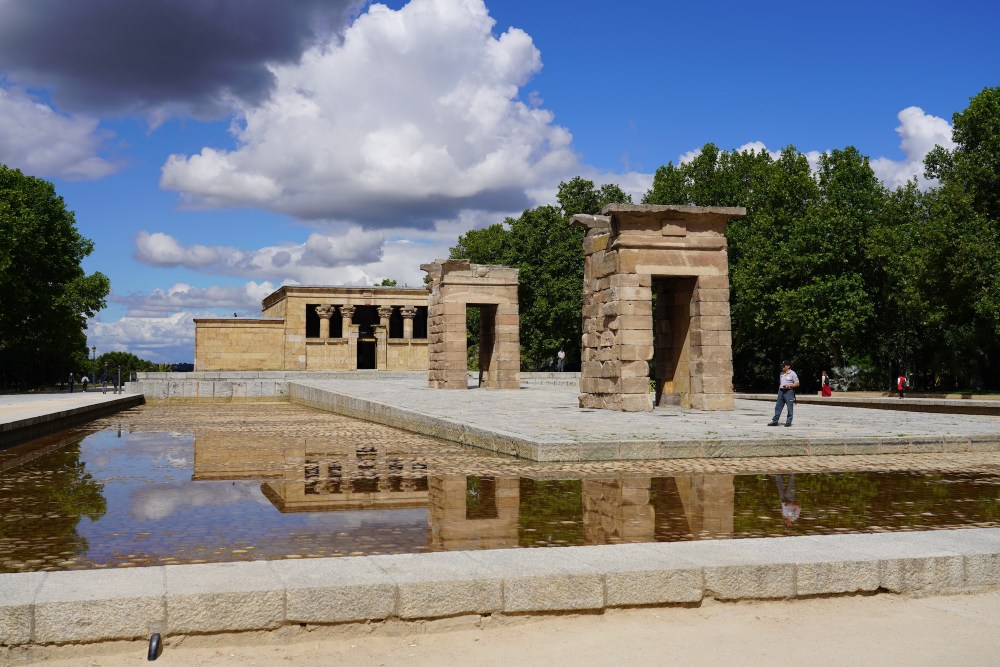
Temple of Debod
The Temple of Debod is an ancient Egyptian temple that was dismantled and rebuilt in Madrid.
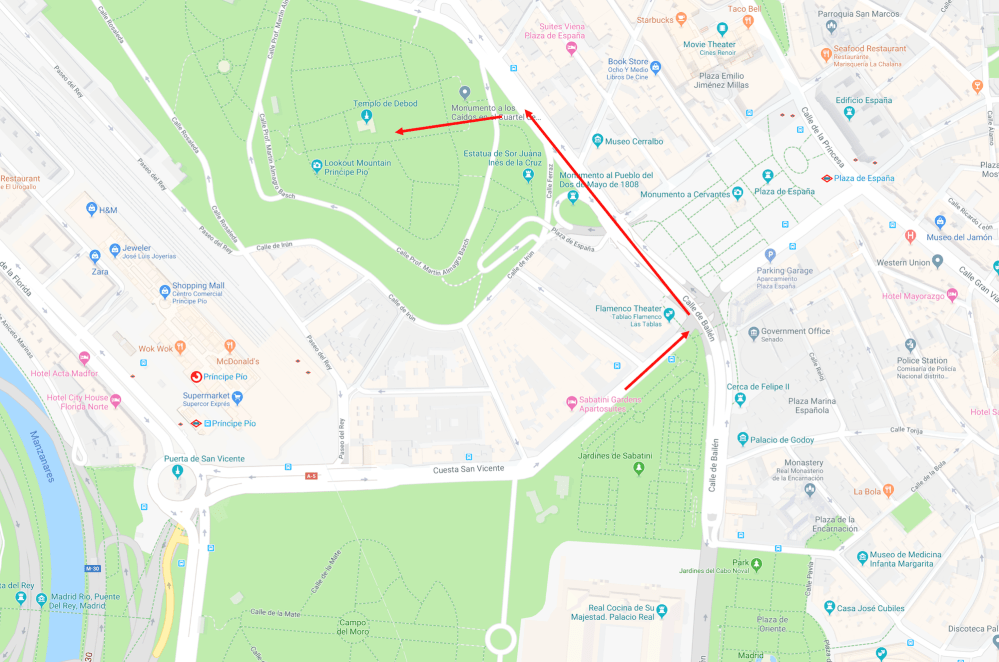
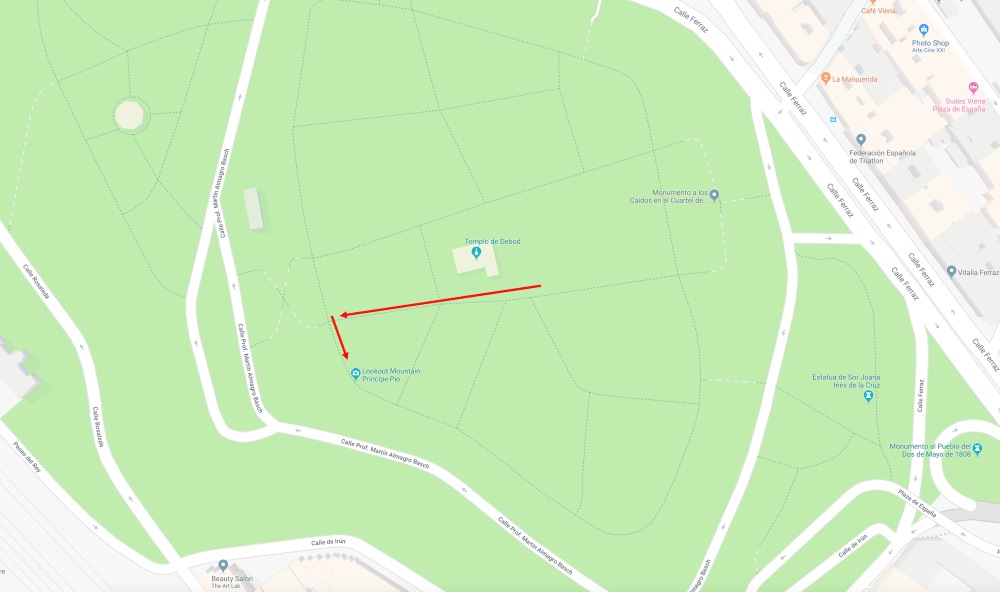
Directions: Leave the park on Cuesta San Vicente and turn right. Turn left on Calle de Bailén which turns into Calle Ferraz.
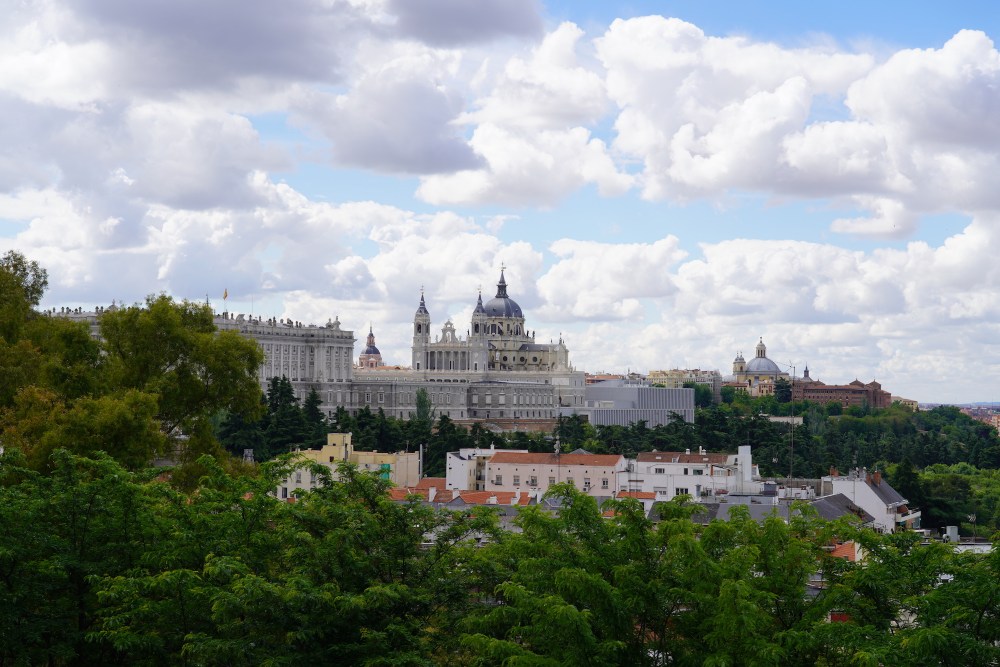
Viewpoint
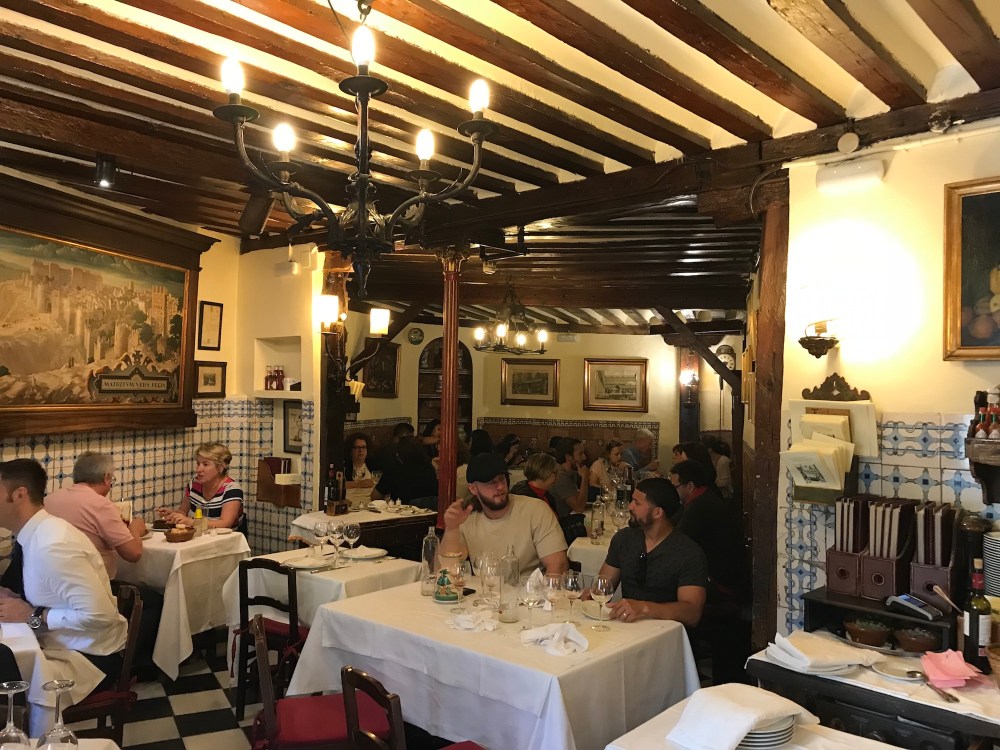
Lunch: Sobrino de Botín
Sobrino de Botín is the oldest restaurant continuously operating in the world, according to the Guinness Book of Records. The artist Francisco de Goya worked in Cafe Botin as a waiter while waiting to get accepted into the Royal Academy of Fine Arts. The restaurant was founded in 1725 by Frenchman Jean Botin and his wife, and was originally called Casa Botín. It was inherited by a nephew called Candido Remis and had a name change to Sobrino de Botín, which survives to this day. Sobrino is the Spanish word for nephew. Apart from using the original recipes, the restaurant has also kept the flame burning in the oven continuously, never to be extinguished. The restaurant and its speciality of cochinillo asado (roast suckling pig) are mentioned in the closing pages of Ernest Hemingway’s novel The Sun Also Rises.
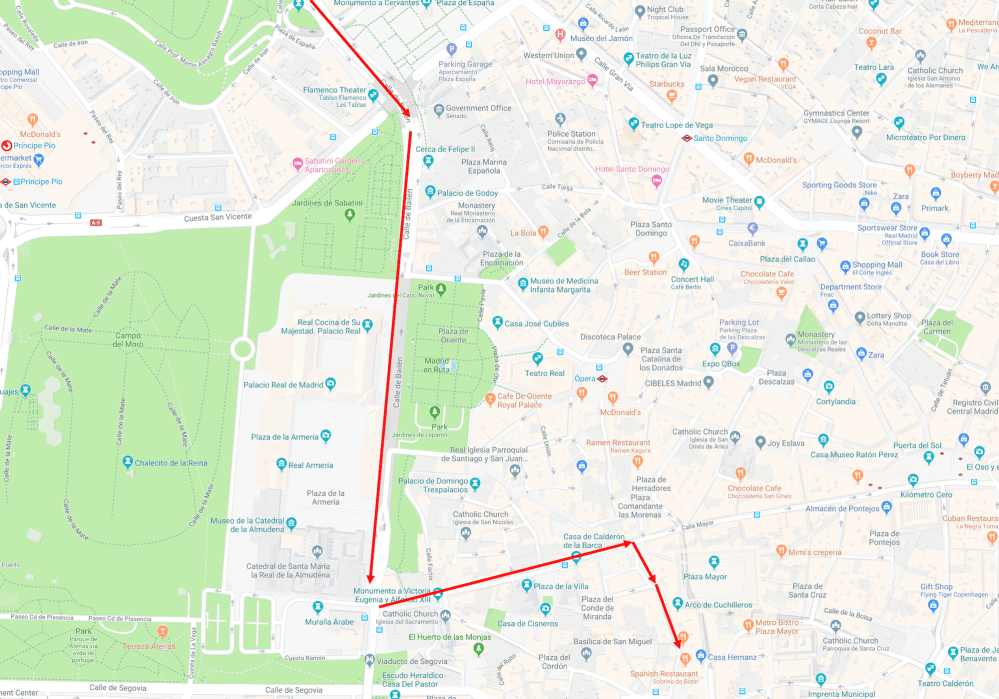
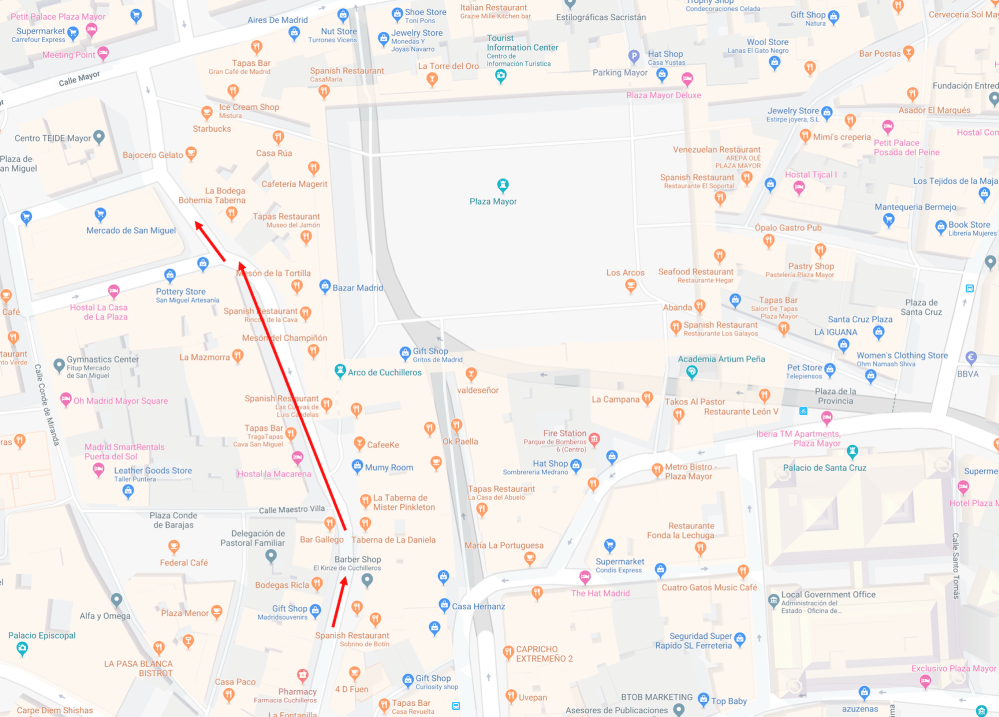
Directions: Leave the park on Calle Ferraz and follow it as it becomes Calle de Bailén. Turn left on Calle Mayor. Turn right on Calle Cava de San Miguel.
Mercado de San Miguel
The Market of San Miguel is a covered market originally built in 1916. San Miguel Market is the most popular market in Madrid among tourists since it is located in the center of Madrid and within walking distance from Plaza Mayor. The market is not a traditional grocery market but a gourmet tapas market, with over 30 different vendors selling a wide variety of freshly prepared tapas, hams, olives, baked goods and other foods. Beer, wine and champagne are also available.

Directions: Return on Calle Cava de San Miguel.
Plaza Mayor
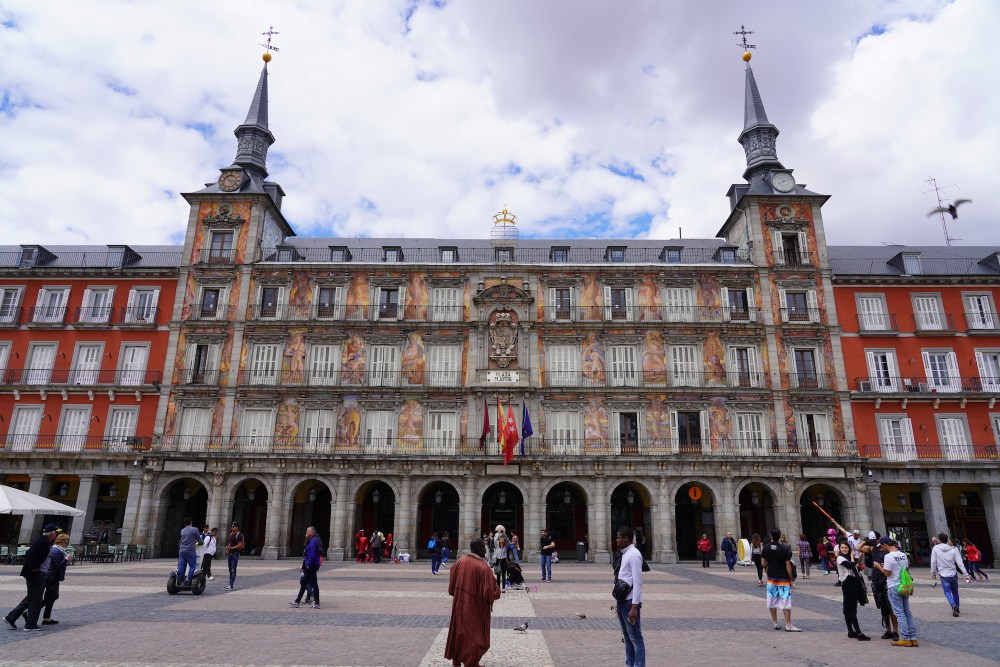
The Plaza Mayor was first built (1580–1619) during Philip III’s reign and is a central plaza in the city of Madrid. It is surrounded by three-story residential buildings having 237 balconies facing the Plaza. It has a total of nine entrance ways. The Casa de la Panadería (Bakery House), serving municipal and cultural functions, dominates the Plaza Mayor.
Directions: Continue on Calle Cava de San Miguel and turn left on Calle Cdad. Rodrigo.
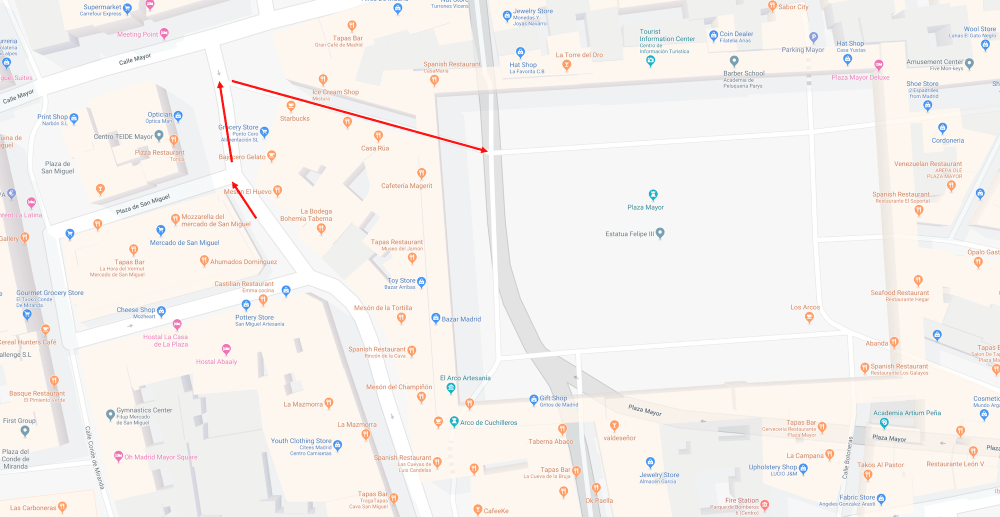
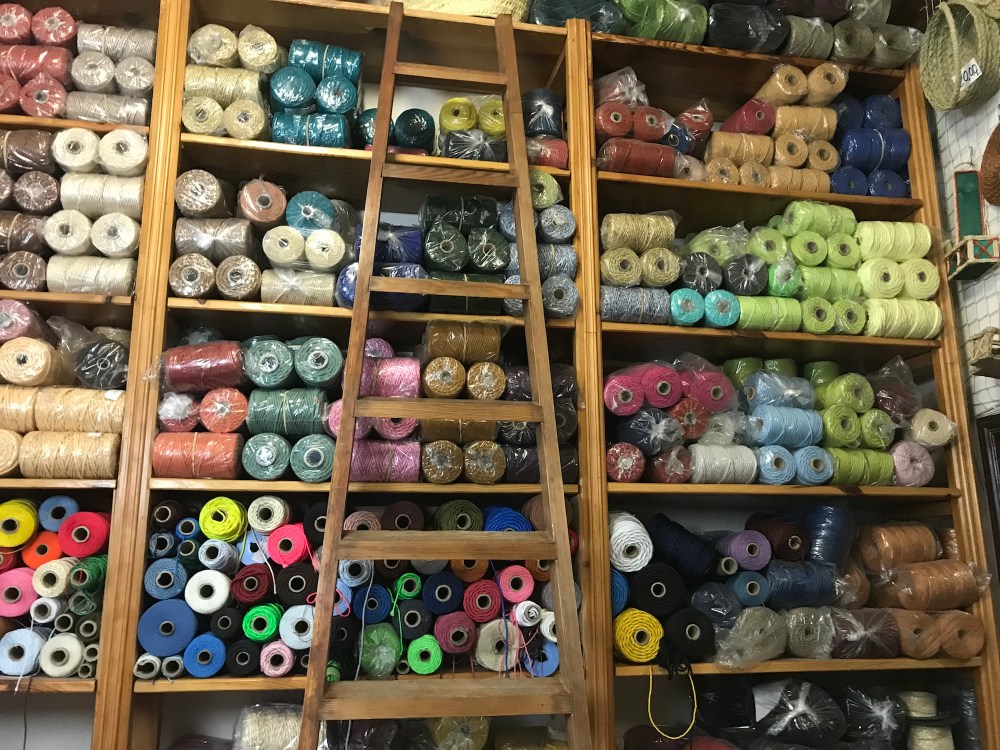
Casa Hernanz
Espadrille store in business for five generations.
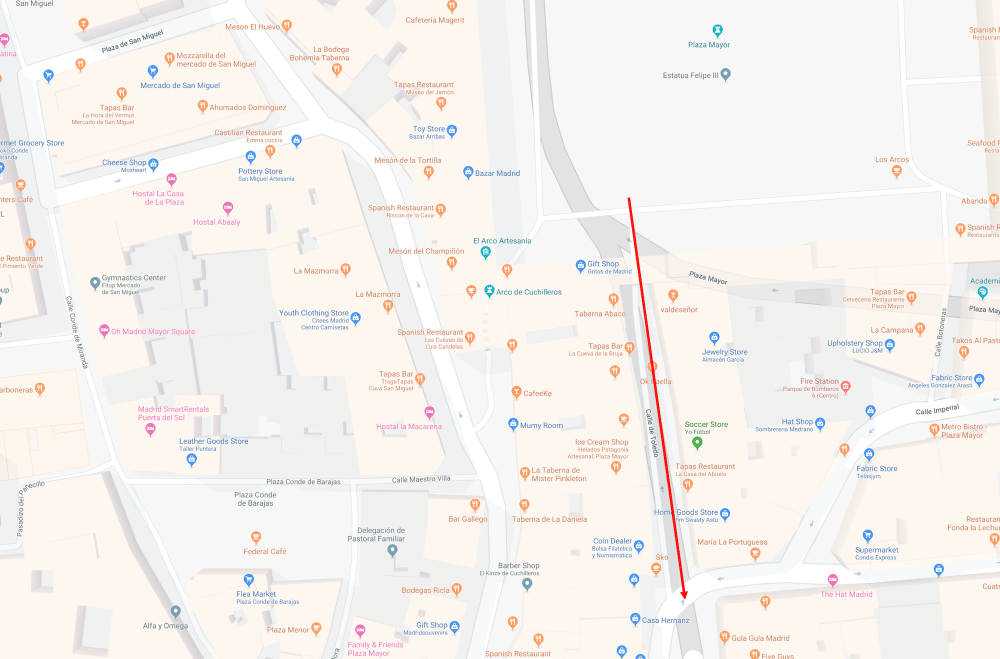
Directions: Exit Plaza Mayor on Calle de Toledo.
Convento de Corpus Cristi
El Convento de Corpus Christi was founded in the 17th century. The cloistered nuns here make and sell traditional sweets.
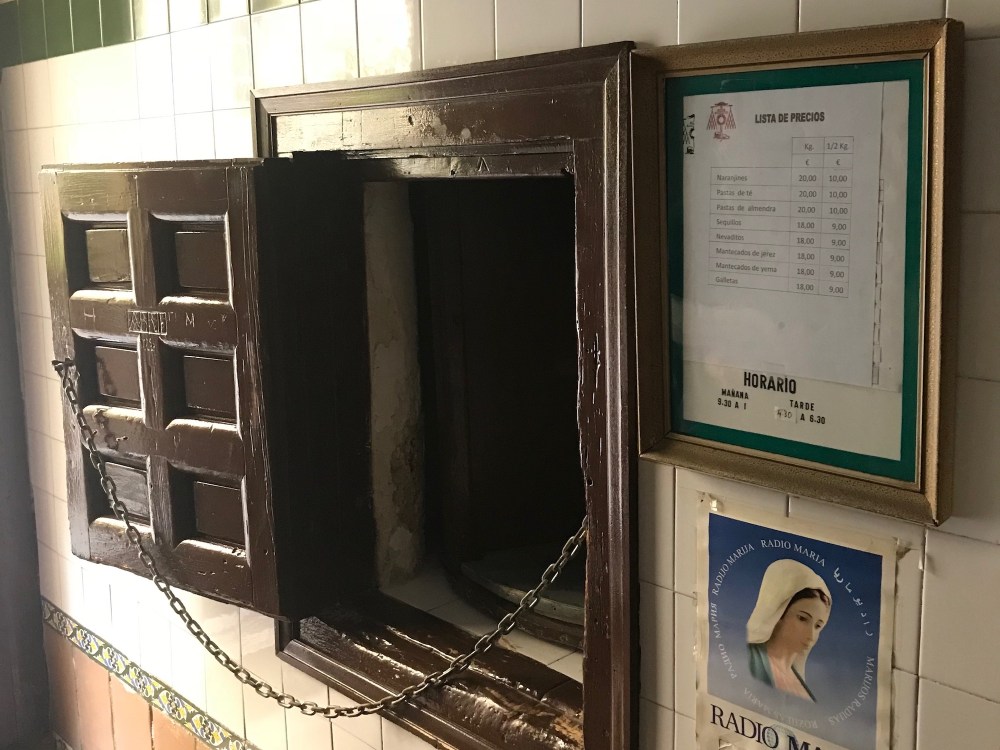
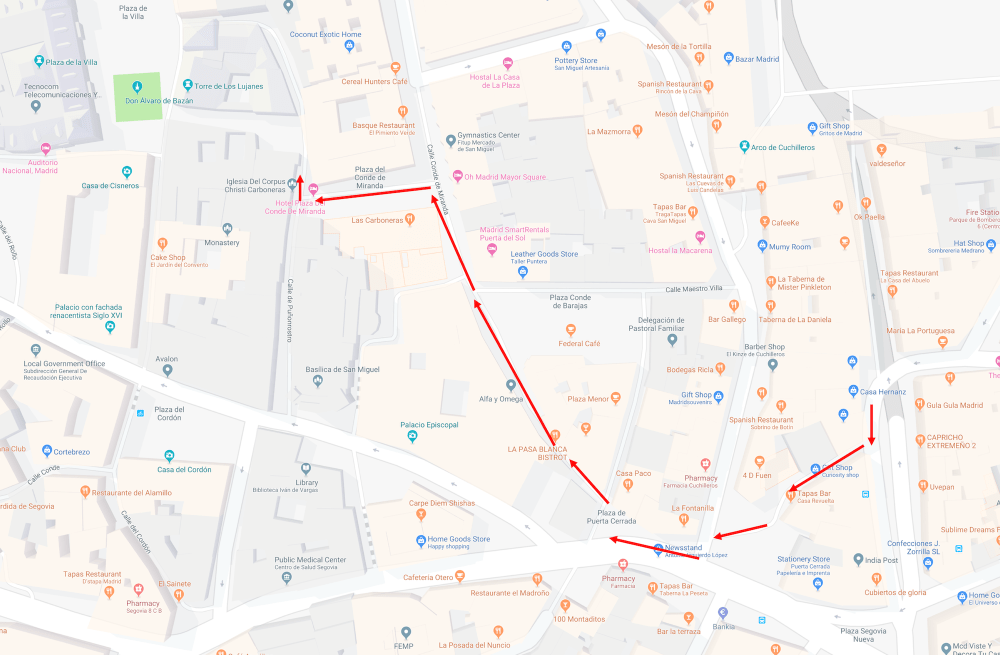
Directions: Continue on Calle de Toledo. Turn right on Calle Latoneros. Continue on Plaza Puerta Cerrada and take Calle de la Pasa at Plaza de Puerta Cerrada. Turn left at Plaza del Conde de Miranda. You will see the convent ahead. Turn right at Calle del Codo and you will see the door. Enter the convent and follow the signs.
 Eternal Horizon