Breakfast: Bar El Comercio


Santa María La Blanca

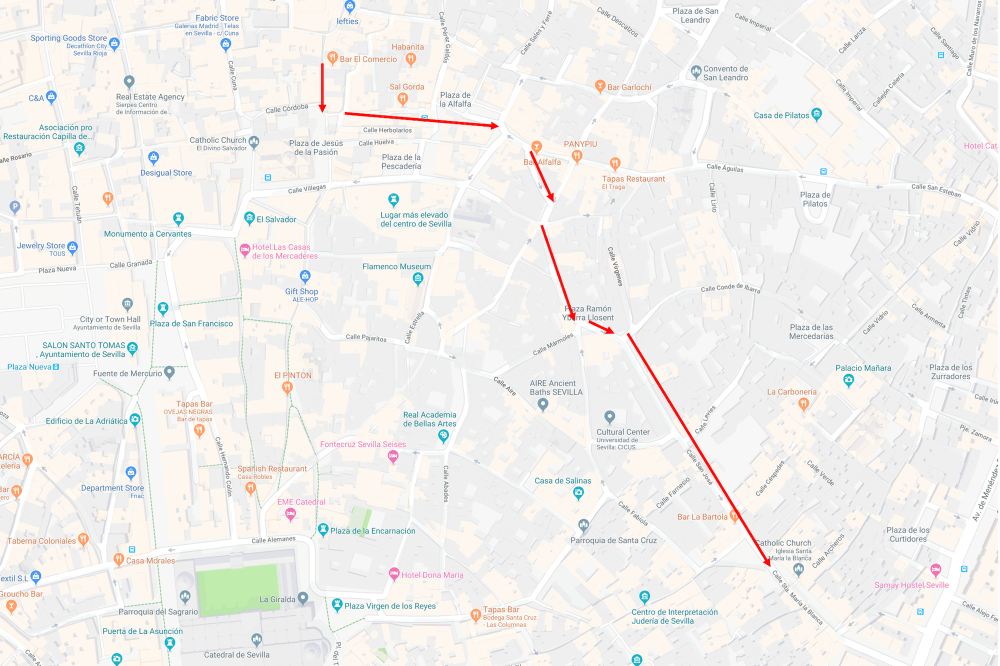
Jardin de Murillo

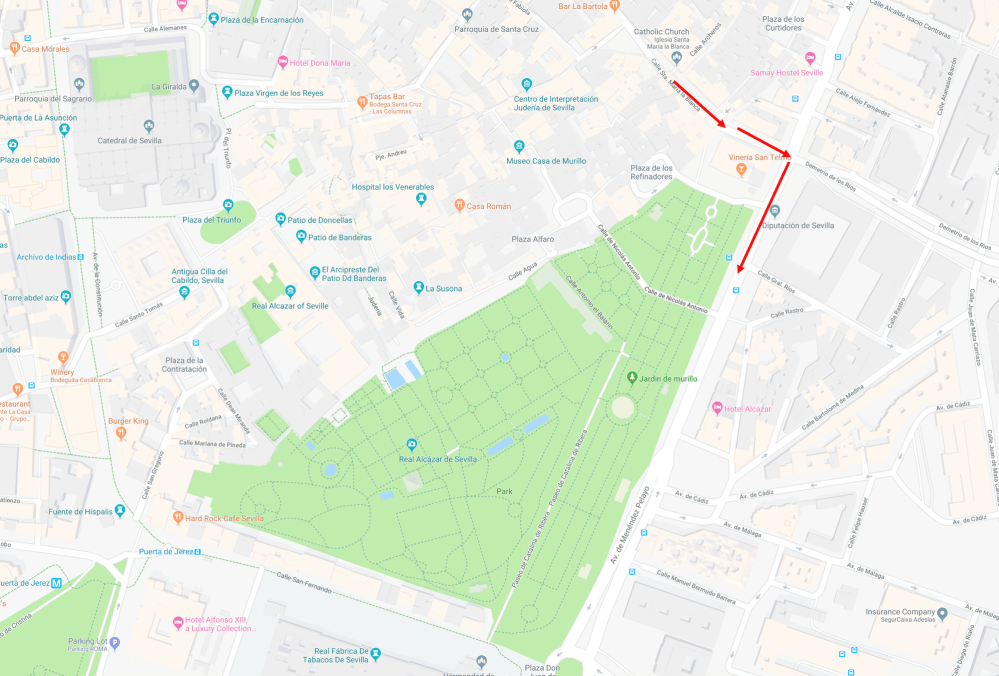
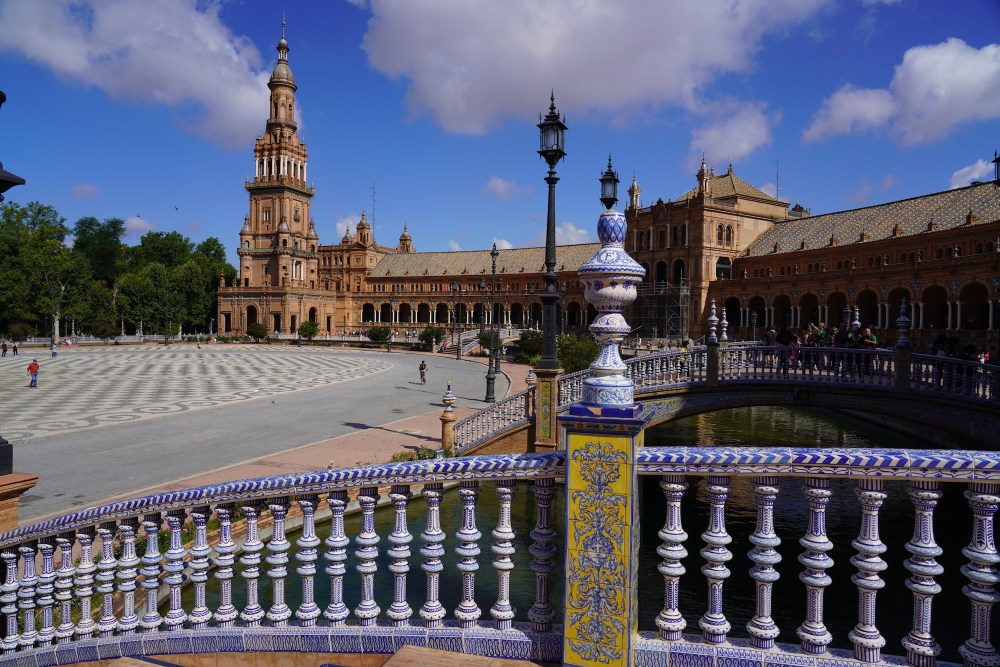
Plaza de España
The Plaza de España is a plaza in the Parque de María Luisa, built in 1928 for the Ibero-American Exposition of 1929. It is a landmark example of the Regionalism Architecture, mixing elements of the Renaissance Revival and Moorish Revival styles of Spanish architecture.
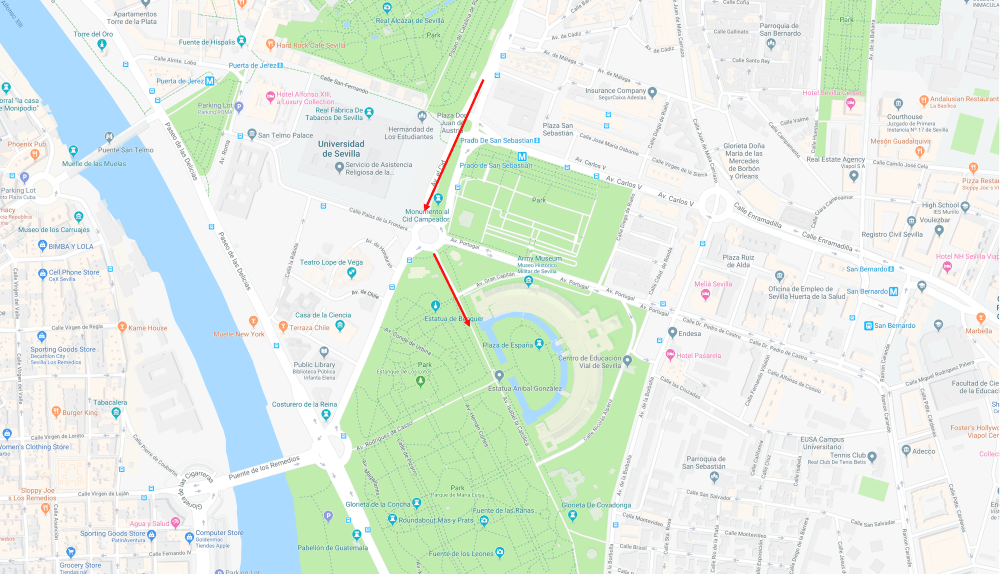
Parque de Maria Luisa
San Telmo Palace
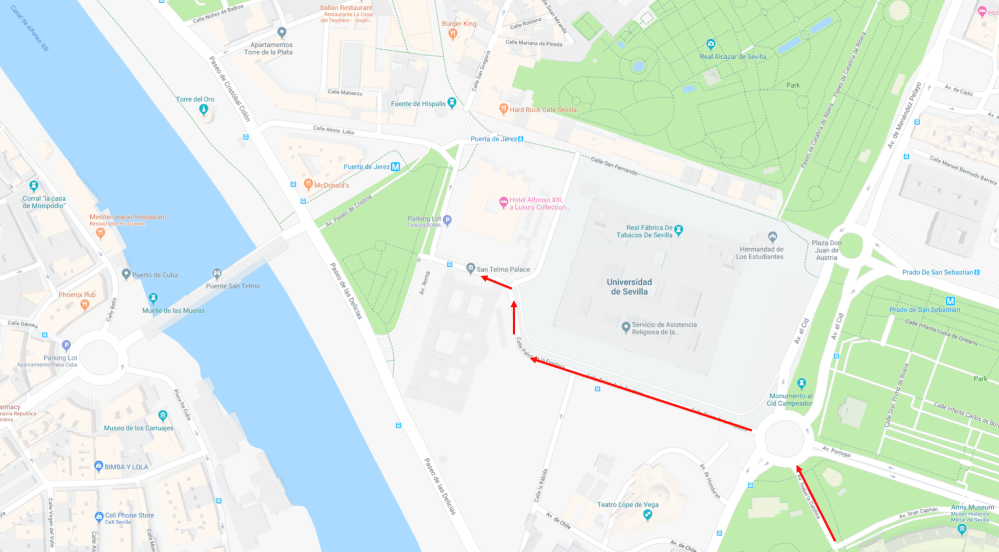
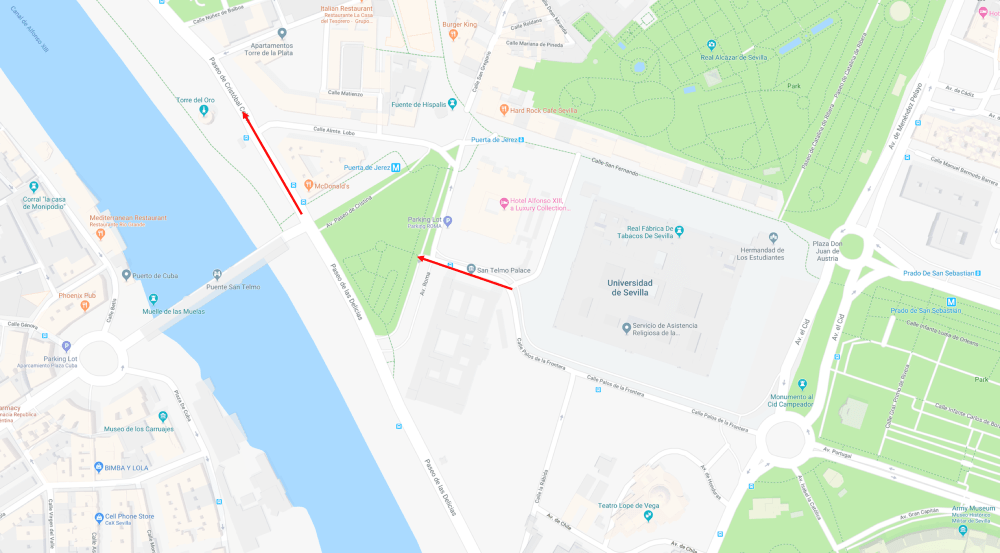
The Golden Tower
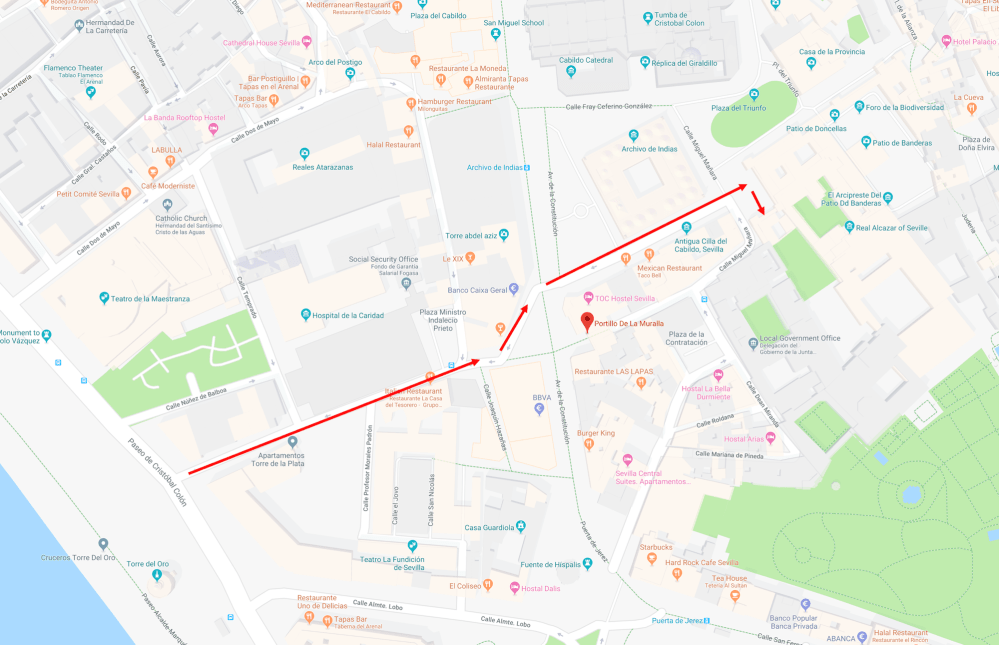
Royal Alcazar of Seville
The Alcázar of Seville is a royal palace built for King Peter of Castile. It was built by Castilian Christians on the site of an Abbadid Muslim residential fortress destroyed after the Christian conquest of Seville. The palace, a preeminent example of Mudéjar architecture in the Iberian Peninsula, is renowned as one of the most beautiful. The upper levels of the Alcázar are still used by the royal family as their official residence in Seville, and are administered by the Patrimonio Nacional. It is the oldest royal palace still in use in Europe.

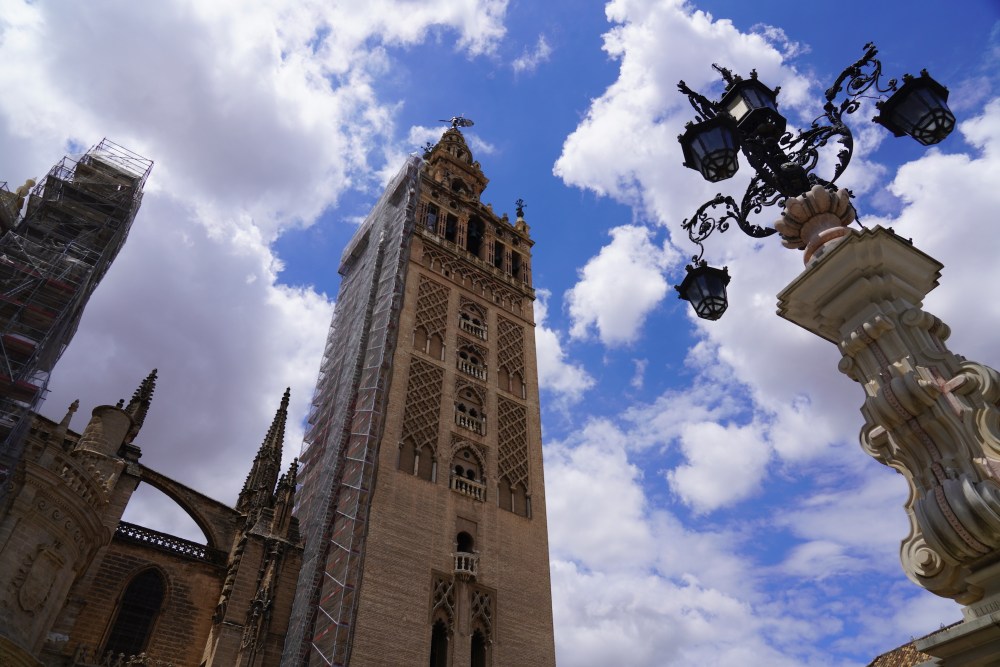
La Giralda
The Giralda is the bell tower of the Seville Cathedral in Seville, Spain. It was originally built as the minaret for the Great Mosque of Seville and completed in 1198. A Renaissance style top was subsequently added by Spanish conquistadors after the expulsion of the Muslims from the area.
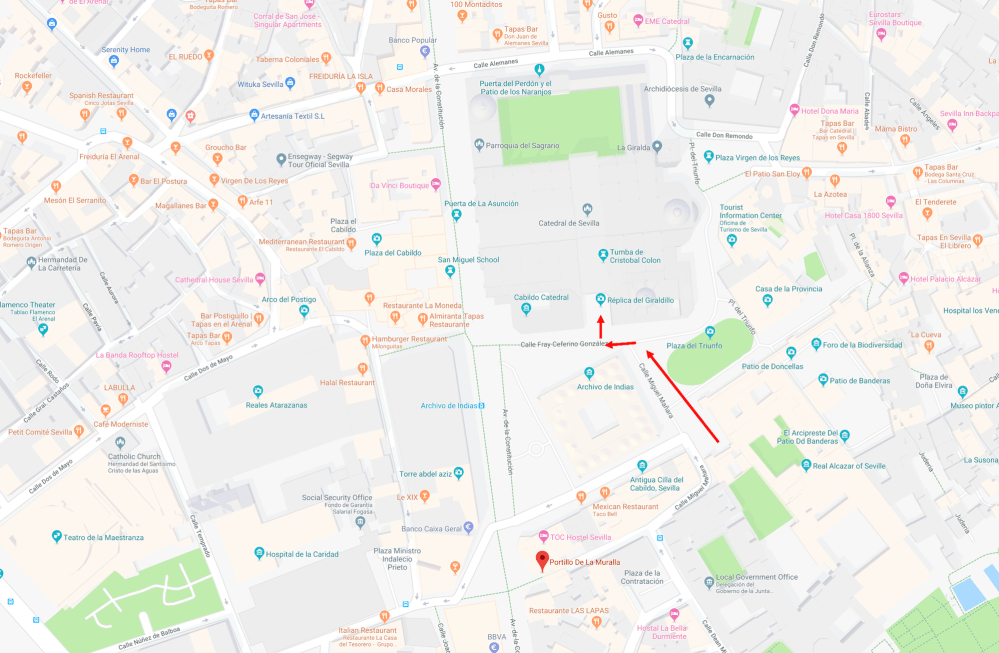
Cathedral of Saint Mary of the See
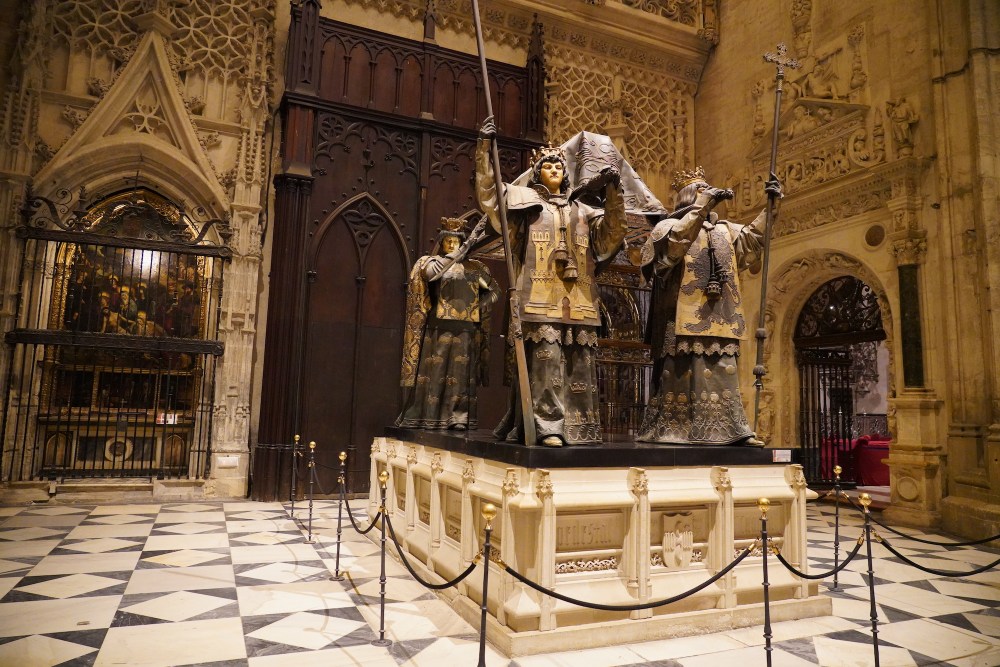
The Cathedral of Saint Mary of the See, better known as Seville Cathedral, is the third-largest church in the world as well as the largest Gothic church. After its completion in the early 16th century, Seville Cathedral supplanted Hagia Sophia as the largest cathedral in the world, a title the Byzantine church had held for nearly a thousand years. The total area occupied by the building is 23,500 square meters. Since the world’s two largest churches (the Basilica of the National Shrine of Our Lady of Aparecida and St. Peter’s Basilica) are not the seats of bishops, Seville Cathedral is still the largest cathedral in the world. Seville Cathedral was the site of the baptism of Infant Juan of Aragon in 1478, only son of the Catholic Monarchs Ferdinand II of Aragon and Isabella I of Castile. Its royal chapel holds the remains of the city’s conqueror Ferdinand III of Castile, his son and heir Alfonso the Wise and their descendant king Peter the Cruel. Christopher Columbus and his son Diego are also buried in the cathedral.
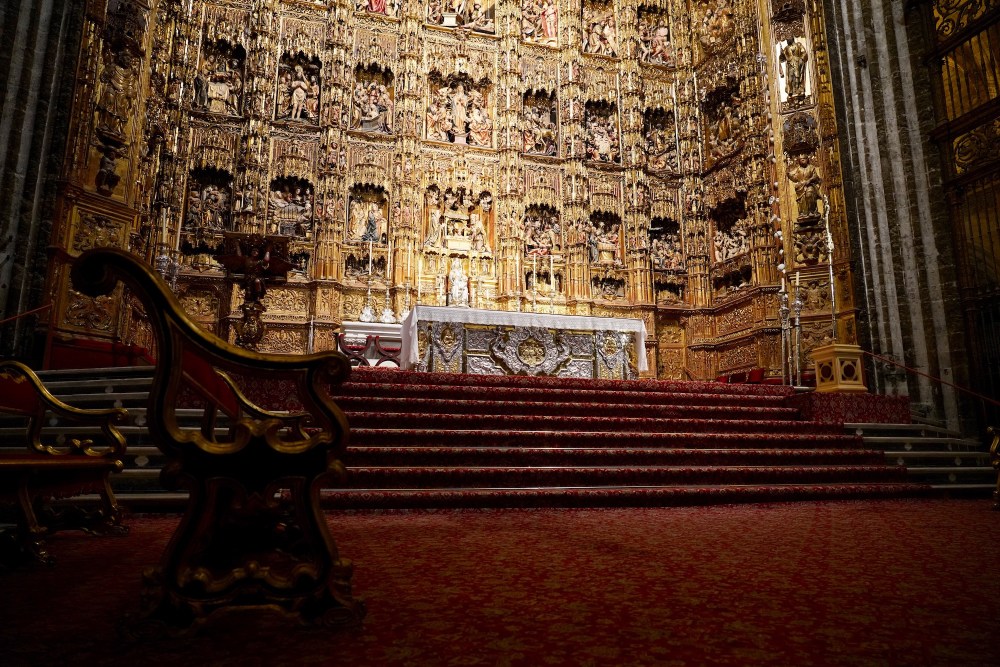
Columbus’ Tomb
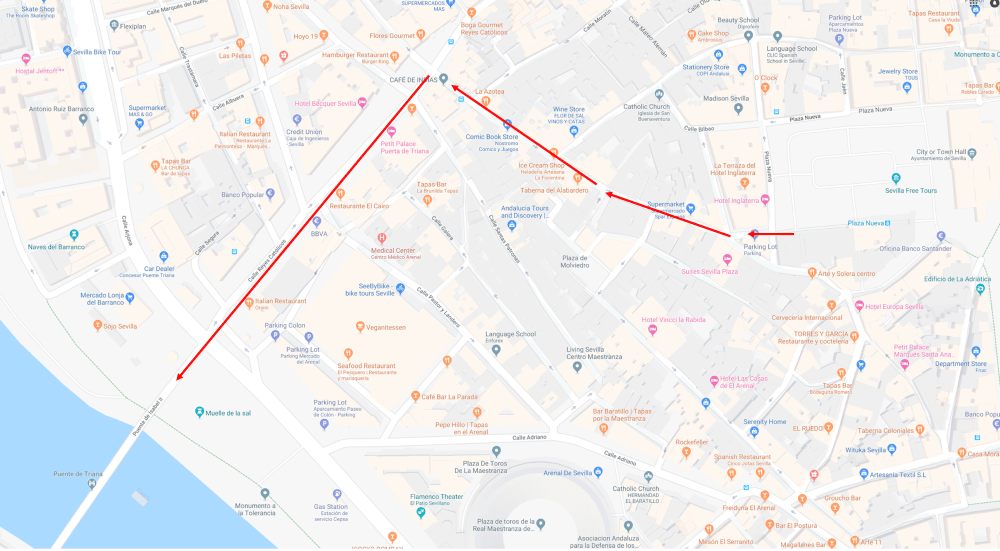
Artesanía Textil S.L

Ayuntamiento de Sevilla

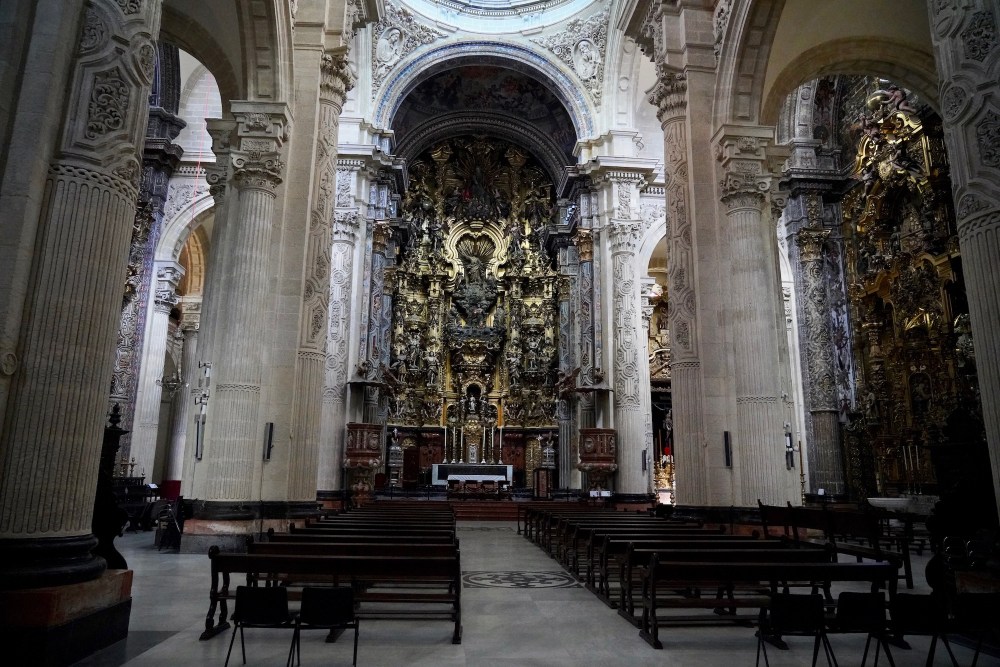
El Divino Salvador
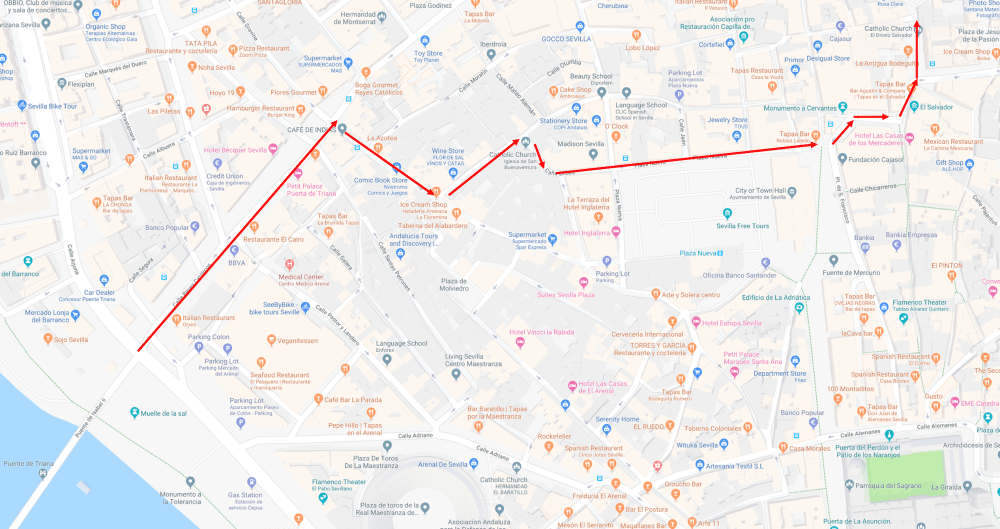
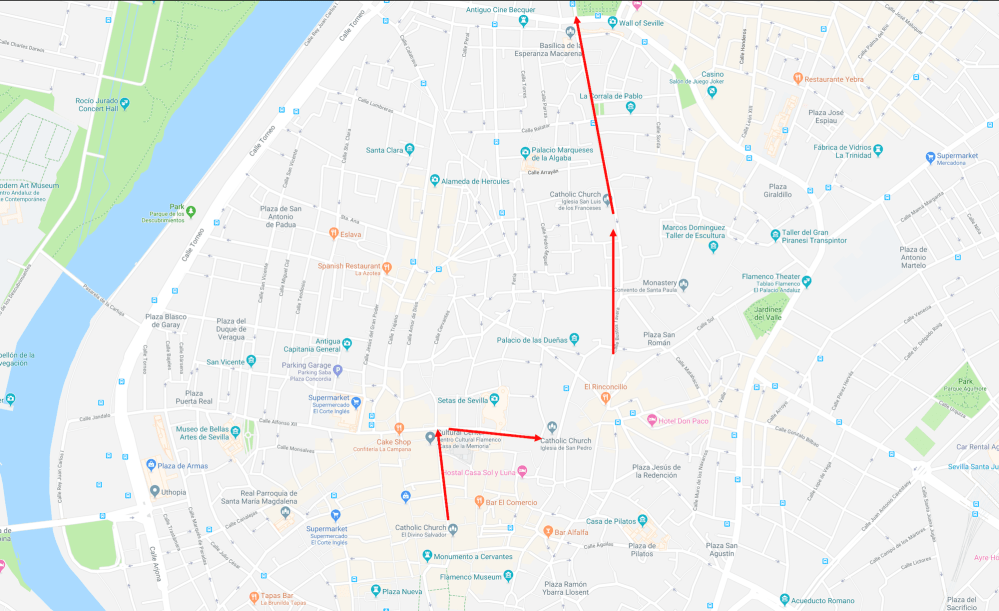
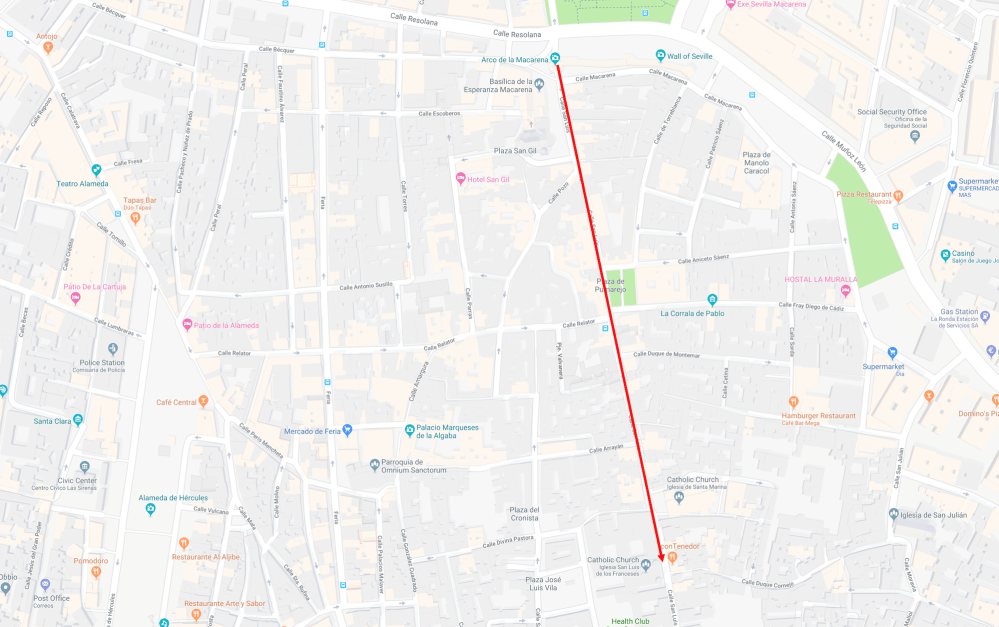
Gate of Macarena
The Puerta de la Macarena is one of the only three city gates that remain today of those from the walls of Seville. Although the enclosure walls of the city was built in time of Julius Caesar, the gate corresponds to the extension made by the Sultan Ali ibn Yusuf in the 12th century, and its present appearance is the result of a remodeling carried out between the years 1723 and 1795.

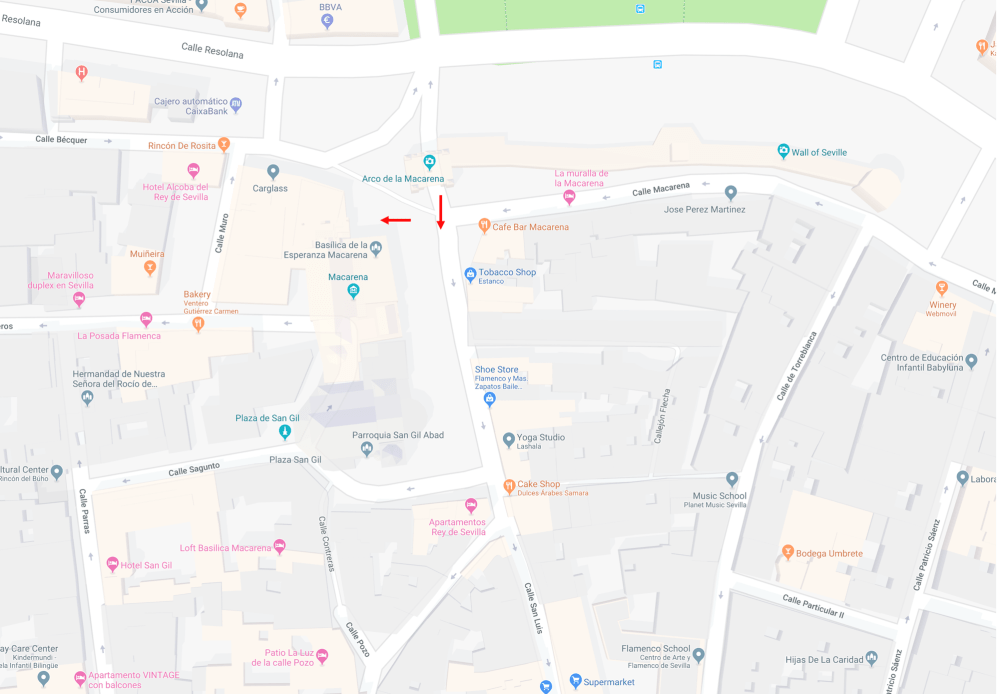
Basílica de la Macarena
The Basílica de La Macarena houses the image of the Our Lady of La Esperanza Macarena, one of the most characteristic images of the Holy Week in Seville. The wooden statue of Our Lady of Hope Macarena dates from the 17th century and the Neobaroque Basilica was built in the 20th century.

Parroquia San Luis de los Franceses

Basilica of Jesus del Gran Poder

 Eternal Horizon