Starting point: Tower of London
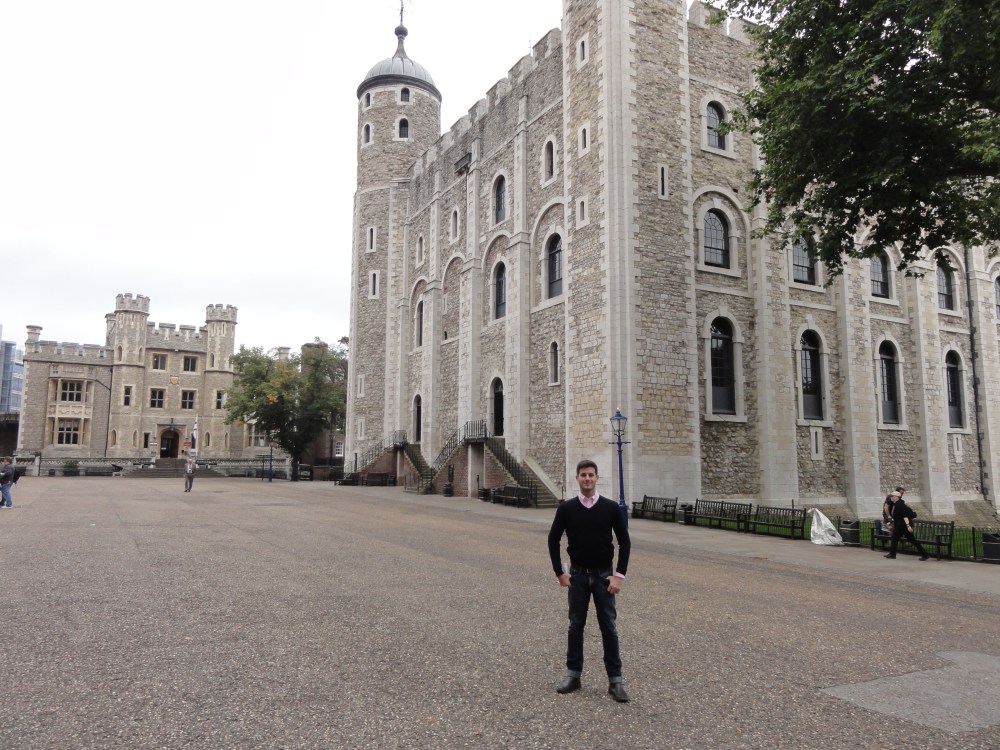
The Tower of London was founded towards the end of 1066 as part of the Norman Conquest of England. The White Tower was built by William the Conqueror in 1078, and was a resented symbol of oppression, inflicted upon London by the new ruling elite. The castle was used as a prison from 1100 until 1952, although that was not its primary purpose. A grand palace early in its history, it served as a royal residence. As a whole, the Tower is a complex of several buildings set within two concentric rings of defensive walls and a moat. There were several phases of expansion in the 12th and 13th centuries. The general layout established by the late 13th century remains despite later activity on the site.
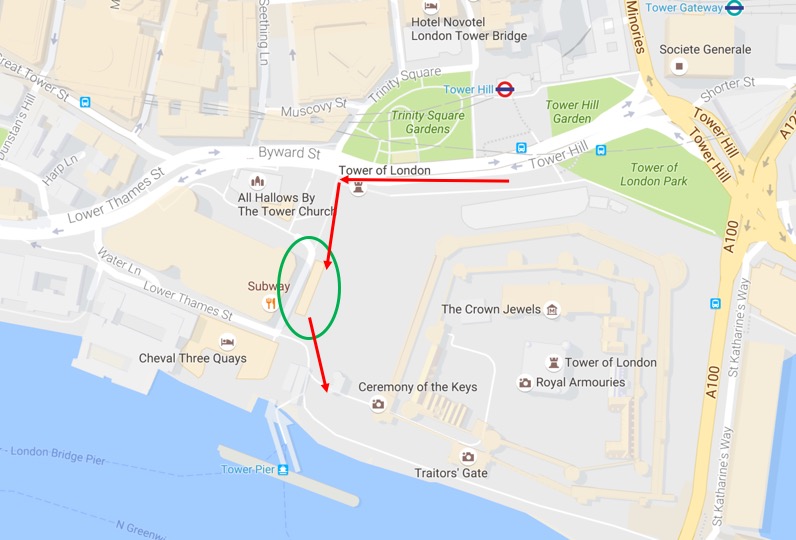
Directions: Take the Circle Line or the District Line to the Tower Hill station. Follow the map below to the ticket booth (circled in green) and then continue to the entrance.
Tower Bridge
Tower Bridge is a bridge that crosses the river Thames. It was built in 1886–1894.
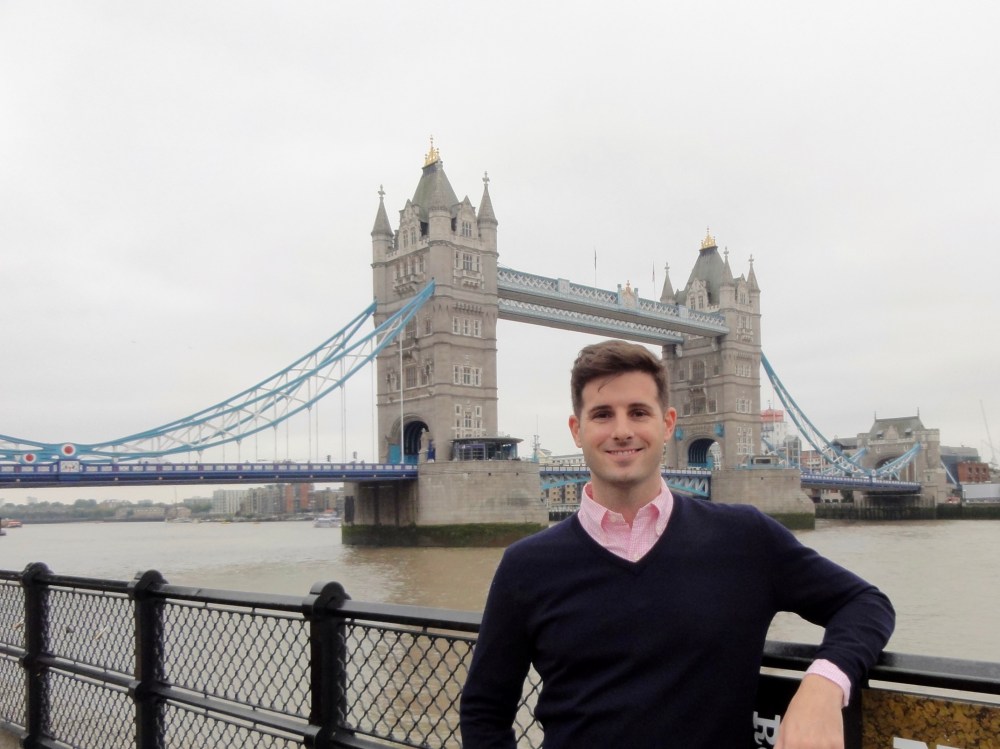
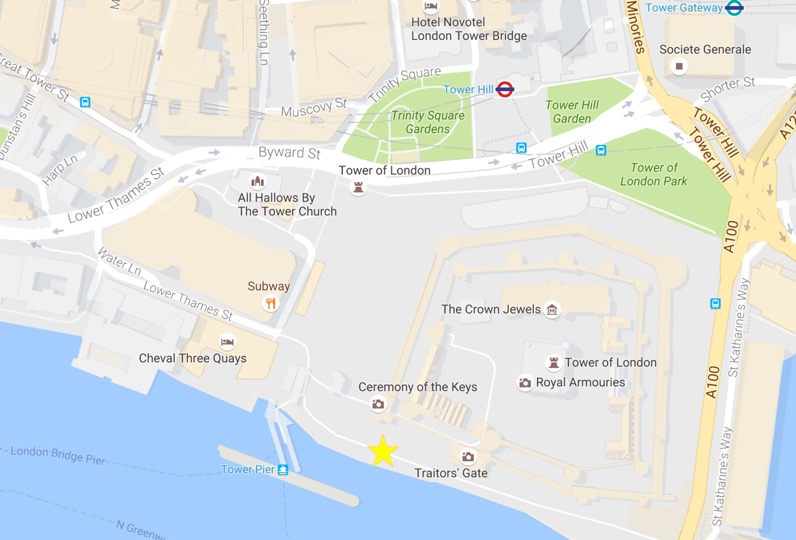
Directions: Just outside the Tower of London, you can walk along the Thames for a view of the Tower Bridge.
Great Fire of London Monument
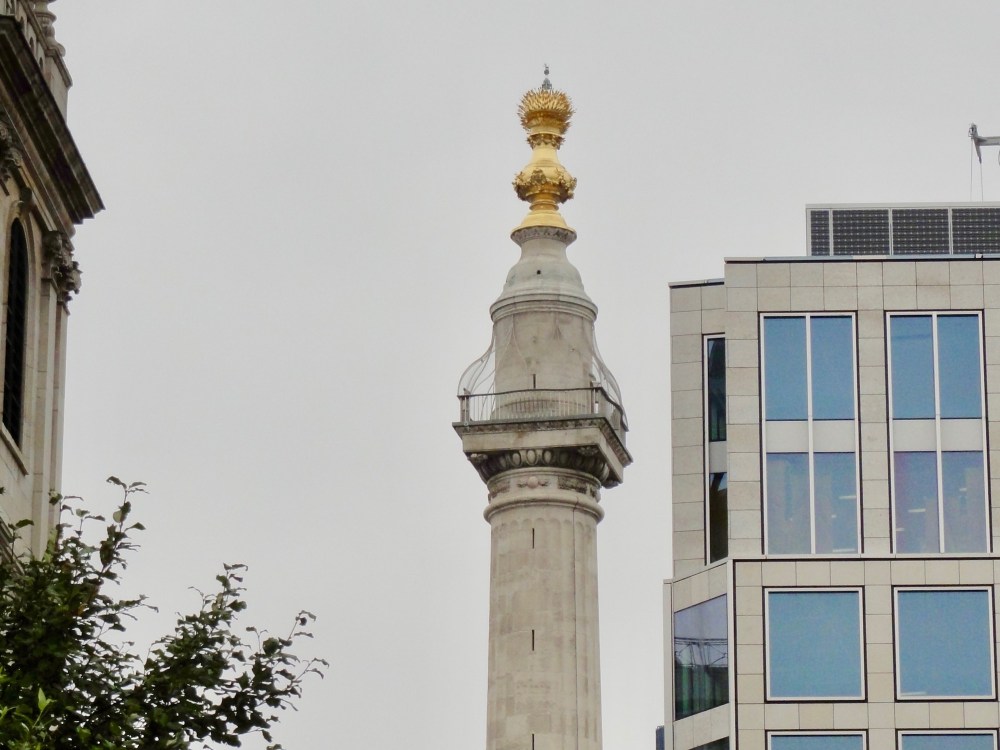
The Monument to the Great Fire of London is a Doric column in the City of London that commemorates the Great Fire of London. Constructed between 1671 and 1677, it was built on the site of St. Margaret’s, Fish Street, the first church to be burnt down by the Great Fire. It’s height (200 feet) mark it’s distance from the spot in Pudding Lane where the Great Fire started on September 2, 1666. The viewing platform near the top of the Monument is reached by a narrow winding staircase of 311 steps.
St Paul’s Cathedral
St Paul’s Cathedral is an Anglican cathedral and the seat of the Bishop of London. It sits on Ludgate Hill at the highest point of the City of London. The present church, dating from the late 17th century, was designed by Sir Christopher Wren. Its construction was part of a major rebuilding program after the Great Fire of London.

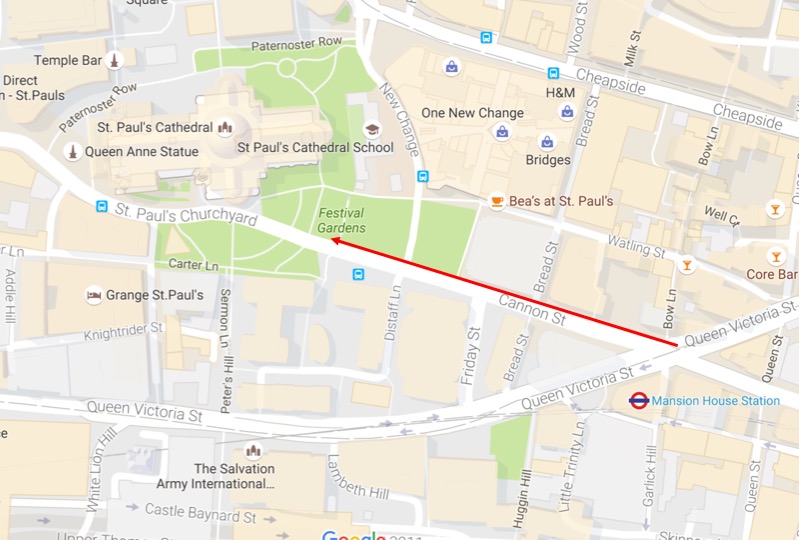
Directions: Return to the Tower Hill underground/subway station. Take the Circle Line or the District Line to the Mansion House station. Cross Queen Victoria Street and take a left on Cannon Street. Continue up to St. Paul’s Cathedral.
Ye Olde Cheshire Cheese
Ye Olde Cheshire Cheese is one of several pubs in London to have been rebuilt shortly after the Great Fire of 1666. There has been a pub at this location since 1538. Some of the interior wood panelling is nineteenth century, some older, perhaps original. The vaulted cellars are thought to belong to a 13th-century Carmelite monastery which once occupied the site. The entrance to this pub is situated in a narrow alleyway.

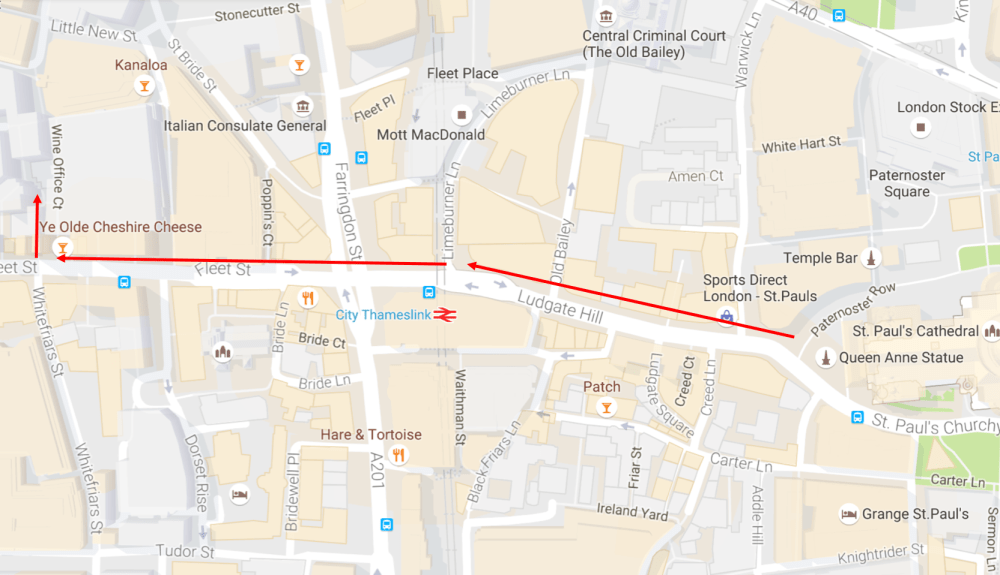
Directions: From the front of St Paul’s Cathedral, walk forward on Legate Hill/Fleet Street. Take a right on Wine Office Court to arrive at Ye Olde Cheshire Cheese.
Temple Church
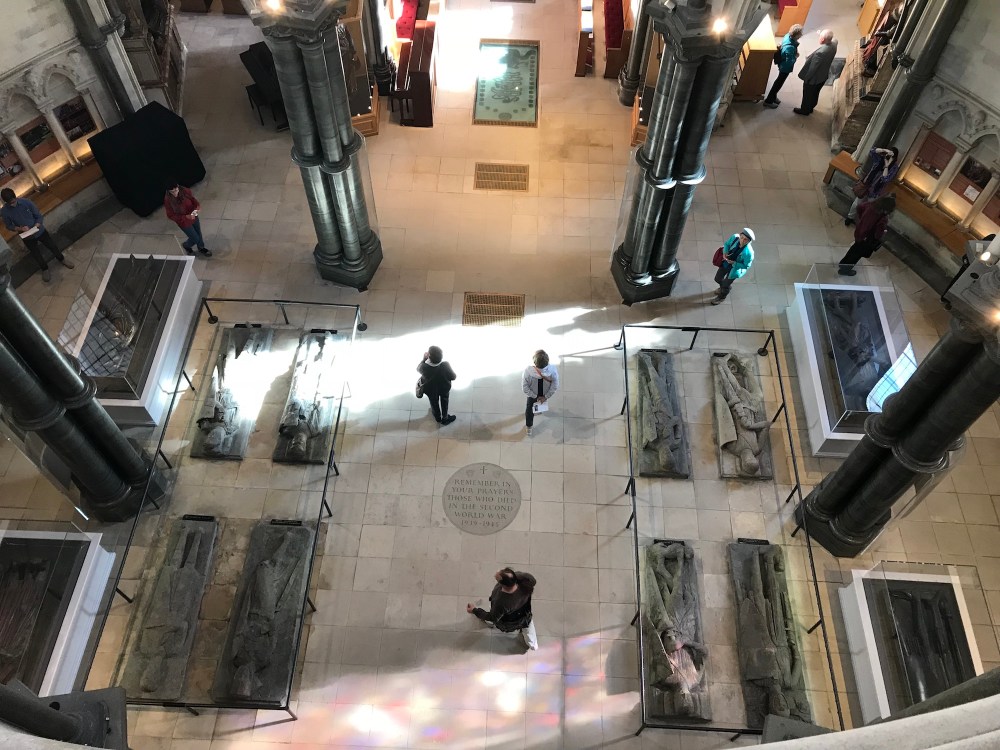
The Temple Church is a late 12th-century church built by the Knights Templar as their English headquarters. During the reign of King John (1199–1216) it served as the royal treasury, supported by the role of the Knights Templars as proto-international bankers. It is famous for being a round church, a common design feature for Knights Templar churches, and for its 13th and 14th century stone effigies. It was heavily damaged by German bombing during World War II and has since been restored and rebuilt.
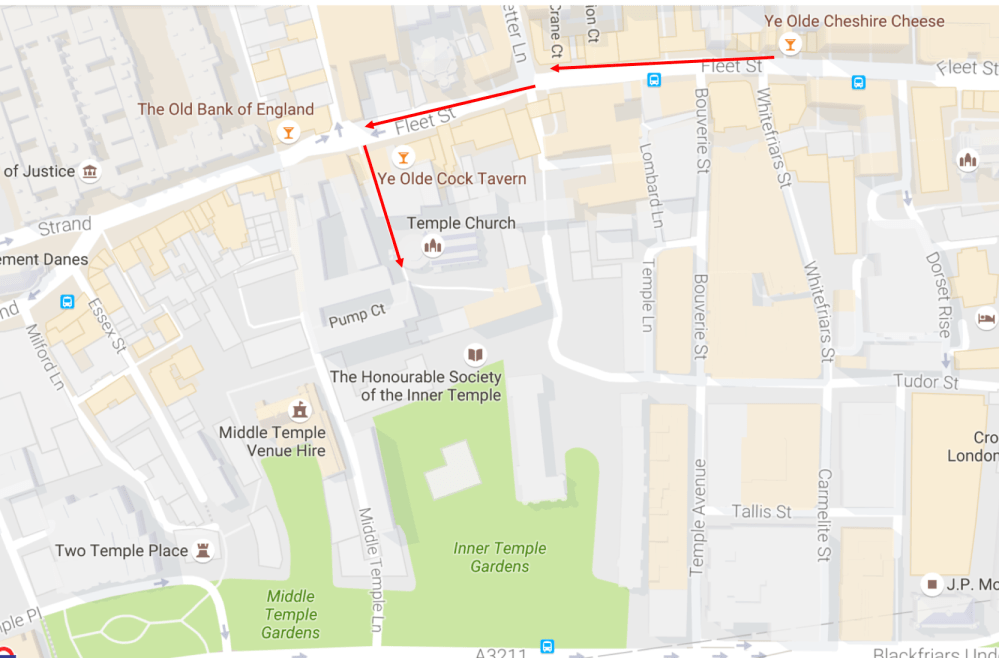
Directions: From Ye Olde Cheshire Cheese, take a right on Fleet Street. On the left side of the street, there are several footpaths that will lead you towards Temple Church. However, on the weekend, you will need to enter on Tudor Street. Directions are here.
Royal Courts of Justice
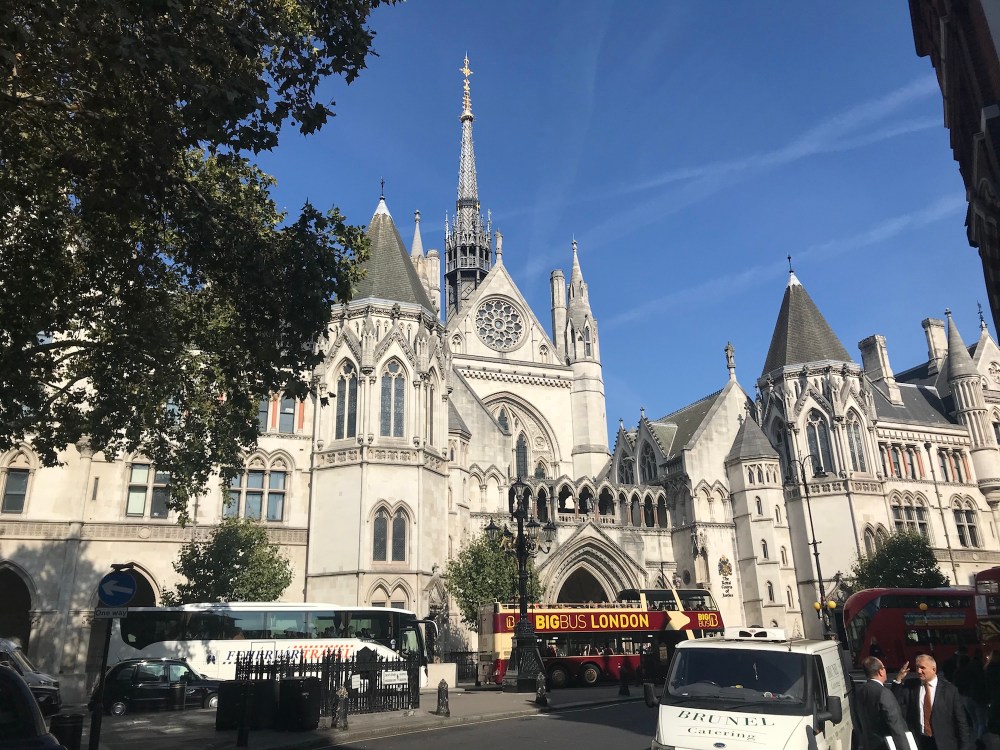
The Royal Courts of Justice is a court building in London which houses the High Court and Court of Appeal of England and Wales. It is a large grey stone edifice in the Victorian Gothic style built in the 1870s and opened by Queen Victoria in 1882.
Somerset House
Somerset House is a large Neoclassical building situated on the south side of the Strand in central London, overlooking the River Thames, just east of Waterloo Bridge. The building, on the site of a Tudor palace, was designed by Sir William Chambers in 1776, and further extended with Victorian wings to the east and west in 1831 and 1856 respectively.

 Eternal Horizon