Starting Point: Micklegate Bar
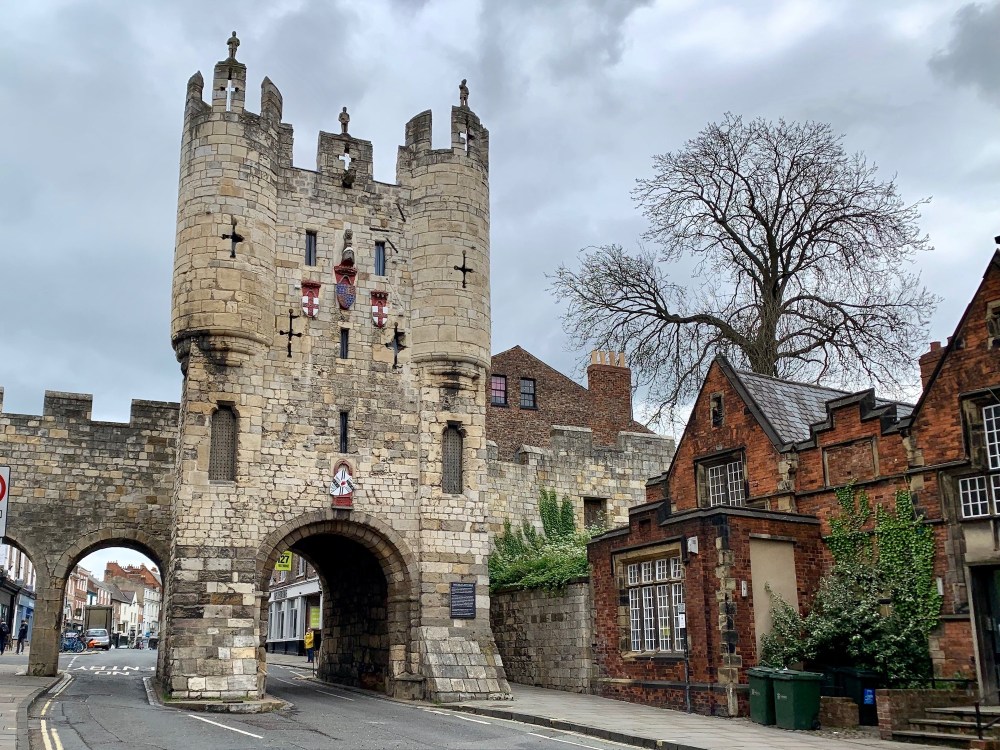
Micklegate Bar was the traditional ceremonial gate for monarchs entering the city, who, in a tradition dating to Richard II in 1389, touch the state sword when entering the gate. The lower section was built in the 12th century while the top stories in the 14th.Its symbolic value led to traitors’ severed heads being displayed on the defenses, including that of Richard the Third Duke of York duding the Wars of the Roses. The Bar was inhabited until the 20th century. The upper two floors contain living quarters, which today are a museum known as the Henry VII Experience at Micklegate Bar. The museum explores the early life of Henry VII as a Lancastrian in exile, his reign as king after the Wars of the Roses and the impact of the establishment of the Tudor royal dynasty on the city of York.
Directions:
Clifford’s Tower
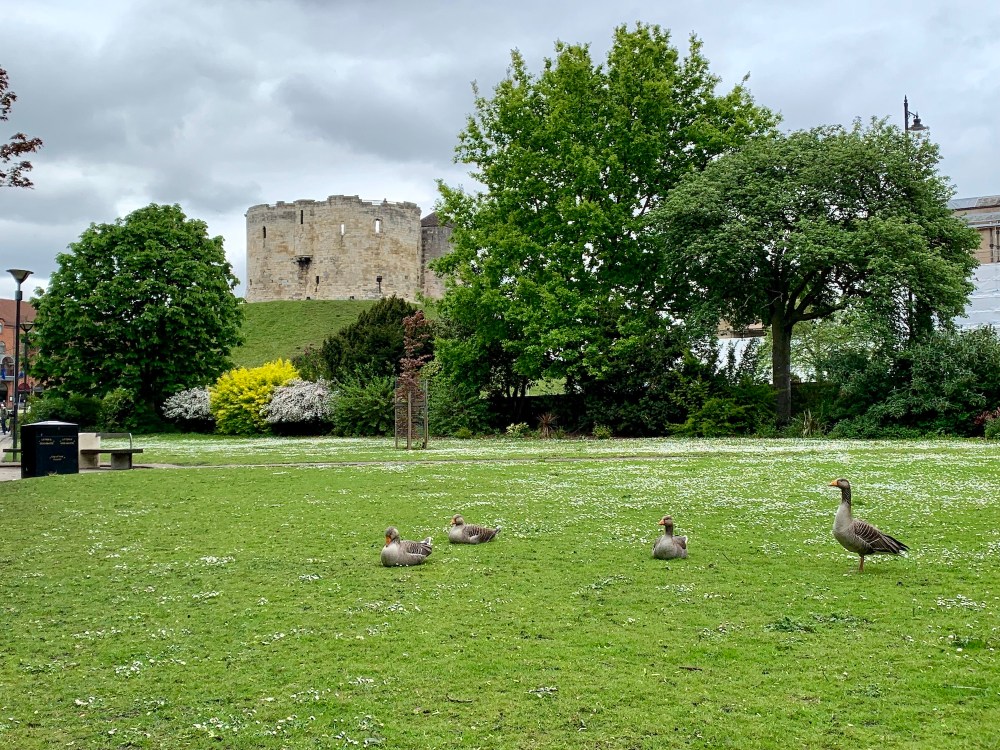
York Castle is a fortified complex in the city of York, England. It has comprised a sequence of castles, prisons, law courts and other buildings, which were built over the last nine centuries on the south side of the River Foss. The now-ruinous keep of the medieval Norman castle is commonly referred to as Clifford’s Tower. Built originally on the orders of William I to dominate the former Viking city of York, the castle suffered a tumultuous early history before developing into a major fortification with extensive water defences. After a major explosion in 1684 rendered the remaining military defences uninhabitable, York Castle continued to be used as a jail and prison until 1929.
Directions:
York Shambles
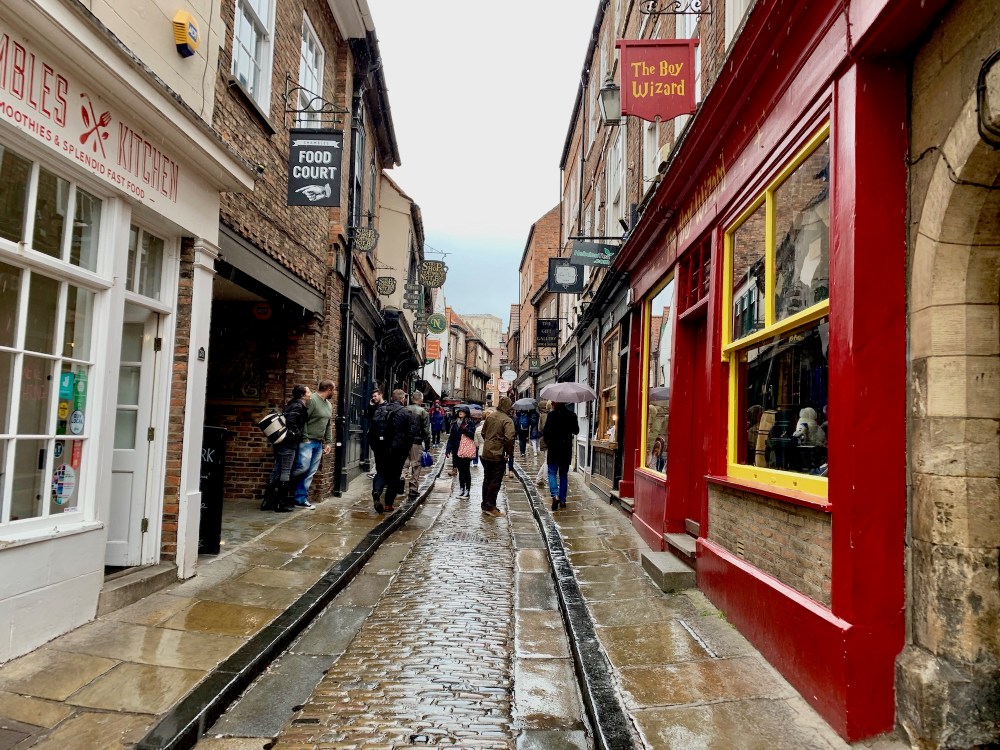
The Shambles is an old street with overhanging timber-framed buildings. The street was mentioned in the Domesday Book of 1086 and many of the current buildings are from circa 1350-1475.It was once known as The Great Flesh Shambles, probably from the Anglo-Saxon Fleshammels (literally ‘flesh-shelves’), the word for the shelves that butchers used to display their meat. As recently as 1872 twenty-five butchers’ shops were located along the street. Although the butchers have now vanished, a number of the shops on the street still have meat-hooks hanging outside and, below them, shelves on which meat was displayed. The shops currently include a mix of restaurants and shops as well as a bookshop and a bakery. Five “snickelways” lead off the Shambles. Shambles Market operates daily and is situated between The Shambles and Parliament Street.
Directions:
Lunch
Description
Directions:
Holy Trinity Church
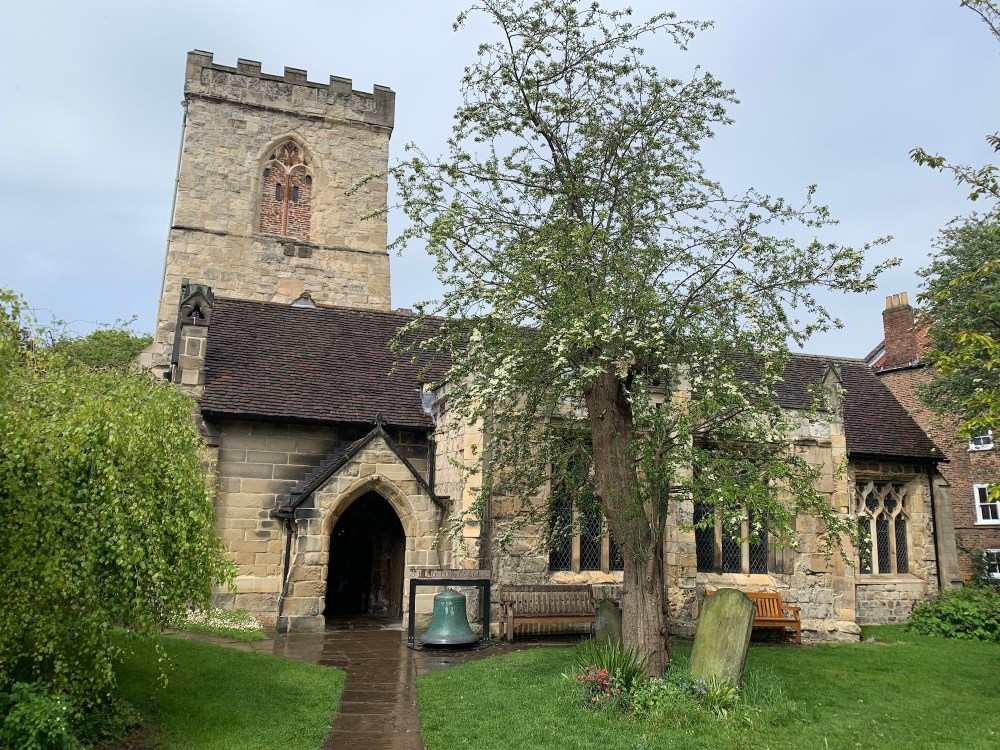
The church dates from the 12th century. The south east chapel is 13th century, and the south aisle and south arcade date from the 14th century. It was enlarged in 1823 when the north side was rebuilt. A blue plaque outside the church marks the occasion when Anne Lister and her lover Ann Walker took Holy Communion together at the church at Easter 1834 as an affirmation of their relationship, thereafter considering themselves married. This moment is seen in HBO’s Gentleman Jack.
Directions:
York Minster
The Cathedral and Metropolitical Church of Saint Peter in York, commonly known as York Minster, is the cathedral of York, and is one of the largest of its kind in Northern Europe. The minster is the seat of the Archbishop of York, the third-highest office of the Church of England (after the monarch as Supreme Governor and the Archbishop of Canterbury), and is the mother church for the Diocese of York and the Province of York. The minster, devoted to Saint Peter, has a very wide Decorated Gothic nave and chapter house, a Perpendicular Gothic quire and east end and Early English North and South transepts. The nave contains the West Window, constructed in 1338, and over the Lady Chapel in the east end is the Great East Window (finished in 1408), the largest expanse of medieval stained glass in the world. In the north transept is the Five Sisters Window, each lancet being over 53 feet (16.3 m) high.[6] The south transept contains a rose window, while the West Window contains a heart-shaped design colloquially known as The Heart of Yorkshire.

Directions:
Monk Bar
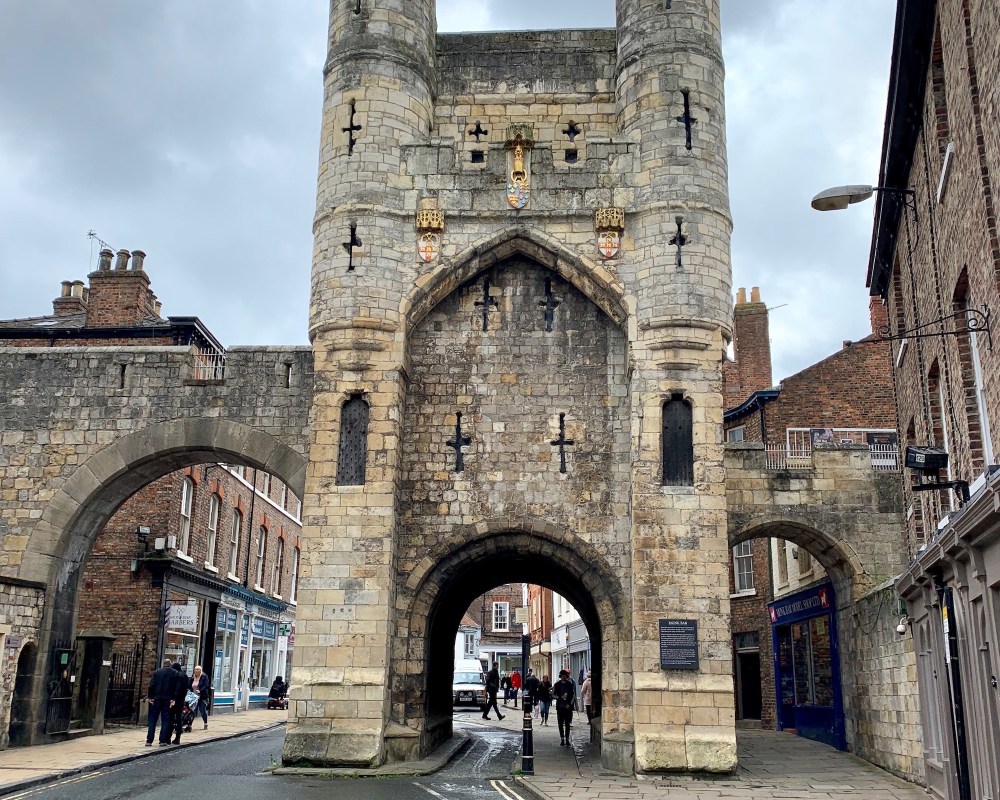
This four-storey gatehouse is the tallest and most elaborate of the four city gatehouses, and was built in the early 14th century. It was intended as a self-contained fort, and each floor is capable of being defended separately. The current gatehouse was built to replace a 12th-century gate known as Munecagate, which stood 100 yards to the north-west, on the site of the Roman gate. Today, Monk Bar houses a museum called the Richard III Experience.
Directions:
St Mary’s Abbey
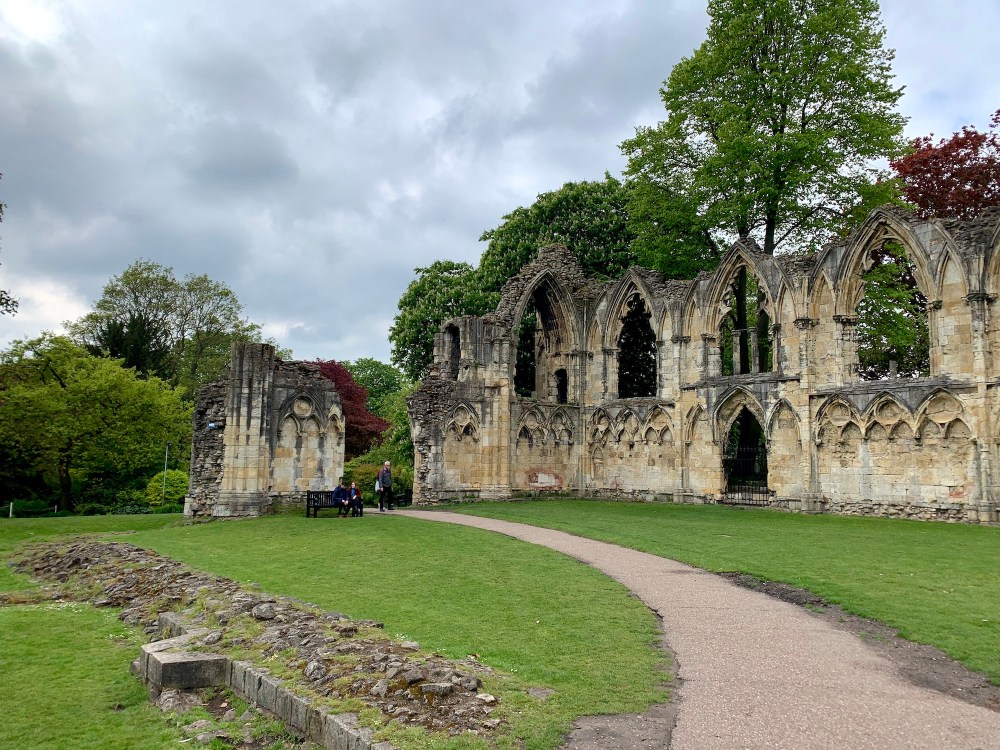
The Abbey of St Mary is a ruined Benedictine abbey, which was built from 1271 to 1294. St Mary’s, the largest and richest Benedictine establishment in the north of England and one of the largest landholders in Yorkshire, was worth over £2,000 a year, when it was valued in 1539, during the dissolution of the monasteries under Henry VIII; it was closed and subsequently substantially destroyed.
Directions:
 Eternal Horizon