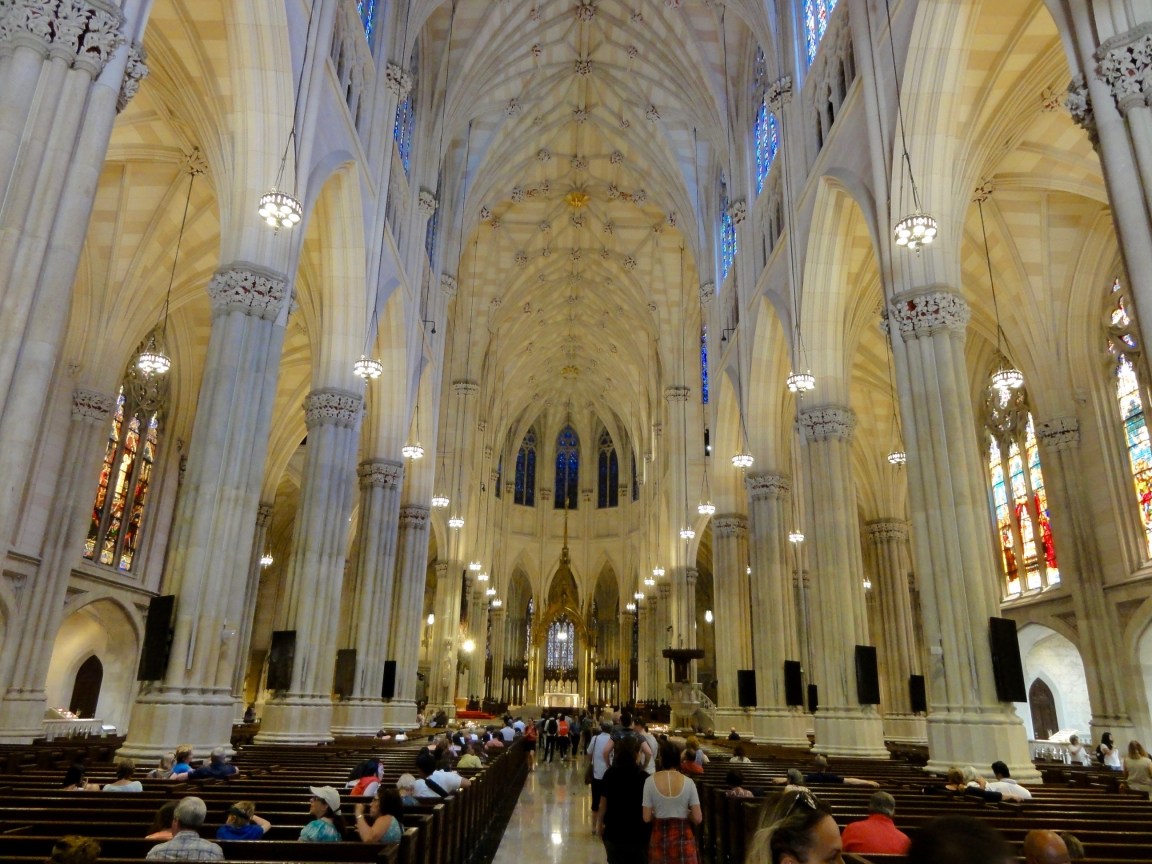
Starting Point: St Patrick’s Cathedral
The Cathedral of St. Patrick is a decorated Neo-Gothic-style Roman Catholic cathedral church in New York City. On August 15, 1858, the cornerstone was laid, just south of the diocese’s orphanage. At that time, present-day midtown Manhattan was far north of the populous areas of New York City. Work began in 1858 but was halted during the Civil War and resumed in 1865. The cathedral was completed in 1878. The spires were added in 1888, and were the tallest structures in New York City and the second highest in the United States. An addition on the east, including a Lady chapel was constructed from 1901 to 1906.
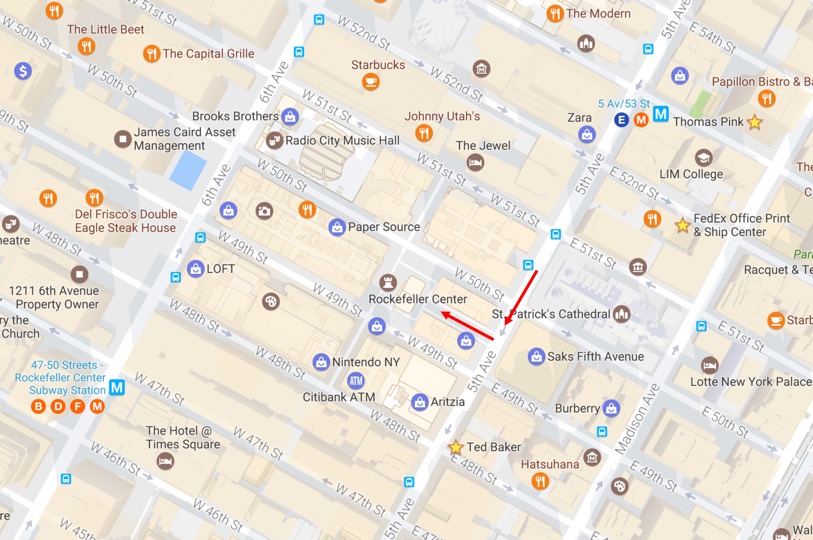
Directions: Take the 6 to 51st Street or the E or M to Lexington Avenue/53rd Street.

Rockefeller Center
Rockefeller Center is a large complex consisting of 19 high-rise commercial buildings covering 22 acres (89,000 m2) between 48th and 51st Streets in New York City. Commissioned by the Rockefeller family, it is located in the center of Midtown Manhattan. It is famous for its annual Christmas tree lighting.

Directions: Rockefeller Center is located on the other side of 5th Avenue from St Patrick’s Cathedral. When leaving St Patrick’s Cathedral, cross 5th Avenue and take a left. Rockefeller Center is located between 50th and 49th Streets.
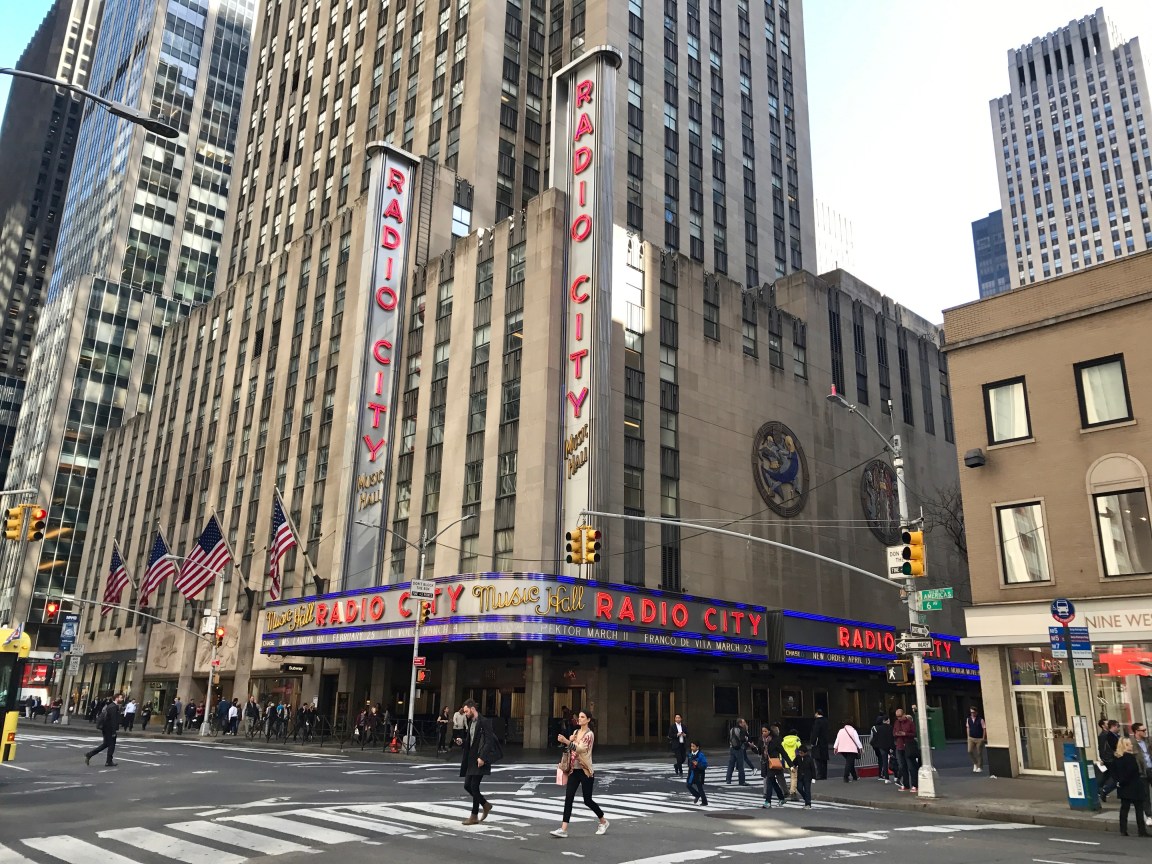
Radio City Music Hall
Radio City Music Hall is an entertainment venue located in Rockefeller Center in New York City. It is notable as being the headquarters for the precision dance company, the Rockettes. The Music Hall opened to the public on December 27, 1932 with a lavish stage show featuring Ray Bolger, Doc Rockwell and Martha Graham.
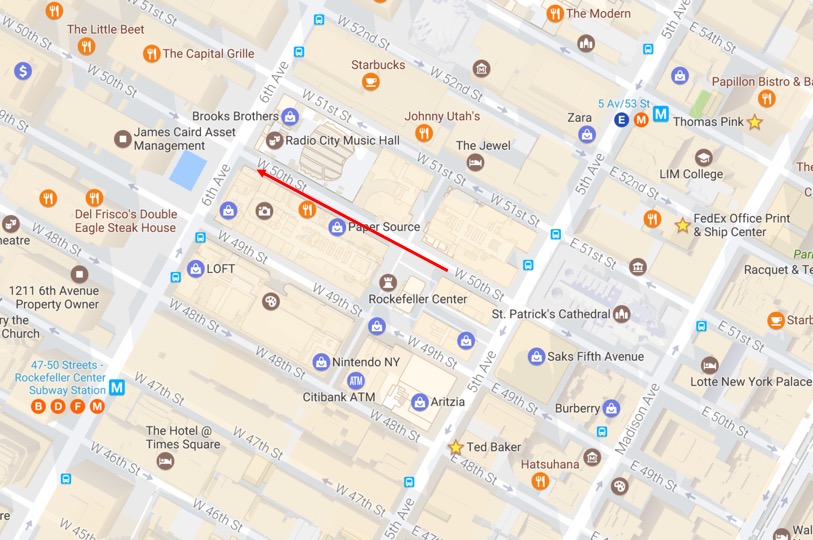
Directions: From Rockefeller Center walk up to 50th Street and take a left. Radio City Music Hall is located at 6th Avenue.
Museum of Modern Art
The Museum of Modern Art (MoMA) is an art museum located in Midtown Manhattan.
MoMA has been important in developing and collecting modernist art, and is often identified as one of the largest and most influential museums of modern art in the world. MoMA’s collection offers an overview of modern and contemporary art, including works of architecture and design, drawing, painting, sculpture, photography, prints, illustrated books and artist’s books, film, and electronic media.
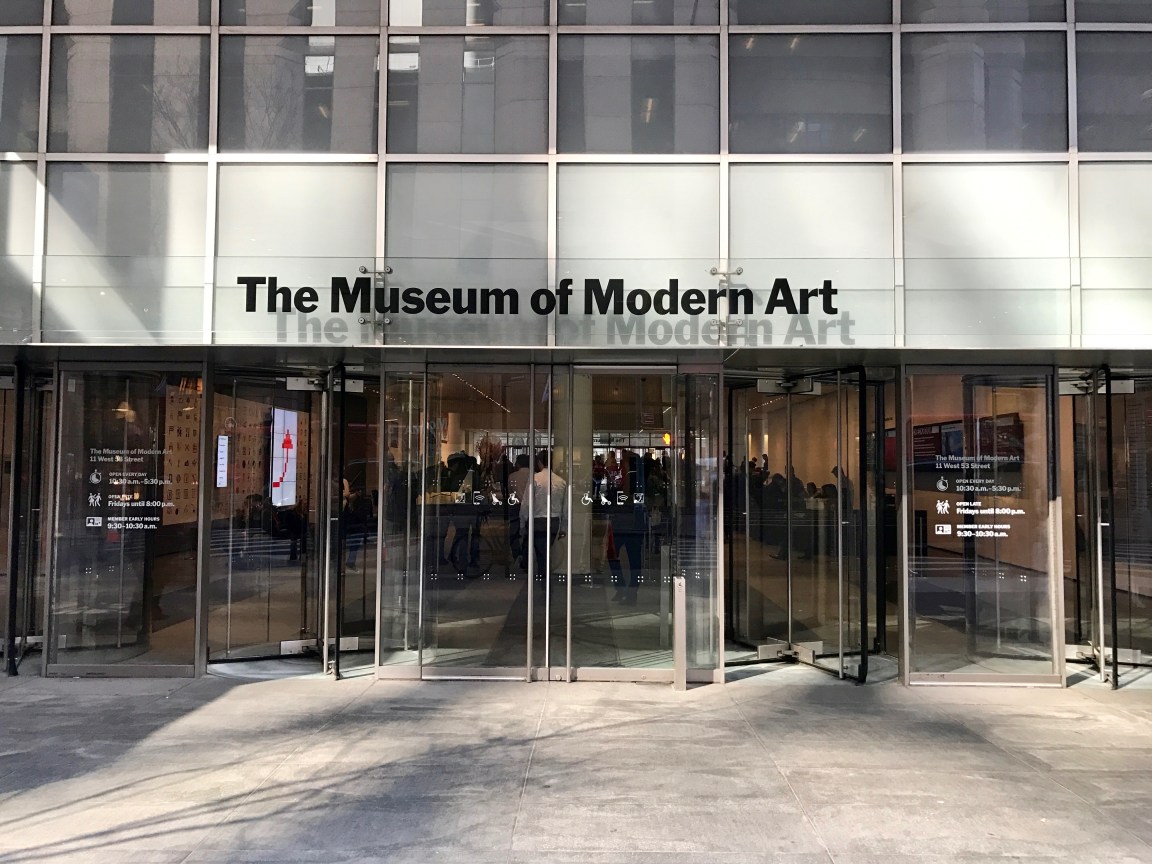
Directions: From Radio City Music Hall, walk north on 6th Avenue to 53rd Street and take a right. The Museum of Modern Art is located on the left.

St Thomas Church
Saint Thomas Church is an Episcopal parish church is also known as Saint Thomas Church Fifth Avenue. The current structure was completed in 1914. The church is home to the Saint Thomas Choir of Men and Boys a choral ensemble comprising men and boys which performs music of the Anglican tradition at worship services and offers a full concert series during the course of the year.

Directions: After leaving the museum, turn left on 53rd street. Take a left on 5th Avenue. The church is on the corner.

5th Avenue
Fifth Avenue is a major thoroughfare going through the borough of Manhattan in New York City, United States. It stretches from West 143rd Street in Harlem to Washington Square North at Washington Square Park in Greenwich Village. The section of Fifth Avenue that crosses Midtown Manhattan, especially that between 49th Street and 60th Street, is lined with prestigious shops and is consistently ranked among the most expensive shopping streets in the world. This section includes iconic stores like Tiffany and the Apple cube.
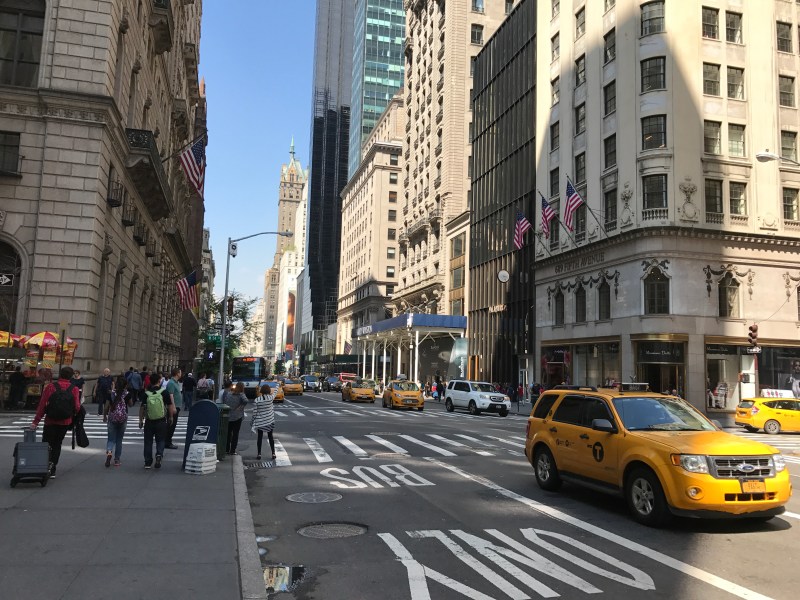
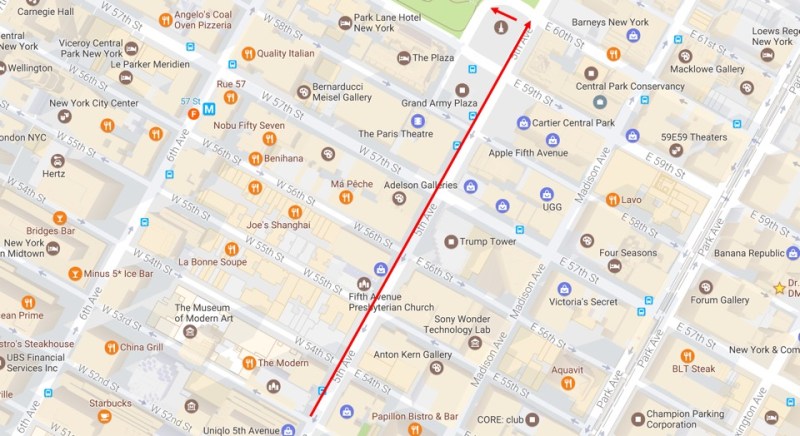
Directions: Continue north on 5th Avenue until you cross 59th Street.
Central Park
Central Park is the most visited urban park in the United States and one of the most filmed locations in the world. The Park was established in 1857 on 778 acres of city-owned land. In 1858, Frederick Law Olmsted and Calvert Vaux, a landscape architect and an architect, respectively, won a design competition to improve and expand the park with a plan they titled the “Greensward Plan”. Construction began the same year and the park’s first area was opened to the public in the winter of 1858. Construction continued during the American Civil War farther north, and was expanded to its current size of 843 acres (341 ha) in 1873.

Directions: Enter the park and walk west towards The Pond. Once you reach The Pond, turn right and walk north.
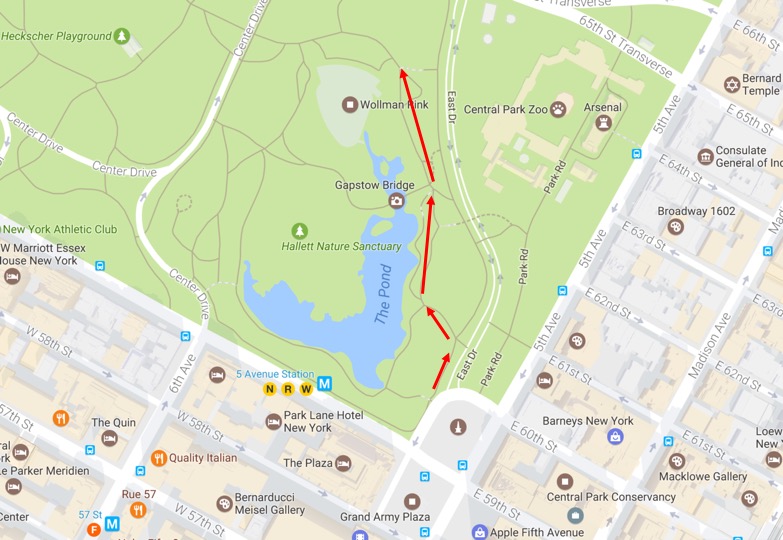

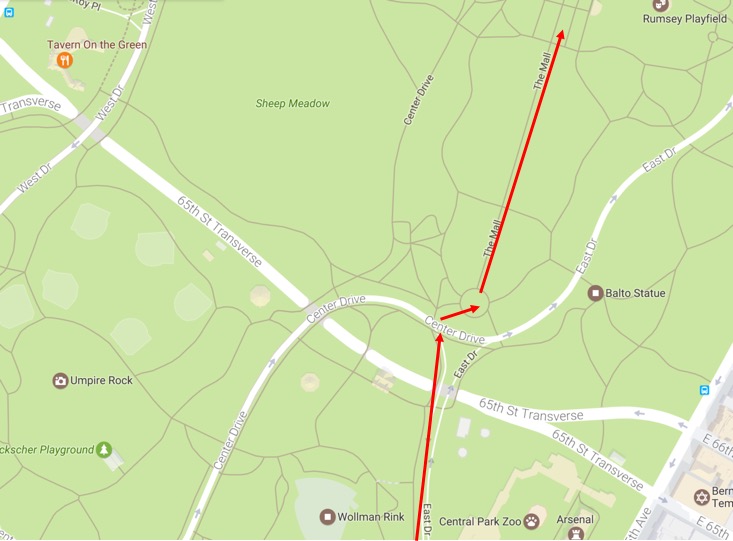
Directions: From The Pond, walk north along the paths. You will pass the Wollman Rink and cross the East 65th Street Transverse. Continue north through The Mall.
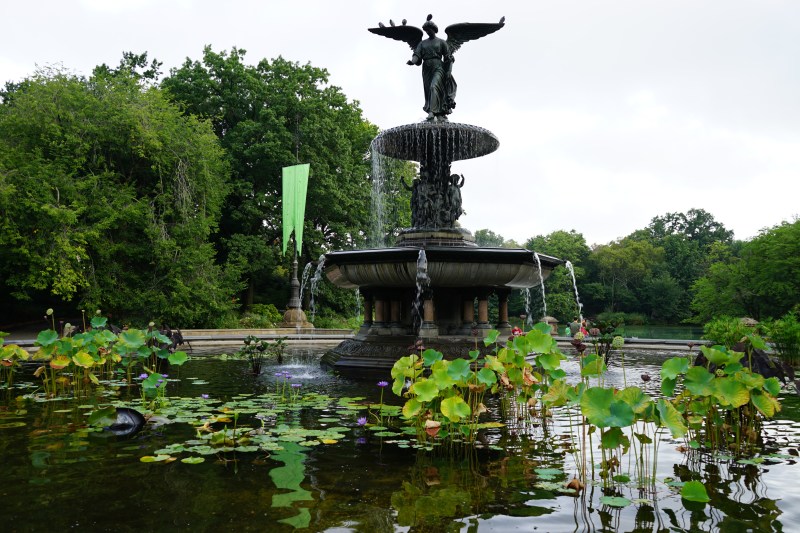
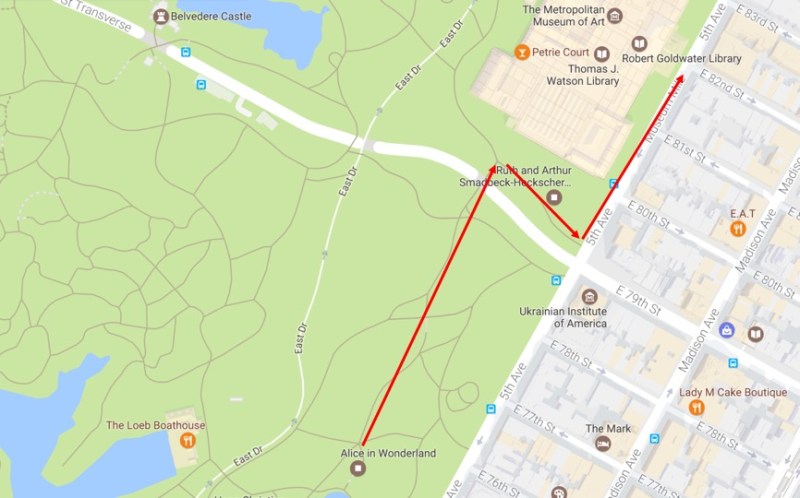
Directions: At the end of The Mall, cross Terrace Road and walk to Bethesda Terrace. From here, walk northeast to The Loeb Boathouse. Then turn right and walk to the Conservatory Water. Turn left here and walk past the Alice in Wonderland statue.

Metropolitan Museum of Art
The Metropolitan Museum of Art, or “the Met”, is the largest art museum in the United States, and is among the most visited art museums in the world. Its permanent collection contains over two million works, consisting of works of art from classical antiquity and ancient Egypt, paintings and sculptures from nearly all the European masters, and an extensive collection of American and modern art. The Met maintains extensive holdings of African, Asian, Oceanian, Byzantine, Indian, and Islamic art. The museum is home to encyclopedic collections of musical instruments, costumes and accessories, as well as antique weapons and armor from around the world. Several notable interiors, ranging from first-century Rome through modern American design, are installed in its galleries. The Metropolitan Museum of Art was founded in 1870. After negotiations with the City of New York in 1871, the Met was granted the land between the East Park Drive, Fifth Avenue, and the 79th and 85th Street Transverse Roads in Central Park. A red-brick and stone “mausoleum” was designed by American architect Calvert Vaux and his collaborator Jacob Wrey Mould. Vaux’s ambitious building was not well received; the building’s High Victorian Gothic style being already dated prior to completion, and the president of the Met termed the project “a mistake.” Within 20 years, a new architectural plan engulfing the Vaux building was already being executed. Since that time, many additions have been made including the distinctive Beaux-Arts Fifth Avenue facade, Great Hall, and Grand Stairway. These were designed by architect and Met trustee Richard Morris Hunt, but completed by his son, Richard Howland Hunt in 1902 after his father’s death. The architectural sculpture on the facade is by Karl Bitter. As of 2010, the Met measures almost 1⁄4-mile (400 m) long and with more than 2,000,000 square feet (190,000 m2) of floor space, more than 20 times the size of the original 1880 building. The museum building is an accretion of over 20 structures, most of which are not visible from the exterior.
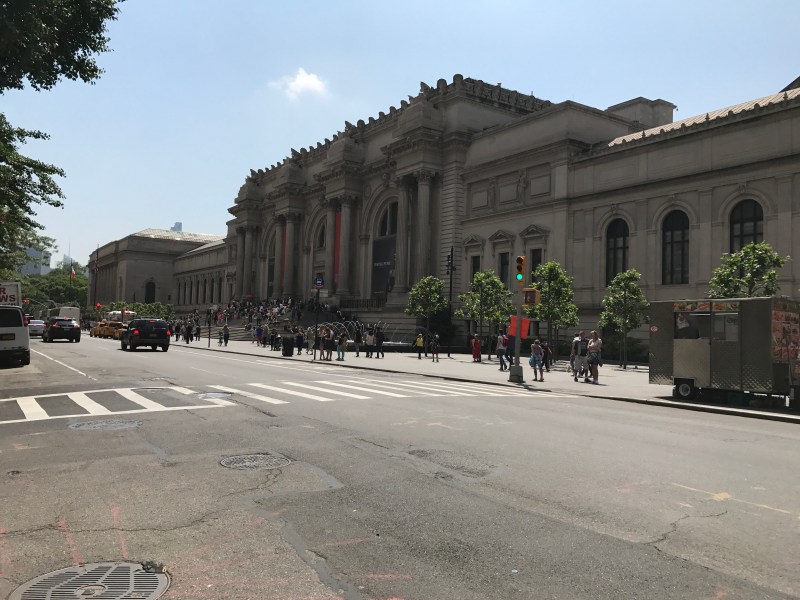
Directions: Continue north through Central Park until you reach the 79th Street Transverse. Turn right here and then turn left on 5th Avenue. The museum is on the left.
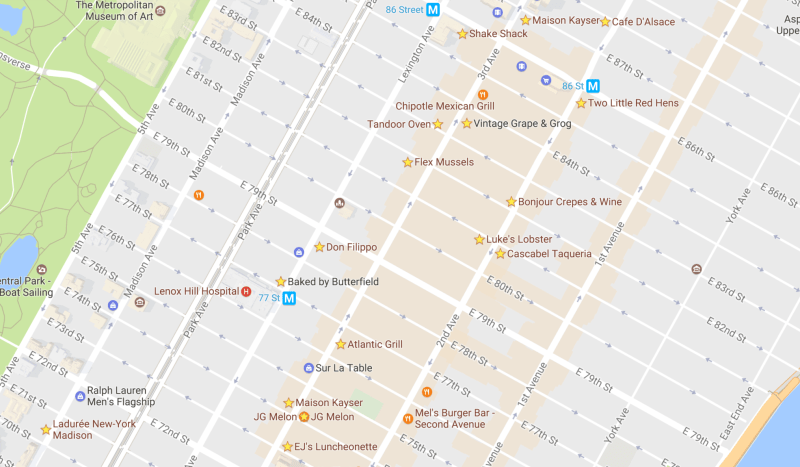
Nearby Food & Drink
 Eternal Horizon